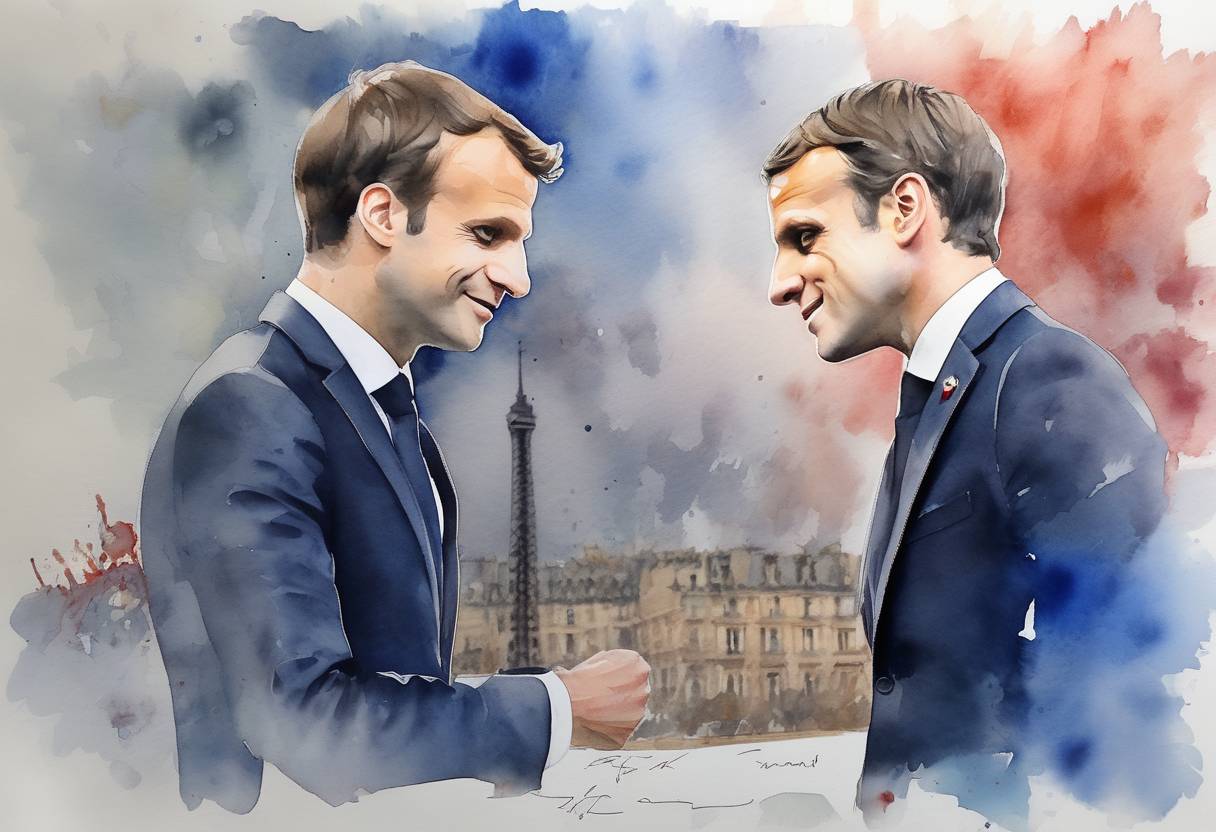
Emmanuel Macron’s Victory in the 2017 French Presidential Election
On May 7, 2017, Emmanuel Macron achieved a significant milestone in French political history by winning the presidential election, defeating Marine Le Pen. This victory marked Macron as the youngest President in the history of France, assuming office at the age of 39.
Context and Background
The 2017 French presidential election was held in a climate of political upheaval and transformation. Traditional political parties faced declining influence, and there was a growing appetite for change among the electorate. Emmanuel Macron, a former investment banker and Minister of the Economy, Industry, and Digital Affairs, capitalized on this sentiment by founding a centrist political movement called “La République En Marche!” in April 2016.
Macron’s campaign was characterized by its pro-European Union stance, progressive economic policies, and a commitment to reforming France’s labor laws and educational system. His platform appealed to a broad spectrum of voters disillusioned with the status quo.
The Election
The election process consisted of two rounds. In the first round, held on April 23, 2017, Macron emerged as a frontrunner alongside Marine Le Pen, the leader of the far-right National Front (now National Rally). Macron secured approximately 24% of the vote, while Le Pen garnered around 21.3%. This result set the stage for a runoff between the two candidates.
In the second round on May 7, 2017, Macron decisively defeated Le Pen, capturing about 66.1% of the vote compared to Le Pen’s 33.9%. His victory was seen as a rejection of the populist and nationalist wave that had been gaining momentum in various parts of the world.
Significance and Aftermath
Macron’s election was significant for several reasons:
Youth and Change: At 39, Macron became the youngest President in French history, symbolizing a generational shift in French politics.
Centrist Movement: His victory underscored the potential for centrist movements to disrupt traditional party dynamics in France.
European Union: Macron’s pro-EU stance was a critical factor in his campaign, and his election was viewed as a reaffirmation of France’s commitment to the European project, especially in the wake of Brexit.
Political Landscape: The election highlighted the fragmentation of the traditional left-right political spectrum in France, with both the Socialist Party and the Republicans failing to advance to the second round.
Following his election, Macron faced numerous challenges, including implementing his ambitious reform agenda, addressing economic issues, and managing social unrest, notably the “Yellow Vest” protests. His presidency has been marked by efforts to balance domestic reforms with maintaining France’s influence on the global stage.
In summary, Emmanuel Macron’s victory in the 2017 French presidential election was a pivotal moment in French politics, reflecting broader trends of political realignment and the rise of centrist movements in Europe.