Decree by Roman Emperor Valentinian II on August 22, 392
392 · Rome, Roman Empire
The Roman Emperor Valentinian II issued a decree prohibiting pagan worship in the Roman Empire, marking a significant step in the Christianization of the empire.
February 15, 0399
The Roman Emperor Arcadius issues a decree that prohibits pagan worship and sacrifices, furthering the Christianization of the Roman Empire.
Constantinople, Eastern Roman Empire | Roman Empire
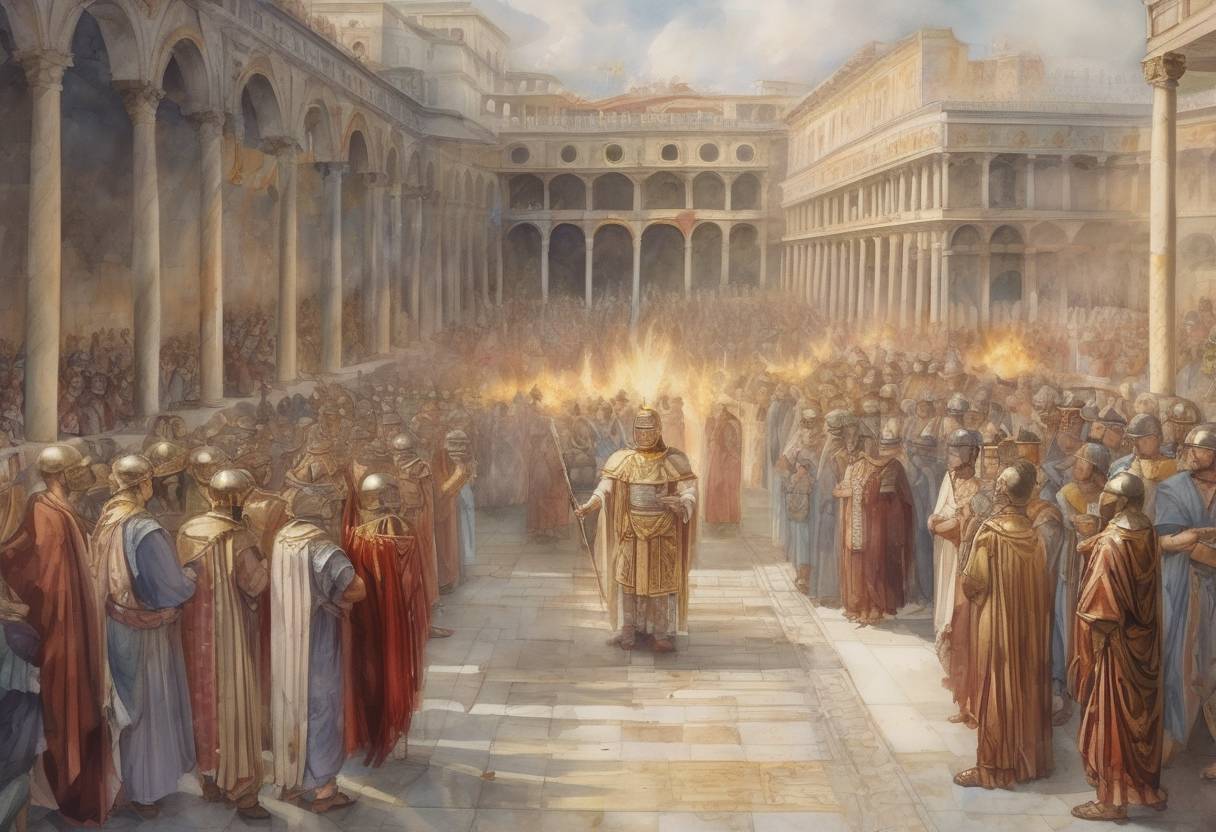
On February 15, 399, Roman Emperor Arcadius issued a significant decree that furthered the Christianization of the Roman Empire by prohibiting pagan worship and sacrifices. This decree was part of a broader series of legislative actions aimed at suppressing pagan practices and promoting Christianity as the dominant religion within the empire.
The late 4th century was a transformative period for the Roman Empire, marked by the gradual decline of traditional Roman polytheism and the rise of Christianity. The Edict of Milan in 313, issued by Emperor Constantine, had already granted religious tolerance to Christians, and subsequent emperors continued to favor Christianity. By the time of Arcadius, Christianity had become deeply entrenched in the political and cultural fabric of the empire.
Arcadius, who ruled the Eastern Roman Empire from 395 to 408, was a devout Christian. His reign was characterized by efforts to consolidate Christian orthodoxy and suppress heretical and pagan practices. The decree of February 15, 399, was a continuation of these efforts.
The decree by Arcadius was part of a broader trend of Christian emperors enacting laws to suppress paganism. These measures were not only religious but also political, as they sought to unify the empire under a single faith and reduce the influence of traditional Roman elites who were often associated with pagan practices.
The decree issued by Emperor Arcadius on February 15, 399, was a pivotal moment in the history of the Roman Empire, reflecting the ongoing transition from a polytheistic society to a Christian one. It underscored the increasing power of the Christian church and the diminishing role of traditional Roman religious practices, shaping the future of the empire and its cultural identity.
Source: en.wikipedia.org