Henry VIII's Ascension to the Throne
1509 · London, England
Henry VIII ascended to the throne of England following the death of his father, Henry VII.
July 12, 1543
King Henry VIII of England married his sixth and final wife, Catherine Parr. Catherine played a key role in reconciling Henry with his daughters and was influential in the education of Elizabeth I.
Hampton Court Palace, England | Tudor monarchy
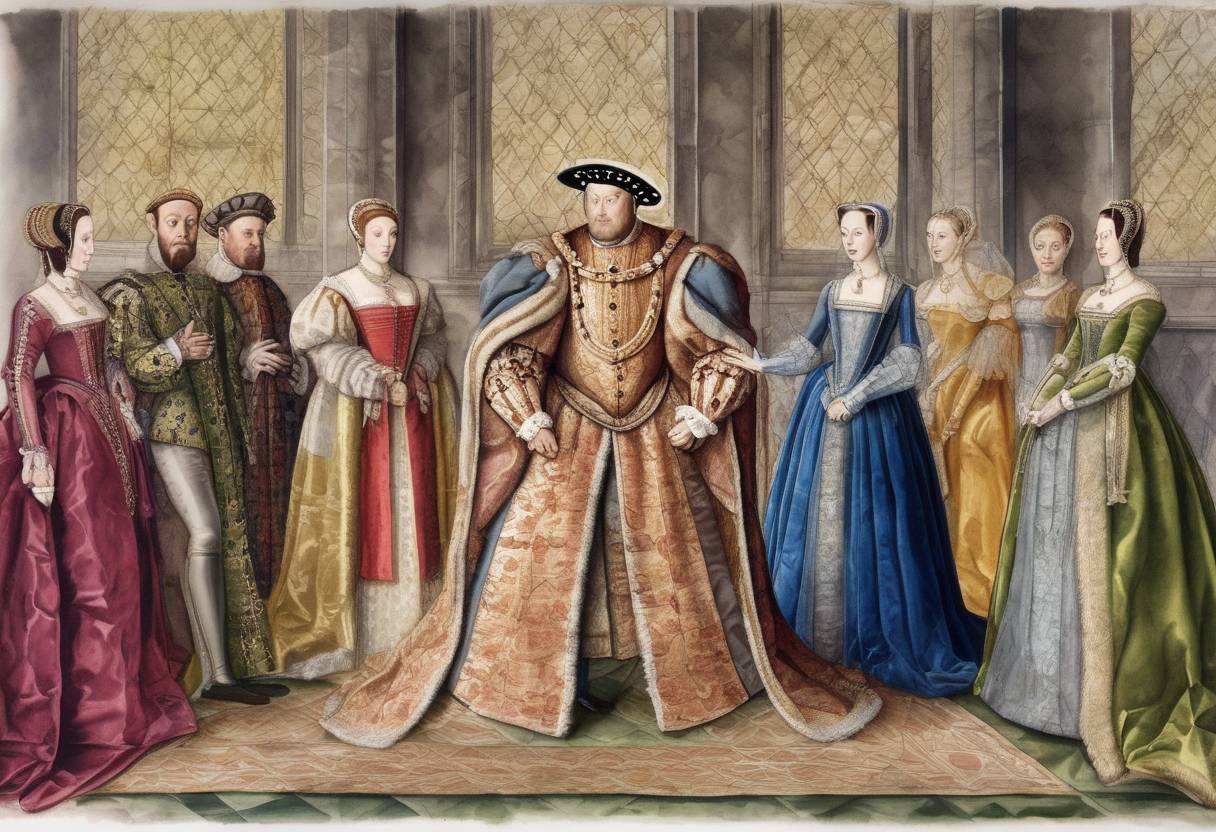
On July 12, 1543, King Henry VIII of England married his sixth and final wife, Catherine Parr. This marriage marked a significant chapter in the Tudor dynasty, not only because it was the last of Henry’s infamous series of marriages but also due to Catherine Parr’s influential role in the royal family and the broader English Reformation.
By the time of his marriage to Catherine Parr, Henry VIII was in his early fifties and had already been married five times. His previous marriages had ended in annulment, execution, or death, leaving a complex legacy of political and religious upheaval. Catherine Parr, a twice-widowed noblewoman, was known for her intelligence, strong Protestant faith, and diplomatic skills.
The marriage ceremony took place at Hampton Court Palace. Catherine Parr’s union with Henry was characterized by her role as a stabilizing influence in the king’s later years. She was not only a companion to the aging monarch but also played a crucial role in the royal family dynamics.
Catherine Parr outlived Henry VIII, who died in 1547. Her marriage to Henry was marked by her advocacy for religious reform and her ability to navigate the treacherous waters of Tudor politics. After Henry’s death, Catherine married Thomas Seymour, but she died in 1548 shortly after giving birth to her only child.
Catherine Parr’s legacy is significant in the context of the English Reformation and the Tudor succession. Her efforts in reconciling the royal family and promoting education had lasting impacts, particularly on Elizabeth I, who would become one of England’s most celebrated monarchs.
In summary, Catherine Parr’s marriage to Henry VIII was not only a personal union but also a pivotal moment in the history of the Tudor dynasty, reflecting the intricate interplay of politics, religion, and family dynamics in 16th-century England.
Source: en.wikipedia.org