The Signing of the Affordable Care Act: March 23, 2010
2010 · Washington, D.C., United States
President Barack Obama signs the Affordable Care Act into law, marking a significant overhaul of the U.S. healthcare system.
July 30, 1965
President Lyndon B. Johnson signs the Social Security Act of 1965 into law, establishing Medicare and Medicaid.
Washington, D.C., United States | U.S. Government
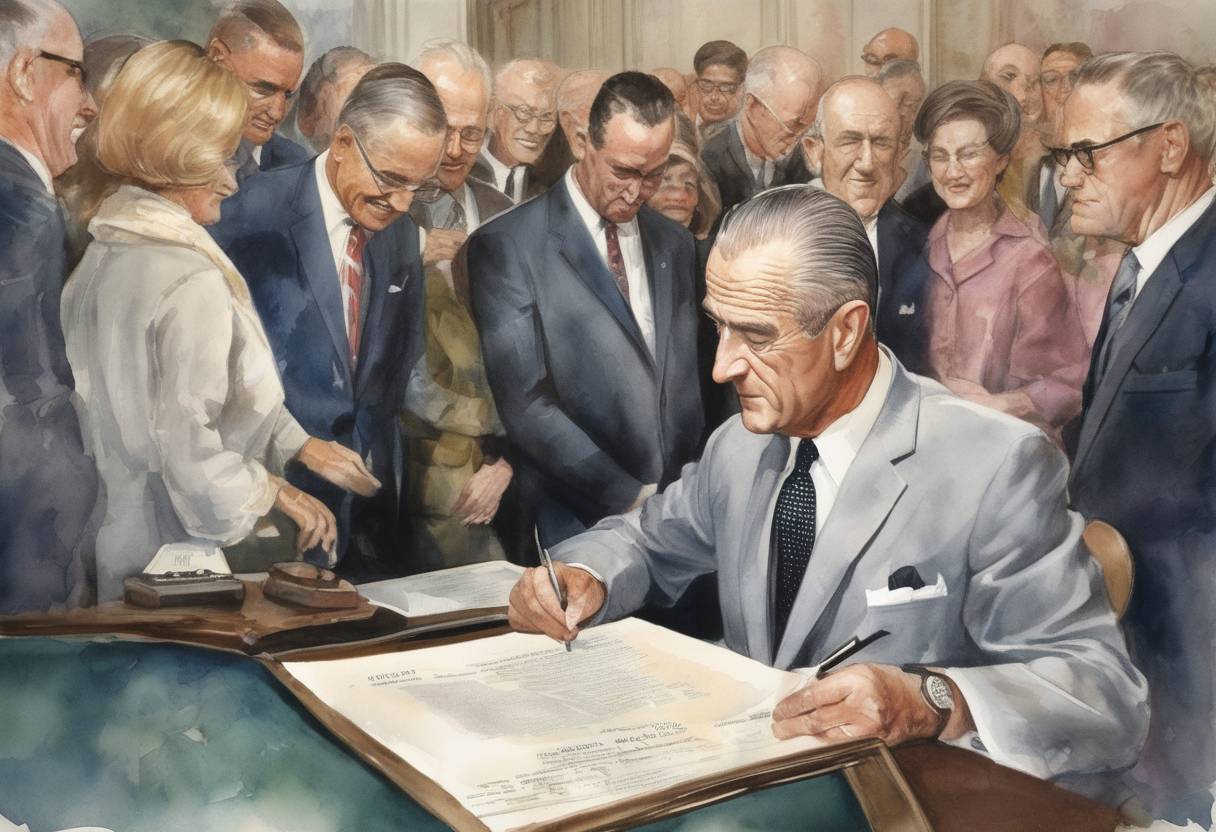
On July 30, 1965, President Lyndon B. Johnson signed the Social Security Act of 1965 into law, a landmark piece of legislation that established Medicare and Medicaid, two critical components of the American social safety net. The signing ceremony took place at the Harry S. Truman Library in Independence, Missouri, symbolically honoring former President Truman, who had first proposed a national health insurance program.
Post-War America: After World War II, the United States experienced significant economic growth and social change. However, many elderly Americans faced financial insecurity and lacked access to affordable healthcare.
Truman’s Proposal: In 1945, President Harry S. Truman proposed a national health insurance plan, but it faced strong opposition and was not enacted. His efforts laid the groundwork for future healthcare reforms.
Johnson’s Great Society: President Johnson, who assumed office after the assassination of John F. Kennedy, launched the “Great Society” initiative, aiming to eliminate poverty and racial injustice. Expanding healthcare access was a key component of this vision.
Medicare: This program was designed to provide health insurance to Americans aged 65 and older, regardless of income or medical history. It covered hospital and medical insurance, funded through payroll taxes.
Medicaid: This program offered federal funding to states to provide medical care for low-income individuals and families. It was a means-tested program, allowing states flexibility in administration.
Healthcare Access: Medicare and Medicaid significantly increased access to healthcare for millions of Americans, particularly the elderly and low-income populations, reducing the financial burden of medical expenses.
Political Landscape: The establishment of these programs marked a major expansion of the federal government’s role in healthcare, setting a precedent for future reforms.
Legacy: Over the decades, Medicare and Medicaid have become integral parts of the U.S. healthcare system, continually evolving to meet the needs of the population. They have also been subjects of ongoing political debate regarding funding and coverage.
Implementation Challenges: The rollout of Medicare and Medicaid faced initial challenges, including resistance from some healthcare providers and logistical hurdles in enrolling beneficiaries.
Long-term Effects: These programs have contributed to improved health outcomes and reduced poverty rates among the elderly and low-income groups. They remain central to discussions on healthcare policy and reform in the United States.
The signing of the Social Security Act of 1965 was a pivotal moment in American history, reflecting a commitment to social welfare and the belief that healthcare is a fundamental right for all citizens.
Source: en.wikipedia.org