Jacques Cartier and the Mapping of the Saint Lawrence River
1534 · Quebec, Canada
Jacques Cartier becomes the first European to describe and map the Saint Lawrence River.
April 20, 1534
Jacques Cartier sets sail on his first voyage to the New World, commissioned by King Francis I of France to explore the northern lands, which would later become Canada.
Saint-Malo, France | French Crown
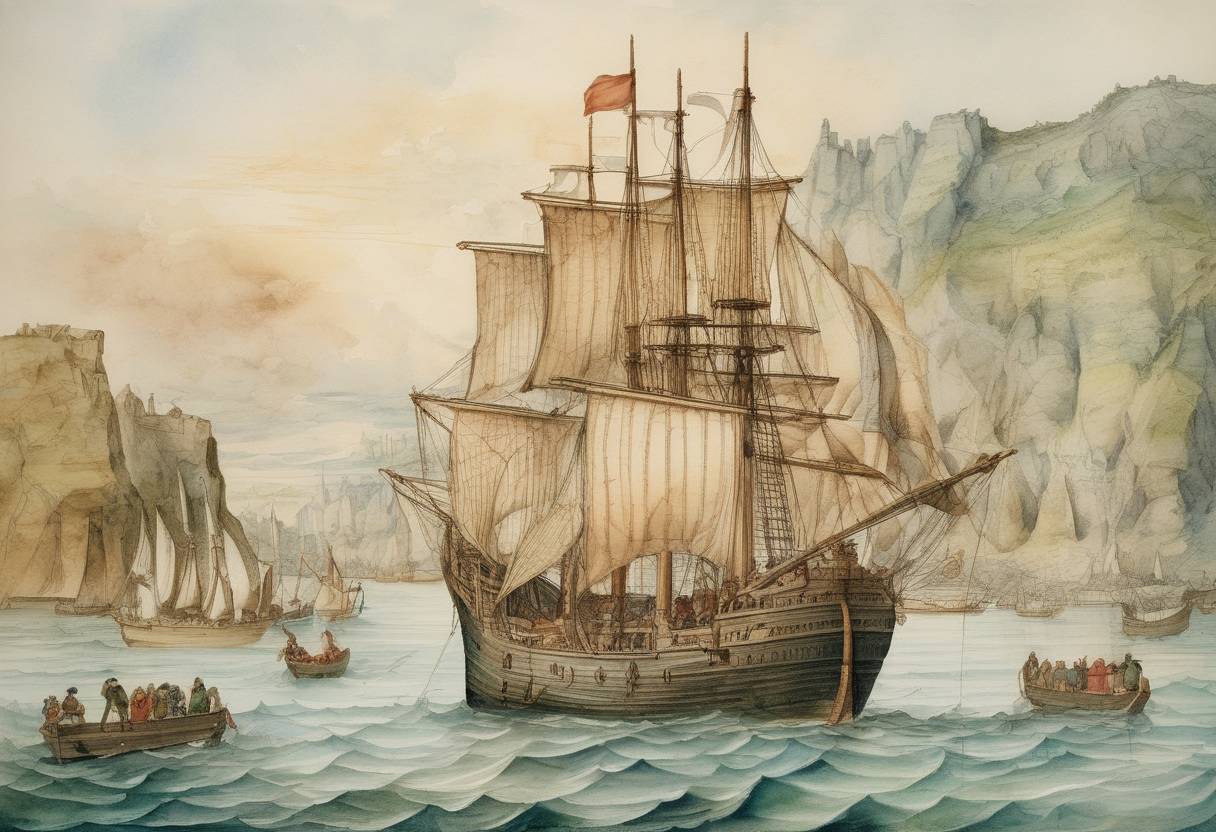
On April 20, 1534, Jacques Cartier, a French navigator and explorer, set sail from Saint-Malo, France, on his first voyage to the New World. This expedition was commissioned by King Francis I of France, who was eager to expand French influence and find new trade routes and resources in the northern lands, which would later become known as Canada.
During the early 16th century, European powers were fervently exploring the Americas, driven by the promise of wealth, new trade routes, and territorial expansion. France, under King Francis I, was keen to compete with Spain and Portugal, who had already established significant footholds in the New World. The king saw potential in the northern territories, which were largely unexplored by Europeans at the time.
Jacques Cartier, an experienced mariner from the port city of Saint-Malo, was chosen to lead this expedition. His mission was to explore the northern regions, search for a passage to Asia, and claim new lands for France.
Cartier departed with two ships and a crew of approximately 61 men. The journey across the Atlantic was challenging, but Cartier’s expertise in navigation and leadership ensured a successful crossing. By May 10, 1534, Cartier and his crew sighted the coast of Newfoundland, marking the beginning of their exploration of the Gulf of Saint Lawrence.
During the voyage, Cartier and his crew explored several key areas:
Cartier’s expedition was among the first European encounters with the indigenous peoples of the region, including the St. Lawrence Iroquoians. These interactions were marked by both curiosity and tension. Cartier’s crew traded European goods with the indigenous peoples, but misunderstandings and cultural differences occasionally led to conflicts.
Cartier returned to France in September 1534, bringing with him two sons of an Iroquoian chief, whom he had taken as an assurance of safe passage and future cooperation. His reports of the rich lands and potential resources in the New World intrigued King Francis I, leading to further expeditions.
Cartier’s first voyage laid the groundwork for subsequent French exploration and colonization in North America. His exploration of the Gulf of Saint Lawrence paved the way for the establishment of New France, which would become a significant part of the French colonial empire.
In summary, Jacques Cartier’s 1534 voyage was a pivotal moment in the history of exploration, marking the beginning of France’s enduring presence in North America and contributing to the broader narrative of European exploration and colonization of the New World.
Source: www.history.com