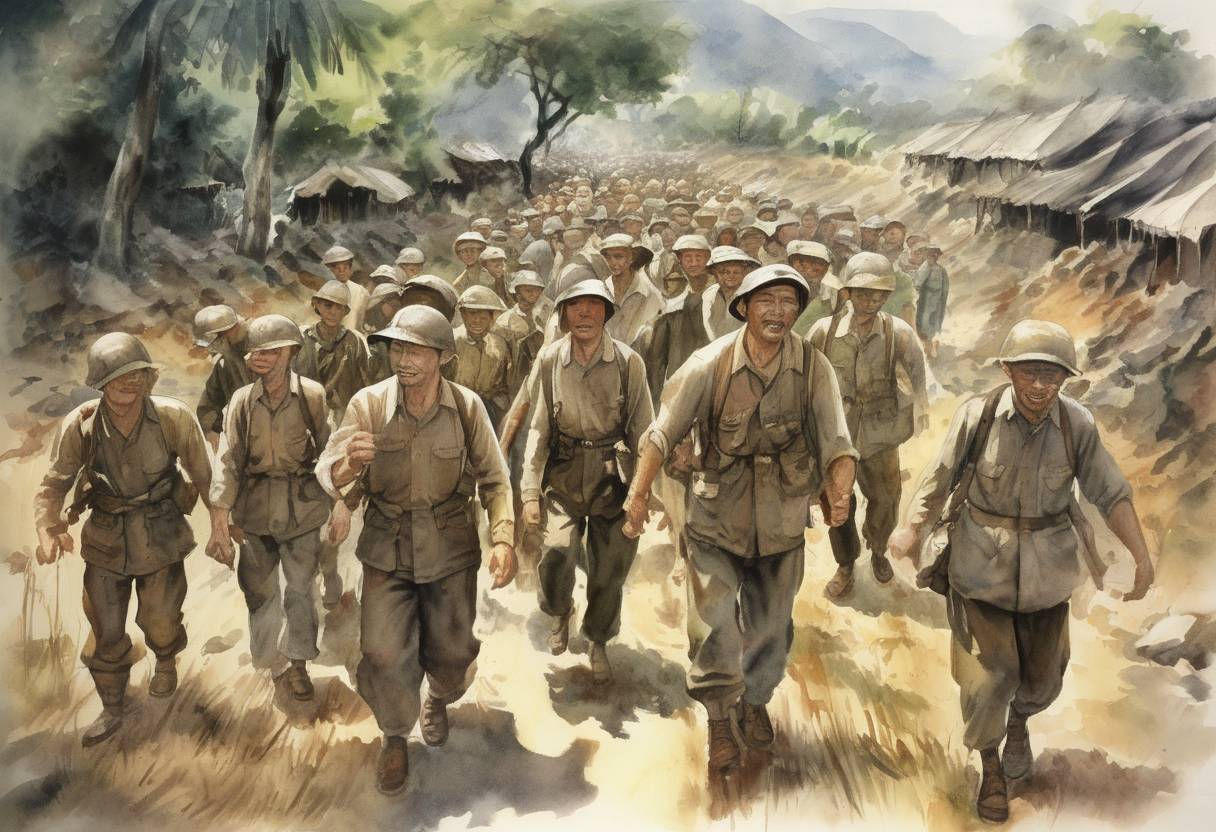
The Bataan Death March: April 9, 1942
On April 9, 1942, one of the most harrowing events of World War II began: the Bataan Death March. This forced transfer of American and Filipino prisoners of war (POWs) by the Imperial Japanese Army marked a significant and tragic moment in the Pacific Theater of the war.
Context and Prelude
- Location: The Bataan Peninsula is situated on the island of Luzon in the Philippines. It became a focal point of conflict following Japan’s attack on Pearl Harbor on December 7, 1941, which led to the United States’ entry into World War II.
- Battle of Bataan: The battle began on January 7, 1942, as Japanese forces launched an offensive to capture the peninsula. Despite being outnumbered and undersupplied, American and Filipino troops held out for three months.
- Surrender: On April 9, 1942, Major General Edward P. King Jr. surrendered approximately 76,000 troops (66,000 Filipinos and 10,000 Americans) to the Japanese, marking the largest surrender in American and Filipino military history.
The March
- Distance and Conditions: The prisoners were forced to march approximately 65 miles from Mariveles, at the southern tip of Bataan, to San Fernando. From there, they were transported by train to Capas and then marched another 9 miles to Camp O’Donnell.
- Brutality: The march was characterized by extreme brutality. Prisoners were subjected to physical abuse, denied food and water, and many were killed outright if they fell behind or attempted to escape.
- Casualties: It is estimated that thousands of soldiers died during the march due to exhaustion, dehydration, disease, and execution. The exact number remains uncertain, but estimates suggest that between 5,000 and 18,000 Filipino and 500 to 650 American soldiers perished.
Aftermath and Significance
- War Crimes: The Bataan Death March was later judged to be a war crime, and several Japanese officers were held accountable in post-war trials.
- Legacy: The event became a symbol of Japanese wartime atrocities and highlighted the brutal conditions faced by POWs in the Pacific. It also galvanized American resolve to defeat Japan.
- Commemoration: The march is commemorated annually in the Philippines and the United States, serving as a somber reminder of the sacrifices made by those who endured it.
The Bataan Death March remains a poignant chapter in the history of World War II, illustrating the severe hardships faced by soldiers and the enduring impact of wartime atrocities on collective memory.