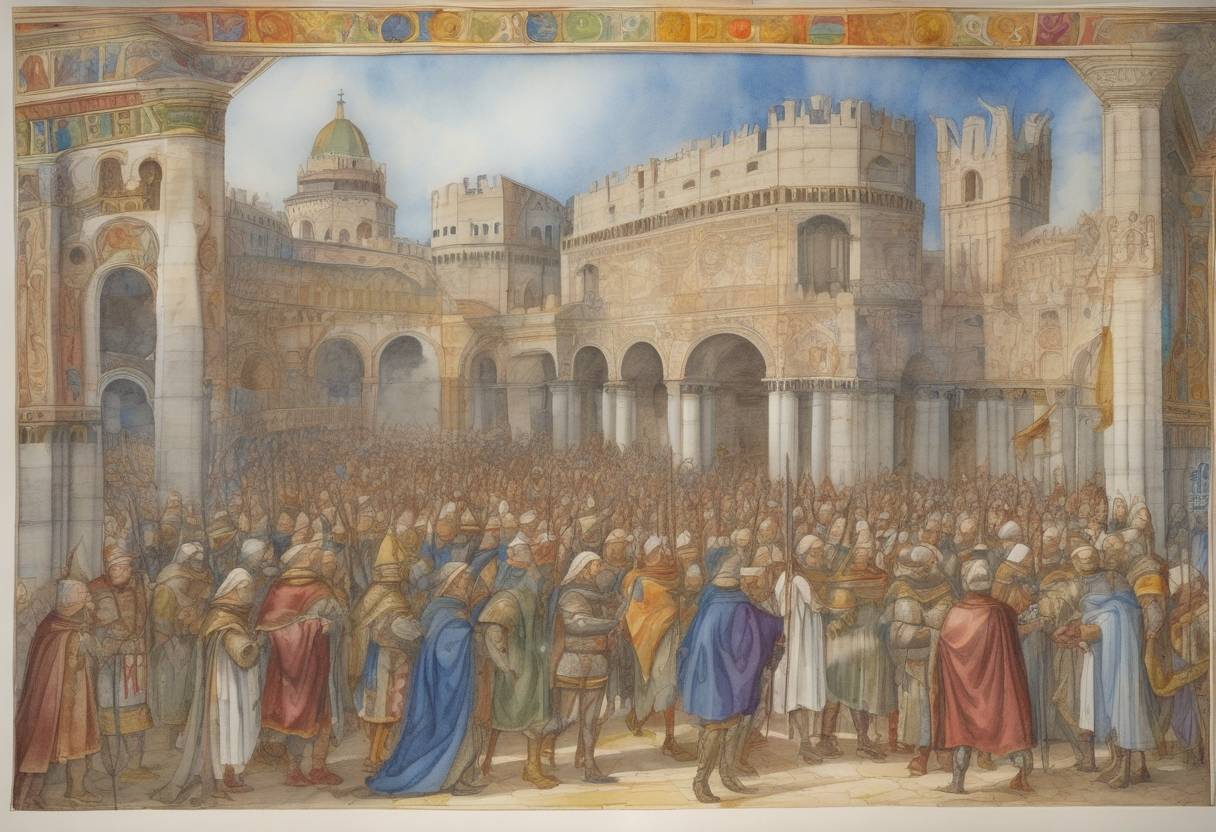
Capture of Ravenna - April 11, 1512
On April 11, 1512, during the War of the League of Cambrai, the forces of the Holy League, led by Pope Julius II, captured the city of Ravenna. This event was a significant episode in the Italian Wars, a series of conflicts involving various European powers vying for control over the Italian Peninsula.
Context and Background
The War of the League of Cambrai (1508–1516) was initially formed as an alliance against the Republic of Venice, comprising major European powers including France, the Papal States, and the Holy Roman Empire. However, the alliances shifted over time, and by 1511, Pope Julius II had formed the Holy League, which included Spain, the Holy Roman Empire, and England, to expel the French from Italy.
The Battle of Ravenna
Prelude: The French, under the command of Gaston de Foix, Duke of Nemours, had been successful in several engagements in Italy. However, the Holy League sought to reclaim territories and diminish French influence.
Forces Involved: The French army, led by Gaston de Foix, faced the combined forces of the Holy League, commanded by Ramón de Cardona, the Spanish Viceroy of Naples, and supported by Papal troops.
The Battle: The battle took place just outside the city of Ravenna. It was one of the bloodiest battles of the Italian Wars, characterized by the use of artillery and innovative tactics. Despite the French achieving a tactical victory on the battlefield, Gaston de Foix was killed, which significantly impacted French morale and leadership.
Aftermath and Consequences
Capture of Ravenna: Following the battle, the Holy League forces managed to capture the city of Ravenna. This marked a turning point as the French, despite their battlefield success, were unable to maintain their hold on the city due to the loss of their commander and subsequent strategic disadvantages.
Impact on the War: The death of Gaston de Foix and the capture of Ravenna weakened the French position in Italy. It allowed the Holy League to regain momentum and eventually led to the French retreat from the Italian Peninsula.
Broader Significance: The capture of Ravenna highlighted the shifting alliances and the volatile nature of the Italian Wars. It underscored the strategic importance of Italy in European politics and the persistent struggle for dominance among European powers.
The capture of Ravenna was a pivotal moment in the War of the League of Cambrai, demonstrating the complexities of early 16th-century European warfare and diplomacy.