Renaming of Saint Petersburg to Leningrad
1924 · Saint Petersburg, Russia
Saint Petersburg, Russia, was renamed Leningrad in honor of the late Soviet leader Vladimir Lenin.
March 13, 1881
Czar Alexander II of Russia was assassinated in Saint Petersburg by members of the revolutionary group Narodnaya Volya, leading to increased repression under his successor.
Saint Petersburg, Russia | Narodnaya Volya
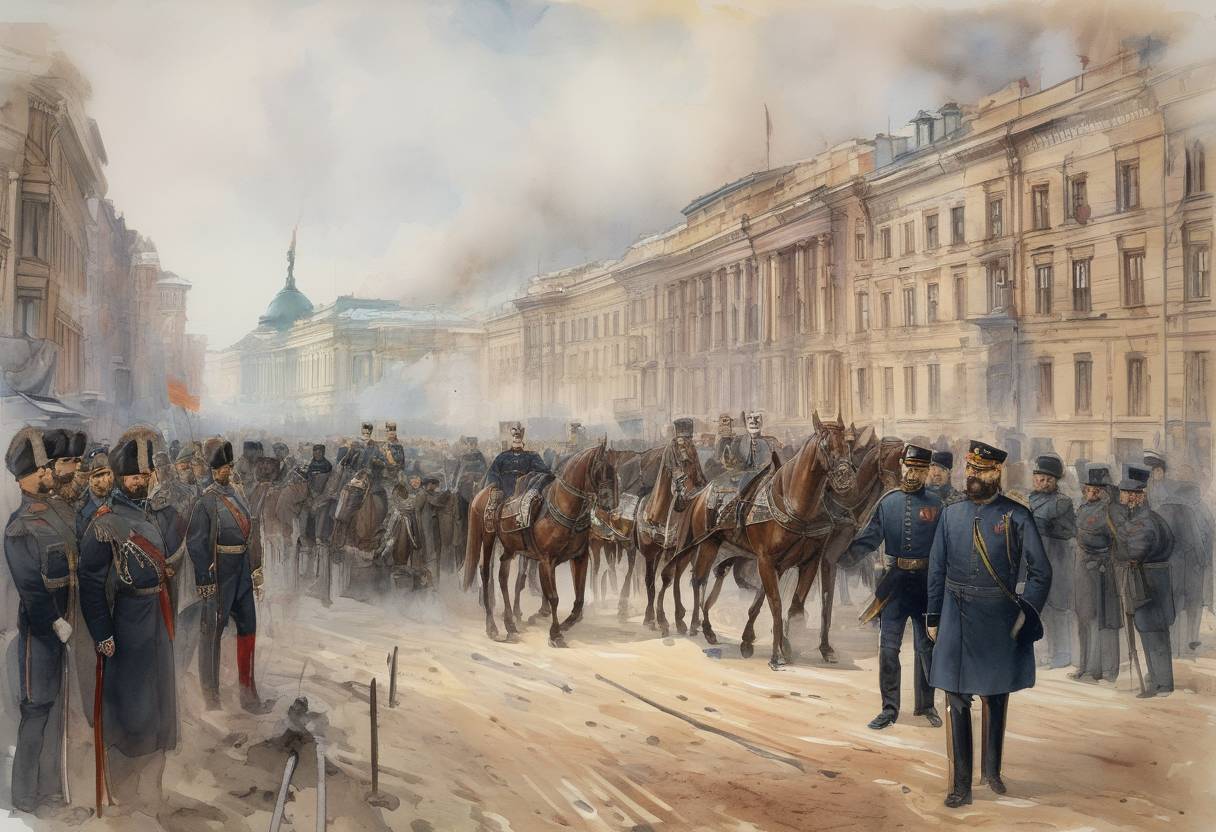
On March 13, 1881, Czar Alexander II of Russia was assassinated in Saint Petersburg by members of the revolutionary group Narodnaya Volya, or “People’s Will.” This event marked a significant turning point in Russian history, leading to increased repression under his successor, Alexander III.
Alexander II, known as the “Czar Liberator,” ascended to the throne in 1855 during the Crimean War. His reign was marked by a series of significant reforms, the most notable being the Emancipation Edict of 1861, which freed the serfs. Despite these reforms, Alexander II faced growing discontent from various segments of Russian society, including radical groups who sought more profound changes.
Narodnaya Volya was a revolutionary organization that emerged in the late 1870s. It was composed mainly of young intellectuals who believed in the use of terrorism to achieve political goals. They aimed to overthrow the autocratic regime and establish a socialist society. The group was responsible for several assassination attempts on Alexander II before their successful attack in 1881.
On the fateful day of March 13, 1881, Alexander II was traveling through the streets of Saint Petersburg in a closed carriage. Members of Narodnaya Volya had planned a coordinated attack. The first bomb, thrown by a member named Nikolai Rysakov, damaged the carriage but left the Czar unharmed. When Alexander II stepped out to inspect the damage, a second conspirator, Ignacy Hryniewiecki, threw another bomb, fatally wounding the Czar. He died shortly after reaching the Winter Palace.
The assassination of Alexander II had profound implications for Russia:
Repression Under Alexander III: Alexander II’s successor, Alexander III, ascended to the throne with a determination to strengthen autocratic rule. He rolled back many of his father’s reforms and implemented policies of increased repression, censorship, and surveillance to quell revolutionary activities.
Impact on Revolutionary Movements: The assassination intensified the government’s crackdown on revolutionary groups, leading to arrests and executions of many Narodnaya Volya members. However, it also inspired future generations of revolutionaries, contributing to the eventual rise of the Bolsheviks and the Russian Revolution of 1917.
Legacy of Alexander II: Despite his assassination, Alexander II’s legacy as a reformer endured. His efforts to modernize Russia and address social issues laid the groundwork for future changes, even as his death highlighted the deep-seated tensions within Russian society.
The assassination of Alexander II remains a pivotal moment in Russian history, symbolizing the clash between reform and reaction, and setting the stage for the tumultuous events that would follow in the early 20th century.
Source: en.wikipedia.org