1887 · Northeast United States, United States
A week-long blizzard kills over 200 people in Northeast United States.
March 11, 1888
The Great Blizzard of 1888 began along the eastern United States, eventually becoming one of the most severe recorded blizzards in U.S. history.
New York City, United States | National Weather Service
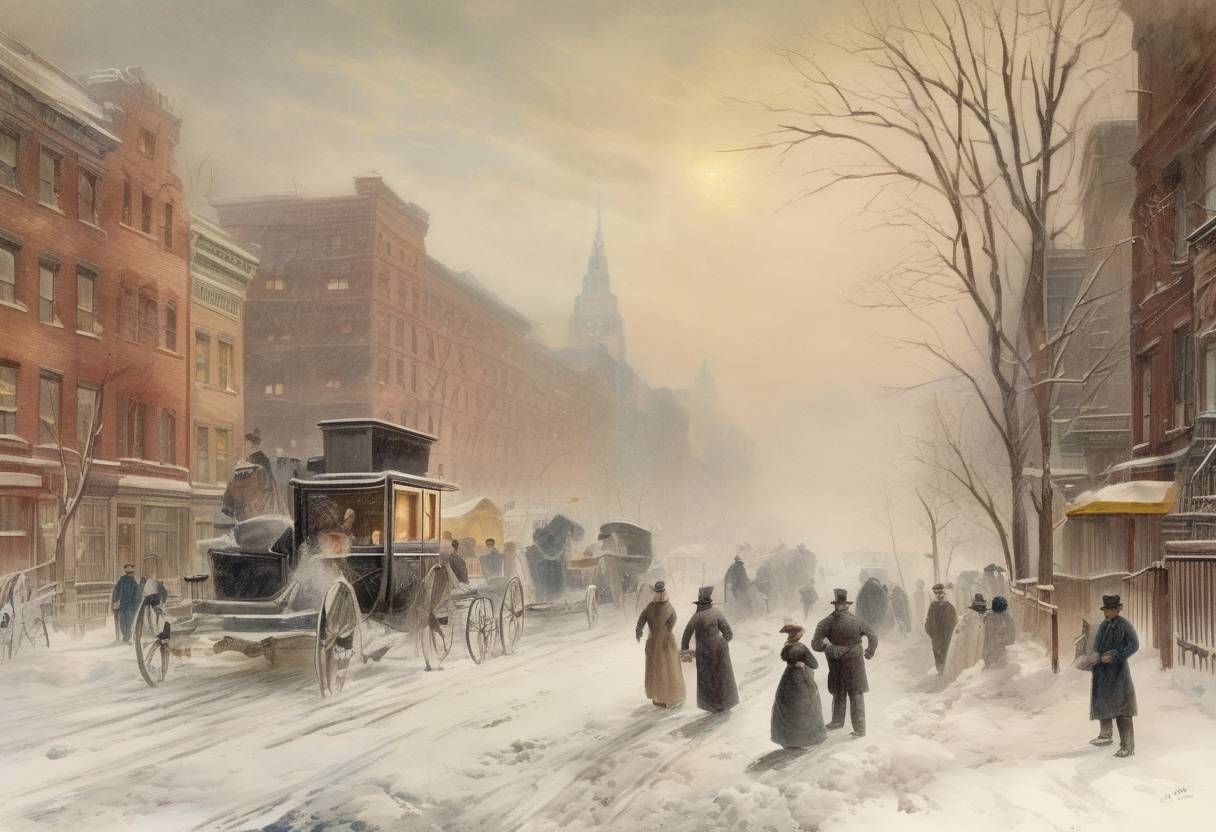
On March 11, 1888, one of the most severe blizzards in U.S. history, known as the Great Blizzard of 1888, began to unfold along the eastern United States. This catastrophic weather event, also referred to as the “Great White Hurricane,” lasted until March 14, 1888, and had a profound impact on the region, particularly the northeastern states.
Prior to the blizzard, the northeastern United States experienced relatively mild weather, which contributed to the storm’s unexpected severity. The blizzard was the result of a collision between a warm, moist air mass from the Gulf of Mexico and a cold, dry air mass from Canada. This interaction created a powerful nor’easter that brought heavy snowfall, strong winds, and frigid temperatures.
Snowfall and Winds: The blizzard dumped between 20 to 60 inches of snow across the affected areas, with drifts reaching up to 50 feet in some locations due to winds exceeding 45 miles per hour. New York City, Albany, and New Haven were among the hardest-hit cities.
Transportation Disruption: The storm paralyzed transportation systems, with railroads and telegraph lines severely disrupted. In New York City, elevated trains were immobilized, and horse-drawn streetcars were unable to operate, leaving thousands stranded.
Casualties and Damage: The blizzard resulted in over 400 fatalities, with many deaths attributed to exposure and accidents. The economic impact was significant, with damages estimated in the millions of dollars (in 1888 currency).
The Great Blizzard of 1888 had lasting effects on infrastructure and urban planning:
Underground Utilities: The storm highlighted the vulnerability of above-ground utility lines, leading to the eventual burial of telegraph and telephone lines in many cities to prevent future disruptions.
Subway Development: The blizzard underscored the need for more reliable transportation systems, accelerating the development of underground subways in major cities like New York.
Emergency Preparedness: The disaster prompted improvements in weather forecasting and emergency response strategies, as communities recognized the importance of better preparation for severe weather events.
The Great Blizzard of 1888 remains a pivotal event in U.S. history, illustrating the power of natural forces and the necessity for resilient infrastructure. It serves as a reminder of the challenges posed by extreme weather and the importance of adapting urban environments to withstand such events.
The blizzard’s impact on transportation, communication, and urban planning continues to be studied as a case of how societies can learn from natural disasters to improve safety and efficiency in the face of future challenges.
Source: en.wikipedia.org