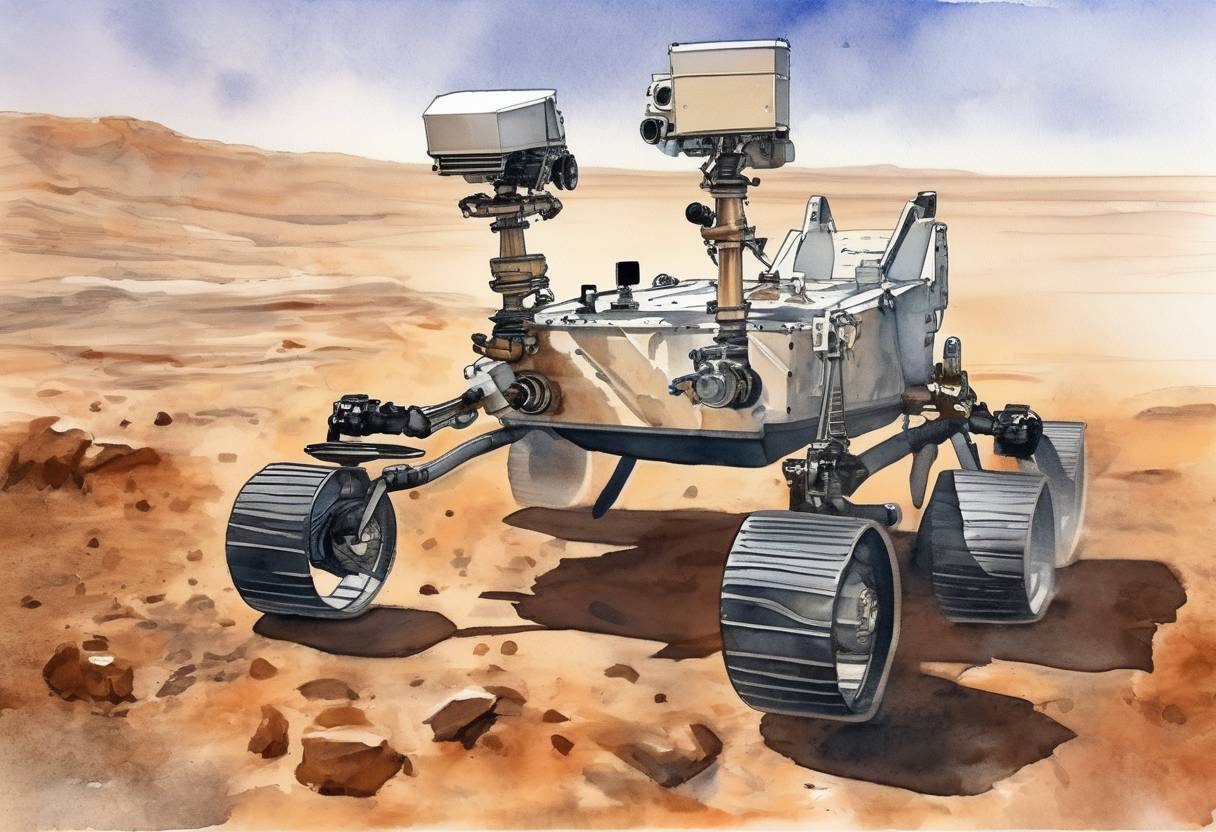
NASA’s Mars Rover Spirit Lands on Mars - January 4, 2004
On January 4, 2004, NASA’s Mars Exploration Rover Spirit successfully landed on the Martian surface, marking the beginning of a groundbreaking mission to explore the Red Planet. This event was a significant milestone in space exploration, as it provided unprecedented insights into Mars’ geology and potential for past life.
Background
The Mars Exploration Rover mission was part of NASA’s Mars Exploration Program, which aimed to understand Mars’ climate, geology, and potential for life. Spirit, along with its twin rover Opportunity, was launched to investigate the history of water on Mars, a critical factor in assessing the planet’s habitability.
Launch and Journey
- Launch Date: Spirit was launched on June 10, 2003, aboard a Delta II rocket from Cape Canaveral Air Force Station in Florida.
- Travel Duration: The rover traveled approximately 487 million kilometers (about 302 million miles) over nearly seven months to reach Mars.
Landing
- Landing Site: Spirit landed in Gusev Crater, a location believed to have once held a lake, making it an ideal site for studying past water activity.
- Landing Method: The rover used a combination of parachutes, retrorockets, and airbags to safely touch down on the Martian surface. This innovative landing technique allowed Spirit to bounce and roll to a stop, minimizing the impact forces.
Mission Objectives
Spirit’s primary objectives included:
- Geological Survey: Analyze rocks and soil to understand the planet’s history and geological processes.
- Search for Water: Investigate the presence and history of water on Mars.
- Atmospheric Studies: Conduct experiments to study the Martian atmosphere and climate.
- Surface Exploration: Capture high-resolution images and data to map the Martian terrain.
Achievements and Discoveries
- Initial Success: Spirit began its mission by sending back detailed images of its surroundings, providing scientists with valuable data about the Martian landscape.
- Scientific Discoveries: The rover discovered evidence of past water activity, including the presence of minerals that form in water, such as hematite.
- Extended Mission: Originally planned for a 90-sol mission (a sol is a Martian day, approximately 24 hours and 39 minutes), Spirit continued to operate for over six years, far exceeding expectations.
Aftermath and Legacy
Spirit’s mission officially ended on May 25, 2011, after it ceased communication in March 2010. Despite its eventual loss, Spirit’s contributions to Mars exploration were profound:
- Enhanced Understanding: The data collected by Spirit significantly advanced our understanding of Mars’ geological history and the role of water on the planet.
- Technological Innovations: The mission demonstrated the effectiveness of robotic exploration and paved the way for future missions, including the Mars Science Laboratory Curiosity and the Mars 2020 Perseverance rover.
Spirit’s successful landing and mission marked a pivotal moment in the exploration of Mars, inspiring continued interest and investment in uncovering the mysteries of our neighboring planet.