Argentina Declares Independence from Spain: July 9, 1816
1816 · San Miguel de Tucumán, Argentina
Argentina declares independence from Spain.
July 5, 1811
Venezuela declared independence from Spain, marking the beginning of the Venezuelan War of Independence.
Caracas, Venezuela | First Venezuelan Republic
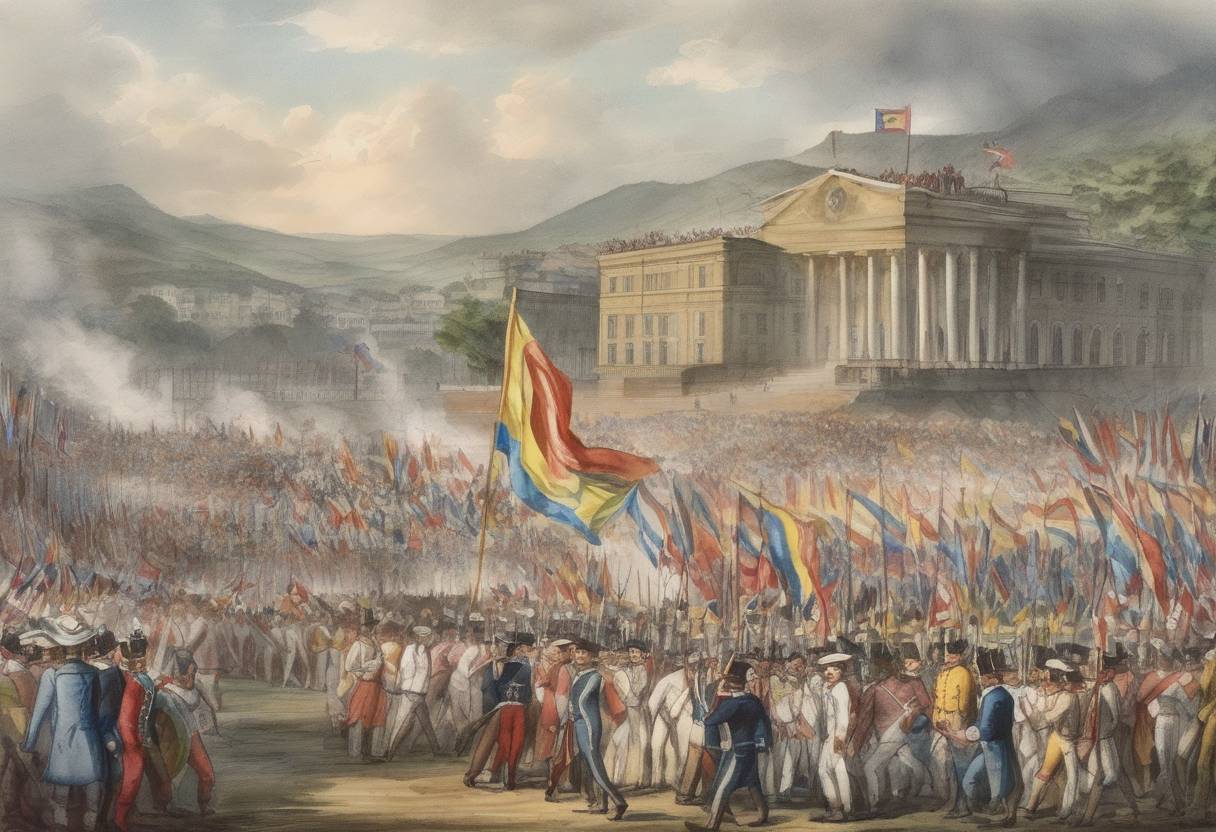
On July 5, 1811, Venezuela took a decisive step in its quest for sovereignty by declaring independence from Spanish colonial rule. This momentous event marked the beginning of the Venezuelan War of Independence, a crucial chapter in the broader Spanish American wars of independence.
Colonial Rule: Venezuela had been under Spanish control since the early 16th century. By the early 19th century, dissatisfaction with Spanish rule was growing due to economic restrictions, social inequalities, and the influence of Enlightenment ideas.
Napoleonic Wars: The Napoleonic invasion of Spain in 1808 and the subsequent abdication of King Ferdinand VII created a power vacuum and political instability in Spain, which reverberated across its colonies.
Local Movements: Inspired by the American and French revolutions, local movements in Venezuela began advocating for greater autonomy and self-governance. The Caracas Junta, established on April 19, 1810, was a pivotal precursor to independence, as it rejected the authority of the Spanish regency.
First Congress of Venezuela: Convened in March 1811, the Congress of Venezuela was composed of representatives from various provinces. It was tasked with determining the future political status of the region.
Declaration of Independence: On July 5, 1811, the Congress formally declared Venezuela’s independence from Spain. The declaration was influenced by Enlightenment principles and articulated a vision of a sovereign nation free from colonial domination.
Signatories: The declaration was signed by prominent figures, including Francisco de Miranda, a key leader in the independence movement, and other influential Venezuelan patriots.
Economic and Social Strains: The Spanish colonial system imposed heavy taxes and trade restrictions, which stifled economic growth and fueled resentment among the Creole elite and other social groups.
Influence of Revolutionary Ideas: The spread of Enlightenment ideas and the success of other independence movements provided ideological support for the Venezuelan cause.
Venezuelan War of Independence: The declaration marked the beginning of a protracted and bloody conflict against Spanish forces, lasting until 1823. The war was characterized by significant battles and shifting alliances.
Role of Simón Bolívar: Known as “El Libertador,” Simón Bolívar emerged as a central figure in the struggle for independence, not only in Venezuela but across Latin America.
Legacy: The declaration set a precedent for other Spanish colonies in South America, contributing to a wave of independence movements that reshaped the continent.
End of Colonial Rule: The Venezuelan Declaration of Independence was a critical step in the dismantling of Spanish colonial power in the Americas.
Formation of New Nations: It paved the way for the establishment of new, independent nations in Latin America, fundamentally altering the political landscape of the region.
The events of July 5, 1811, remain a cornerstone of Venezuelan national identity and are celebrated annually as a symbol of the country’s enduring quest for freedom and self-determination.
Source: en.wikipedia.org