King Louis XVI's Trial for Treason
1792 · Paris, France
King Louis XVI of France is put on trial for treason by the National Convention during the French Revolution.
July 17, 1791
The Champ de Mars massacre occurred in Paris when the National Guard fired on a crowd of republican protesters, killing dozens.
Paris, France | National Guard
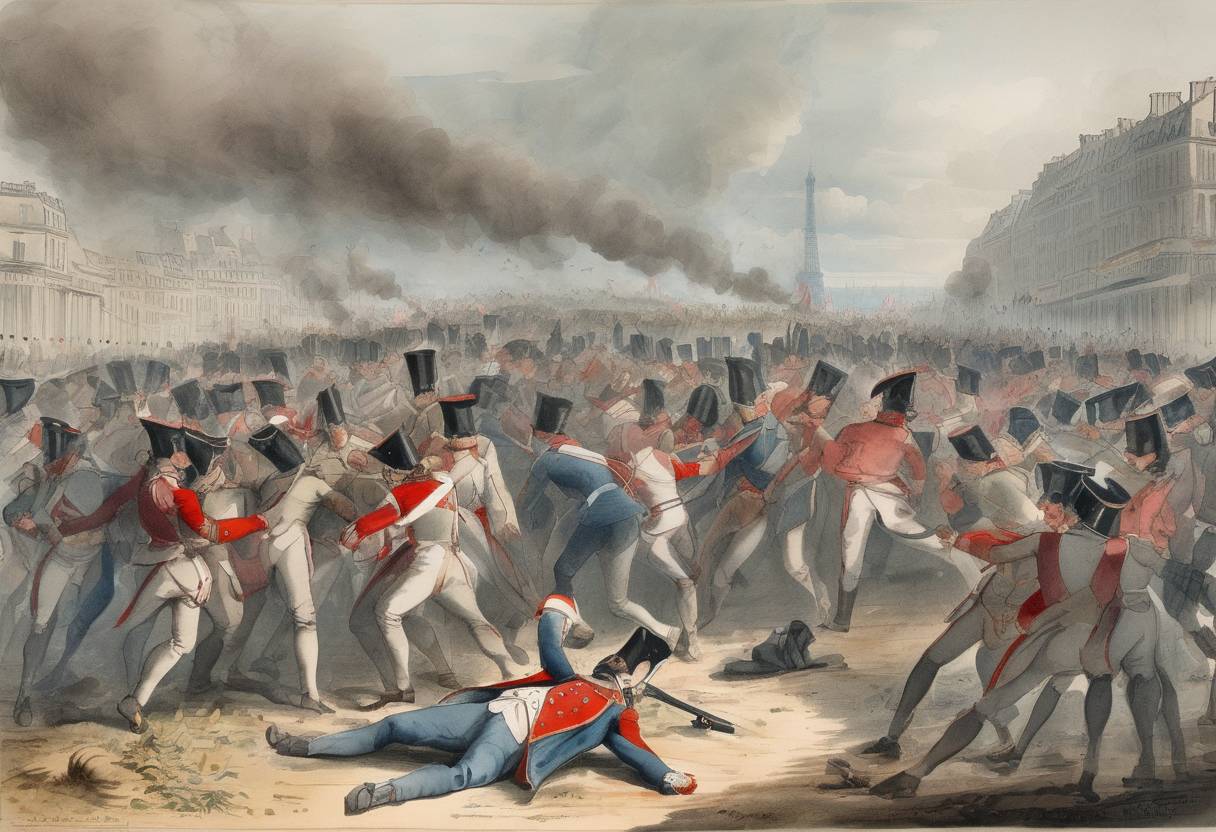
The Champ de Mars Massacre was a significant and tragic event during the French Revolution, occurring on July 17, 1791, in Paris. It marked a pivotal moment in the revolutionary period, highlighting the deepening divisions within French society and the revolutionary movement itself.
The French Revolution, which began in 1789, was a period of radical social and political upheaval in France. By 1791, the revolution had already seen the fall of the Bastille, the abolition of feudal privileges, and the establishment of a constitutional monarchy. However, tensions were rising between different factions with varying visions for France’s future.
In June 1791, King Louis XVI and his family attempted to flee Paris in what became known as the Flight to Varennes. This event severely undermined the king’s credibility and fueled republican sentiments among the populace, who increasingly viewed the monarchy as a threat to the revolution.
On July 17, 1791, a large crowd gathered at the Champ de Mars, a public greenspace in Paris, to sign a petition demanding the abdication of King Louis XVI. The petition was organized by the radical Cordeliers Club and other republican groups who sought to push the revolution towards a republic, eliminating the monarchy altogether.
Fearing unrest and potential violence, the National Constituent Assembly, which was dominated by more moderate revolutionaries, declared martial law. The National Guard, commanded by the Marquis de Lafayette, was deployed to maintain order.
As tensions escalated, the National Guard attempted to disperse the crowd. The situation quickly deteriorated, and the guardsmen opened fire on the protesters. The exact number of casualties is uncertain, but it is estimated that dozens were killed, and many more were injured.
The Champ de Mars Massacre had profound implications for the French Revolution:
Polarization: The massacre deepened the divide between the revolution’s moderates and radicals. It alienated many who had previously supported the constitutional monarchy and pushed them towards more radical republicanism.
Public Opinion: The event damaged the reputation of the National Guard and Lafayette, who was seen as a hero of the early revolution. It also intensified distrust towards the Assembly and the monarchy.
Revolutionary Momentum: The massacre galvanized radical elements within the revolution, leading to increased demands for the establishment of a republic and the eventual downfall of the monarchy.
Political Repression: In the immediate aftermath, the government cracked down on radical groups, censoring newspapers and arresting leaders, which only fueled further dissent.
The Champ de Mars Massacre is remembered as a turning point in the French Revolution, illustrating the volatile nature of revolutionary politics and the growing rift between different revolutionary factions. It set the stage for the more radical phases of the revolution, including the rise of the Jacobins and the eventual execution of King Louis XVI.
Source: en.wikipedia.org