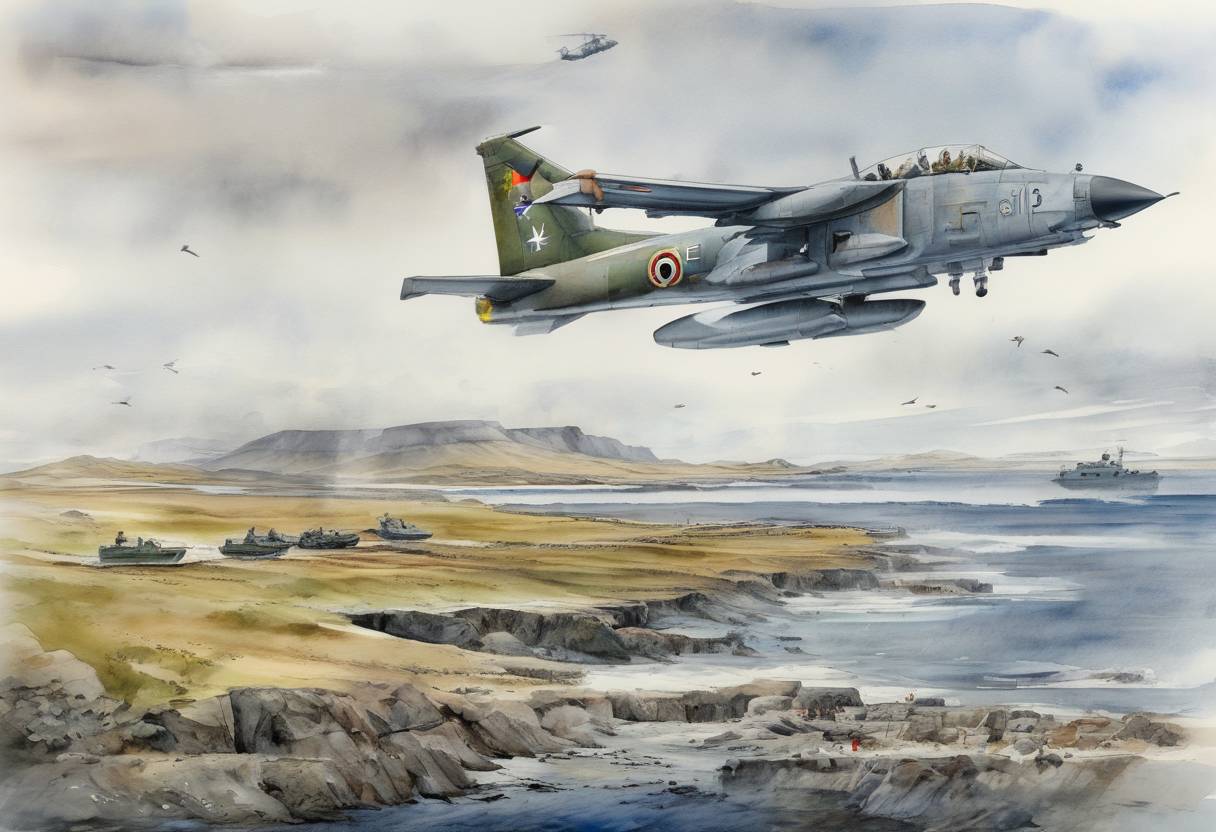
The End of the Falklands War: June 14, 1982
The Falklands War, a ten-week conflict between Argentina and the United Kingdom, concluded on June 14, 1982, with the British forces successfully retaking the islands. This war was primarily fought over the disputed sovereignty of the Falkland Islands, a remote South Atlantic archipelago.
Background
The origins of the conflict can be traced back to long-standing territorial claims. Argentina had claimed the Falkland Islands (known as Islas Malvinas in Spanish) since the early 19th century, asserting that they inherited the islands from Spain upon gaining independence. The United Kingdom, however, had maintained control over the islands since 1833, establishing a British settlement and administration.
Tensions escalated in the late 20th century, driven by nationalistic fervor in Argentina and economic challenges faced by the ruling military junta. On April 2, 1982, Argentina invaded the Falkland Islands, capturing the capital, Port Stanley, and prompting a swift response from the UK.
Key Events Leading to the End of the War
British Naval Task Force: In response to the invasion, the UK dispatched a naval task force to the South Atlantic, marking the beginning of military operations to reclaim the islands.
Major Battles: The conflict saw several significant battles, including the Battle of Goose Green and the Battle of Mount Tumbledown. These engagements were characterized by fierce ground combat and strategic maneuvers.
Diplomatic Efforts: Throughout the conflict, there were attempts at diplomatic resolution, but these were largely unsuccessful due to the entrenched positions of both nations regarding sovereignty.
Sinking of the Belgrano: A pivotal moment occurred on May 2, 1982, when the British submarine HMS Conqueror sank the Argentine cruiser ARA General Belgrano. This event had significant military and political ramifications, intensifying the conflict.
The Conclusion of the War
On June 14, 1982, after weeks of intense fighting, Argentine forces in the Falkland Islands surrendered to the British. The formal surrender was signed in Port Stanley, effectively ending hostilities. The British victory was marked by the raising of the Union Jack over the islands.
Aftermath and Significance
Political Impact in Argentina: The defeat had profound consequences for Argentina, leading to the fall of the ruling military junta and paving the way for the country’s return to democratic governance.
British Political Landscape: In the UK, the successful campaign bolstered the government of Prime Minister Margaret Thatcher, enhancing her political standing and contributing to her re-election in 1983.
Ongoing Dispute: Despite the end of the war, the sovereignty of the Falkland Islands remains a contentious issue. Argentina continues to claim the islands, although they remain under British control.
Military Lessons: The conflict highlighted the importance of naval power, air superiority, and logistical support in modern warfare, influencing military strategies in subsequent years.
The Falklands War remains a significant episode in 20th-century history, illustrating the complexities of territorial disputes and the enduring impact of colonial legacies.