Topping Out of the North Tower of the World Trade Center
1970 · New York City, United States
The North Tower of the World Trade Center in New York City is topped out at 1,368 feet, making it the tallest building in the world at the time.
May 1, 1931
The Empire State Building was officially opened in New York City, becoming the tallest building in the world at the time.
New York City, United States | Empire State Inc.
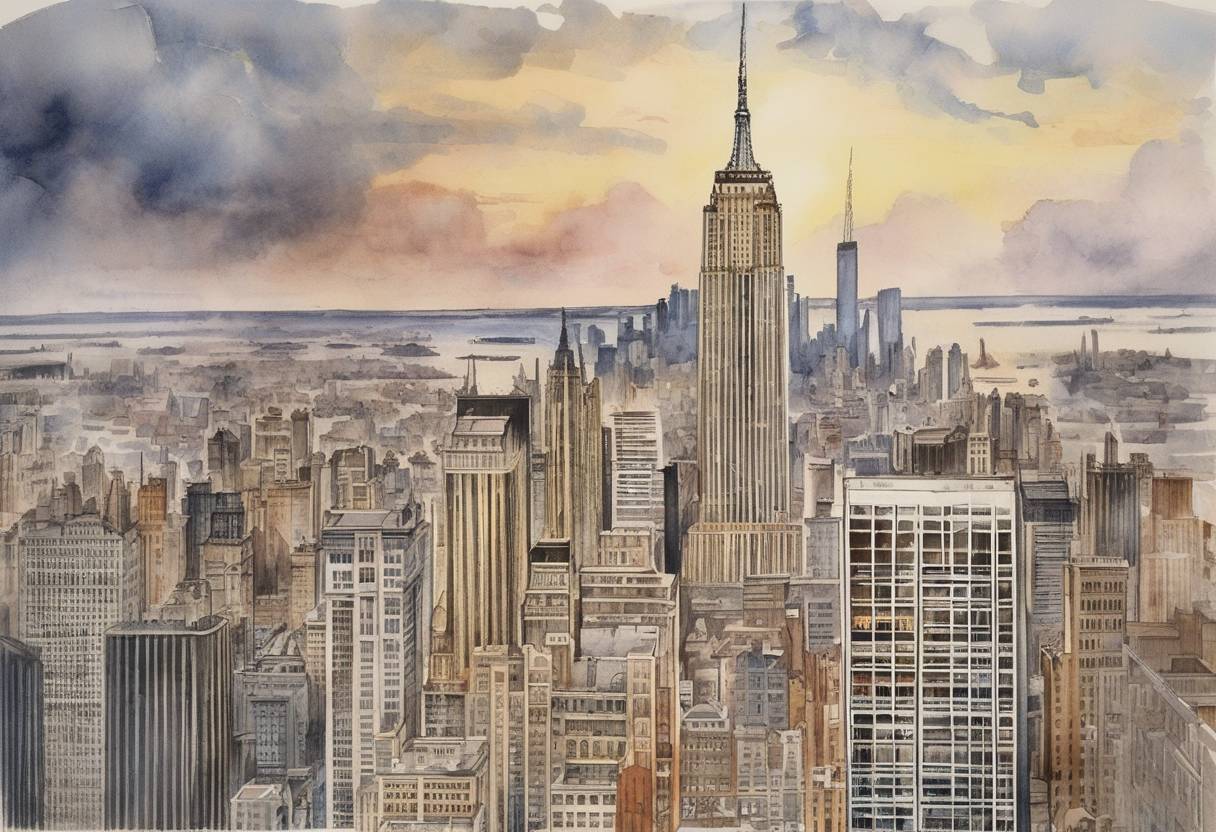
On May 1, 1931, the Empire State Building was officially opened in New York City, marking a significant milestone in architectural and engineering history. At the time of its completion, it became the tallest building in the world, a title it held for nearly four decades.
Design and Planning: The Empire State Building was designed by the architectural firm Shreve, Lamb & Harmon. The building’s Art Deco style was typical of the era, characterized by its sleek lines and modern aesthetic.
Construction Timeline: Construction began on March 17, 1930, and remarkably, the building was completed in just over a year. This rapid construction pace was achieved through innovative techniques and the employment of thousands of workers.
Height and Structure: Standing at 1,250 feet (381 meters) tall, the Empire State Building surpassed the Chrysler Building, which had briefly held the title of the world’s tallest building. The structure comprises 102 stories and was built using a steel frame, allowing for its unprecedented height.
Official Opening: The building was officially opened on May 1, 1931, by President Herbert Hoover, who turned on the building’s lights remotely from Washington, D.C., symbolizing its readiness for occupancy.
Public Reception: The opening was a significant event, celebrated with much fanfare. However, the building initially struggled to attract tenants due to the Great Depression, leading some to dub it the “Empty State Building.”
Architectural Achievement: The Empire State Building was a marvel of modern engineering and design, showcasing the capabilities of American architecture during the early 20th century.
Cultural Icon: Over the years, the building has become an iconic symbol of New York City and American ambition. It has been featured in numerous films, photographs, and artworks, cementing its place in popular culture.
Economic Impact: Despite its early struggles, the building eventually became a profitable venture and a major tourist attraction, contributing significantly to New York City’s economy.
The Empire State Building remained the tallest building in the world until the completion of the North Tower of the World Trade Center in 1970. Today, it continues to be a beloved landmark, attracting millions of visitors each year who come to admire its stunning views and historical significance.
In summary, the opening of the Empire State Building on May 1, 1931, was a landmark event in architectural history, representing both the technological advancements of the era and the enduring spirit of innovation.
Source: en.wikipedia.org