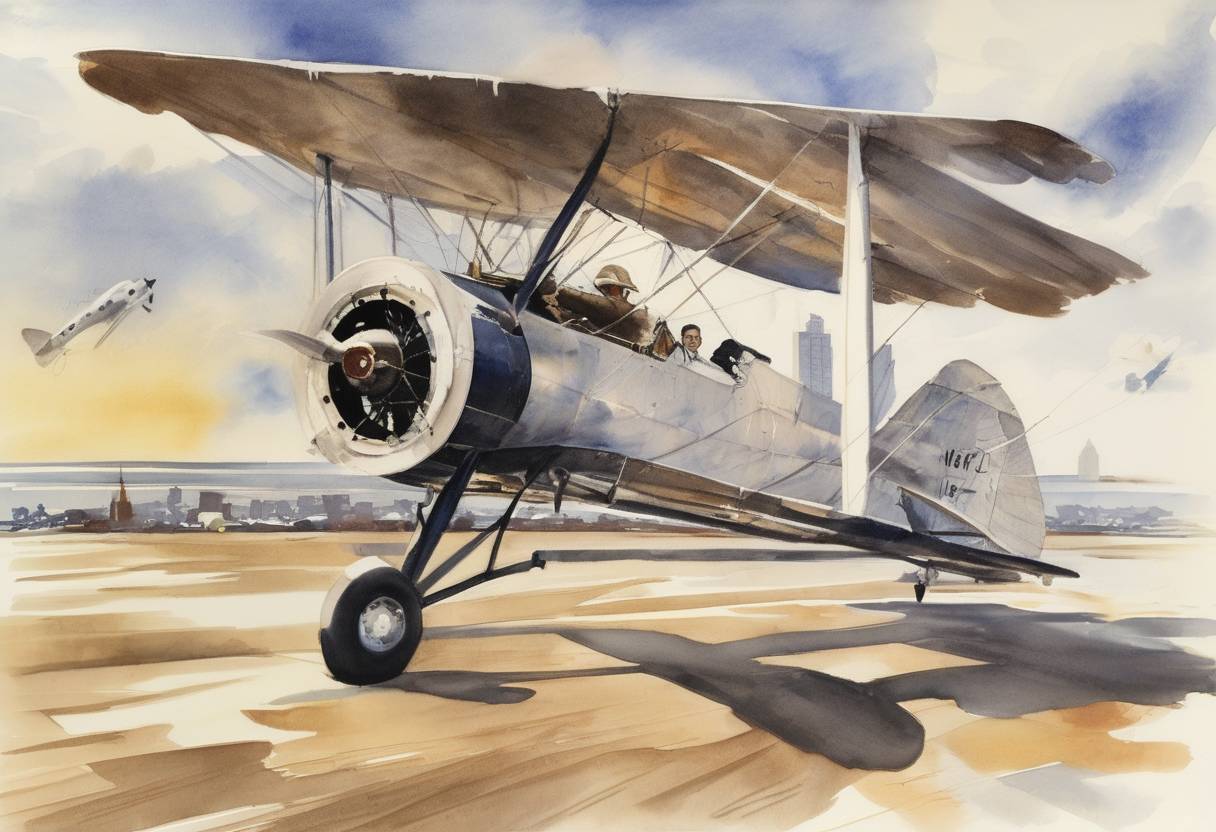
Wiley Post’s Solo Flight Around the World
On July 22, 1933, Wiley Post made history by becoming the first person to fly solo around the world. This remarkable achievement was completed in 7 days, 18 hours, and 49 minutes, marking a significant milestone in aviation history.
Background
Wiley Post was an American aviator known for his pioneering flights and contributions to aviation technology. Before his solo circumnavigation, Post had already gained fame for flying around the world with navigator Harold Gatty in 1931. This earlier journey took 8 days, 15 hours, and 51 minutes, setting a world record at the time.
The Journey
Aircraft: Post flew a Lockheed Vega 5B, named the “Winnie Mae,” which was equipped with advanced navigational instruments for the time, including an autopilot and a radio direction finder. These innovations were crucial for solo navigation over vast distances.
Route: Post’s journey began and ended at Floyd Bennett Field in New York. His route took him across the Atlantic Ocean to Berlin, then through the Soviet Union, over Siberia, across the Pacific Ocean to Alaska, and finally back to New York.
Challenges: The flight was fraught with challenges, including adverse weather conditions, mechanical issues, and the inherent difficulties of navigating solo over long distances. Despite these obstacles, Post’s skill and determination saw him through.
Significance
Wiley Post’s solo flight around the world was a testament to human ingenuity and the spirit of exploration. It demonstrated the potential of long-distance air travel and the importance of technological advancements in aviation. Post’s journey also paved the way for future developments in flight navigation and aircraft design.
Aftermath
Post continued to contribute to aviation after his historic flight. He was involved in high-altitude flight research and worked on developing the pressure suit, which would later influence the design of space suits. Tragically, Post’s life was cut short in 1935 when he died in a plane crash in Alaska alongside humorist Will Rogers.
Wiley Post’s legacy endures as a pioneer who pushed the boundaries of what was possible in aviation, inspiring future generations of aviators and explorers.