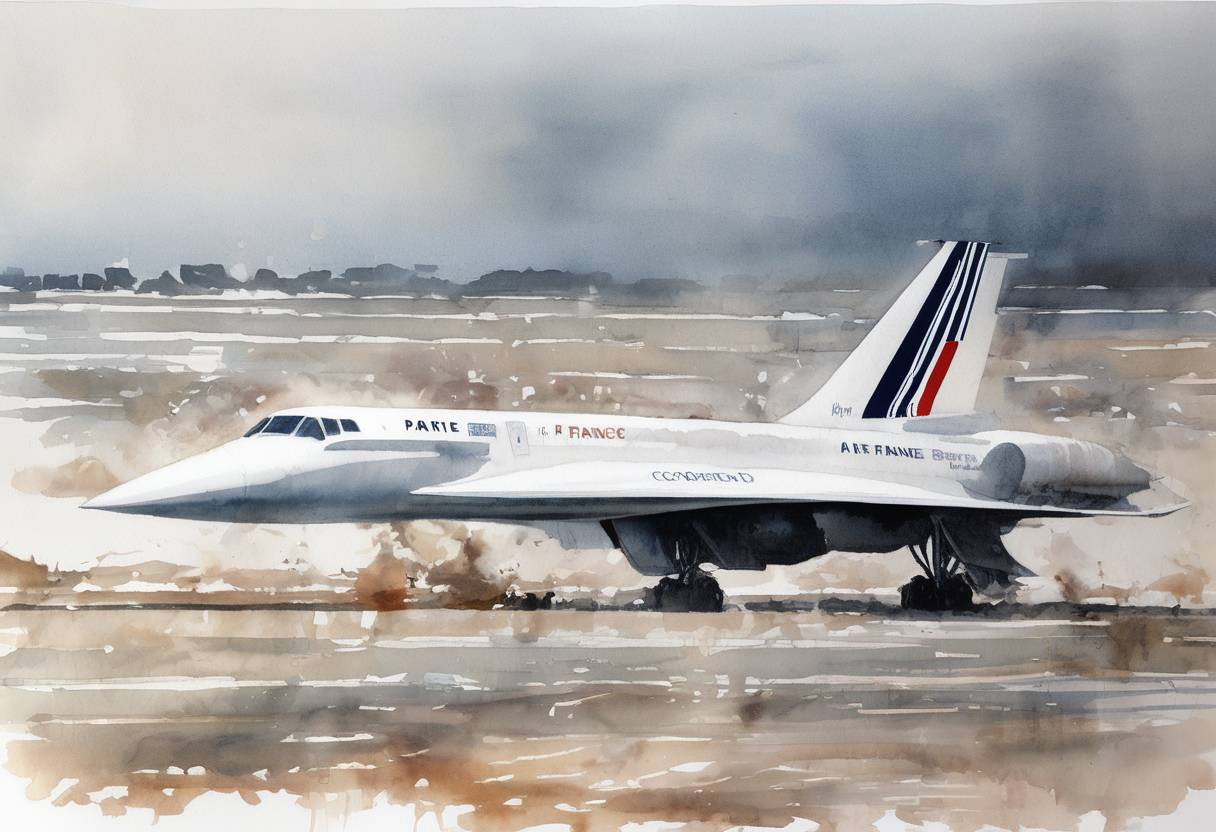
Air France Flight 4590 Crash - July 25, 2000
On July 25, 2000, Air France Flight 4590, a Concorde supersonic passenger jet, tragically crashed shortly after takeoff from Charles de Gaulle Airport in Paris, resulting in the deaths of all 109 people on board and four individuals on the ground. This event marked a significant moment in aviation history, as it was the only fatal accident involving the Concorde, a symbol of luxury and technological advancement in air travel.
Background
- Aircraft: The Concorde was a turbojet-powered supersonic passenger airliner, renowned for its speed and luxury. It could travel at twice the speed of sound, significantly reducing transatlantic flight times.
- Flight Details: Flight 4590 was a chartered flight operated by Air France, destined for John F. Kennedy International Airport in New York City. The passengers were primarily German tourists embarking on a cruise.
The Crash
- Takeoff Incident: Shortly after takeoff from runway 26R at Charles de Gaulle Airport, the Concorde ran over a piece of metal debris on the runway. This debris had fallen from a Continental Airlines DC-10 that had taken off minutes earlier.
- Chain Reaction: The metal strip punctured one of the Concorde’s tires, causing it to burst. Debris from the tire rupture struck the underside of the wing, leading to a fuel tank rupture and a subsequent fire.
- Loss of Control: Despite the crew’s efforts to control the aircraft, the fire caused a catastrophic failure of the engines. The aircraft lost thrust and crashed into a hotel in the nearby town of Gonesse, approximately two minutes after takeoff.
Aftermath
- Casualties: All 100 passengers and 9 crew members on board perished, along with four people on the ground. The crash site was marked by devastation, with significant damage to the hotel and surrounding area.
- Investigation: The French Bureau of Enquiry and Analysis for Civil Aviation Safety (BEA) conducted a thorough investigation. The final report attributed the crash to the metal debris on the runway, which led to the tire burst and subsequent chain of events.
- Impact on Concorde: The crash led to the temporary grounding of the Concorde fleet. Modifications were made to the aircraft, including reinforced fuel tanks and improved landing gear. However, the crash, combined with economic factors, led to the eventual retirement of the Concorde in 2003.
Broader Significance
- Aviation Safety: The crash underscored the importance of runway inspections and debris management, leading to improved safety protocols in airports worldwide.
- End of an Era: The Concorde’s retirement marked the end of commercial supersonic travel, a technological marvel that had captured the imagination of the public since its introduction in the 1970s.
The Air France Flight 4590 disaster remains a poignant reminder of the complexities and risks inherent in aviation, as well as the continuous need for advancements in safety and technology.