The Approval of the Articles of Confederation
1777 · York, United States
The Continental Congress approves the Articles of Confederation, the first constitution of the United States.
March 1, 1781
The Articles of Confederation were ratified after Maryland became the last state to sign them, establishing the United States' first constitution.
Annapolis, United States | Continental Congress
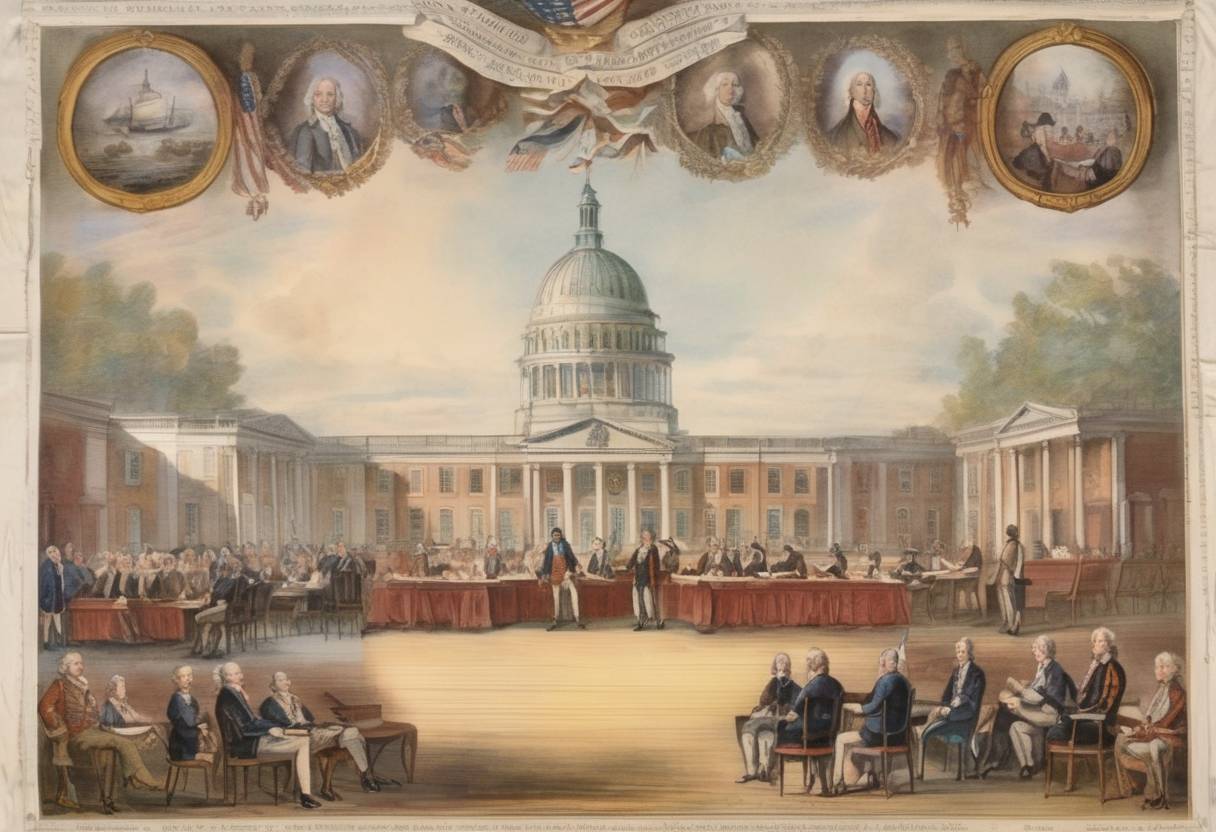
On March 1, 1781, the Articles of Confederation were officially ratified when Maryland became the last of the thirteen original states to sign them. This event marked the establishment of the United States’ first constitution, laying the groundwork for the nation’s initial governance structure.
The Articles of Confederation were drafted during the early years of the American Revolutionary War, with the Continental Congress adopting them on November 15, 1777. The Articles aimed to create a confederation of sovereign states united for mutual defense and cooperation while maintaining their independence and sovereignty.
The ratification process was prolonged due to disputes over land claims west of the Appalachian Mountains. Larger states, such as Virginia and New York, had extensive land claims, which smaller states like Maryland opposed. Maryland’s ratification was contingent upon the resolution of these disputes, leading to the cession of western land claims to the federal government.
The ratification of the Articles of Confederation was a pivotal moment in American history, as it represented the first attempt to unify the states under a national government. However, the Articles’ weaknesses soon became apparent, particularly the lack of a strong central authority to address economic and security challenges.
The limitations of the Articles led to growing calls for reform, culminating in the Constitutional Convention of 1787. This gathering resulted in the drafting of the United States Constitution, which replaced the Articles of Confederation and established a more robust federal government.
In summary, the ratification of the Articles of Confederation on March 1, 1781, was a crucial step in the formation of the United States, providing a framework for governance that would eventually evolve into the current U.S. Constitution.
Source: en.wikipedia.org