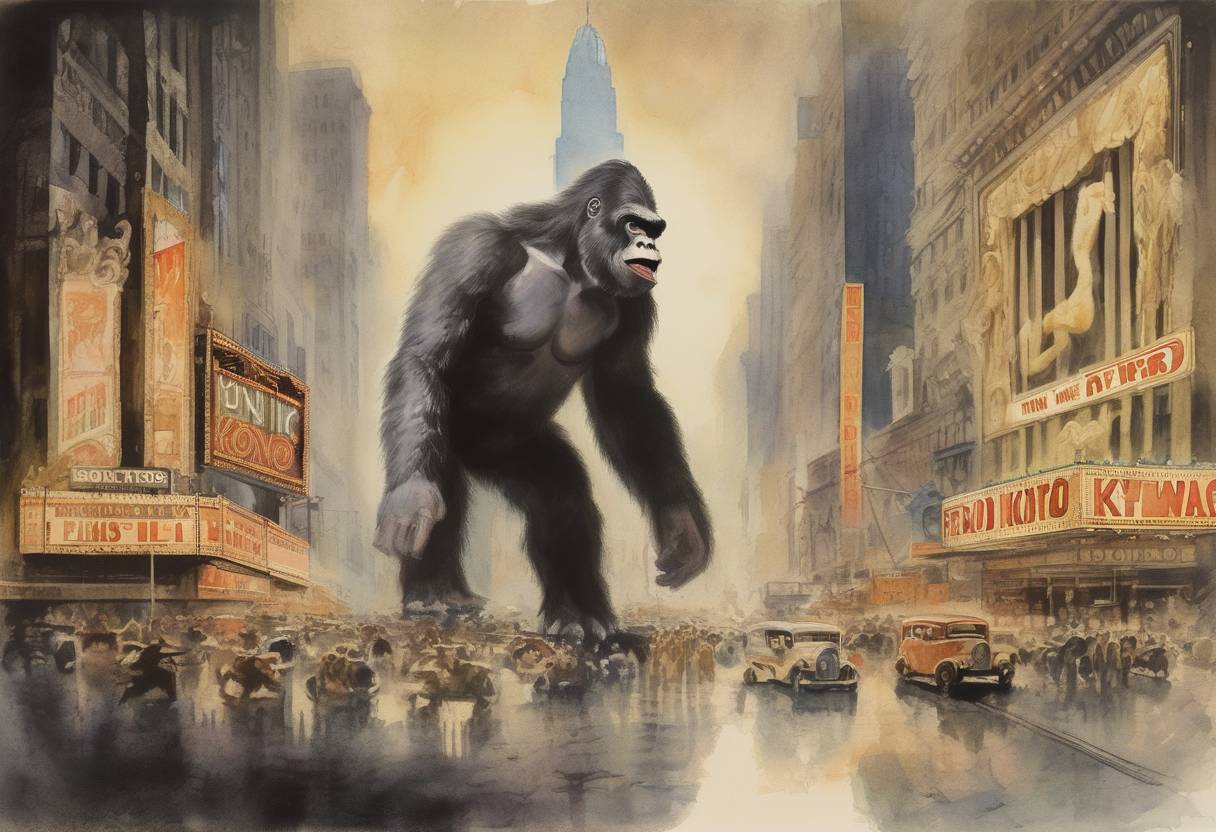
The Premiere of “King Kong” on March 2, 1933
On March 2, 1933, the iconic film “King Kong” premiered at Radio City Music Hall and the RKO Roxy Theatre in New York City. This event marked a significant moment in cinematic history, showcasing groundbreaking special effects and storytelling that would influence the film industry for decades.
Context and Background
- Production: “King Kong” was produced by RKO Pictures and directed by Merian C. Cooper and Ernest B. Schoedsack. The film was notable for its innovative use of stop-motion animation, created by Willis O’Brien, which brought the giant ape, Kong, to life.
- Plot: The film tells the story of a giant ape captured on a remote island and brought to New York City, where it escapes and causes chaos. The narrative explores themes of beauty and the beast, the clash between nature and civilization, and the spectacle of the unknown.
Key Events Leading to the Premiere
- Development: The concept for “King Kong” was developed by Merian C. Cooper, inspired by his fascination with gorillas and adventure stories. The film’s production involved pioneering techniques in visual effects and sound design.
- Marketing: RKO Pictures launched an extensive marketing campaign to build anticipation for the film, emphasizing its thrilling and unprecedented visual spectacle.
The Premiere Event
- Venue: The premiere took place at two of New York City’s most prestigious venues, Radio City Music Hall and the RKO Roxy Theatre, highlighting the film’s importance and expected impact.
- Audience Reaction: The premiere was attended by a large audience, including notable figures from the film industry and the press. The film received enthusiastic applause, particularly for its special effects and dramatic sequences.
Aftermath and Cultural Impact
- Box Office Success: “King Kong” was a commercial success, drawing large audiences and becoming one of the highest-grossing films of 1933.
- Critical Acclaim: The film was praised for its innovative special effects, thrilling action sequences, and its ability to captivate audiences with a blend of adventure and horror.
- Legacy: “King Kong” has since become a cultural icon, inspiring numerous remakes, sequels, and adaptations. It is often cited as a landmark in the history of cinema, particularly for its influence on the monster movie genre and special effects technology.
Broader Historical Significance
- Technological Advancements: The film’s use of stop-motion animation and sound design set new standards for visual storytelling and special effects in cinema.
- Cultural Reflection: “King Kong” reflected contemporary themes of exploration, the exotic, and the tension between modernity and the natural world, resonating with audiences during the Great Depression era.
The premiere of “King Kong” on March 2, 1933, remains a pivotal moment in film history, demonstrating the power of cinema to captivate and innovate. Its legacy continues to influence filmmakers and entertain audiences worldwide.