1891 · Yukon Territory, Canada
The Great Fire of 1891 occurs in Mysterious Valley (Vallée-Mystérieuse), Yukon Territory, Canada, devastating the indigenous communities. The blaze was caused by dry weather and faulty fire management.
June 13, 1886
A fire devastated much of Vancouver, British Columbia, shortly after its incorporation as a city, leading to significant rebuilding efforts.
Vancouver, Canada | City of Vancouver
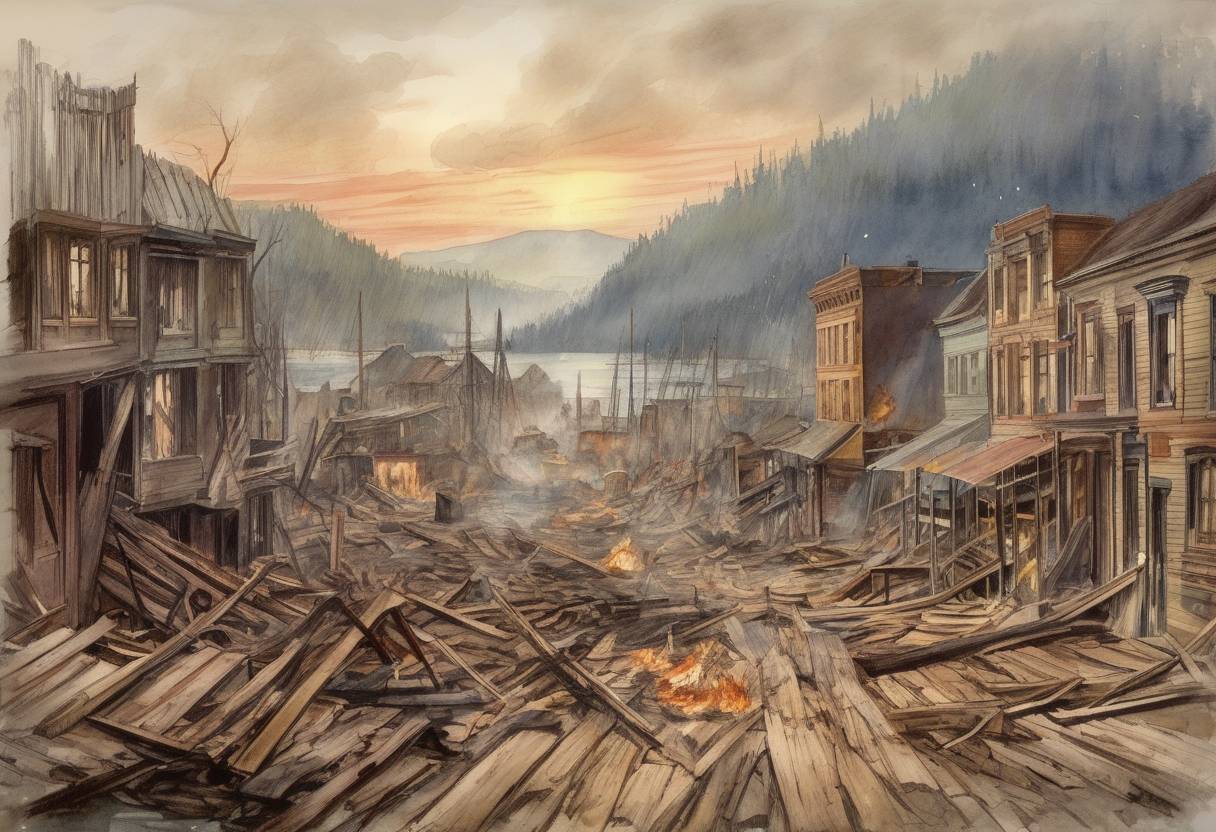
On June 13, 1886, a catastrophic fire swept through the newly incorporated city of Vancouver, British Columbia, leaving a significant mark on its early history. This event, known as the Great Vancouver Fire, occurred just two months after Vancouver was officially incorporated on April 6, 1886.
The city of Vancouver was in its nascent stages, rapidly developing due to its strategic location as a terminus for the Canadian Pacific Railway. The burgeoning city was primarily constructed of wood, a common building material of the time, which made it particularly susceptible to fire. On the day of the fire, a combination of dry weather and strong winds created a perfect storm for disaster.
The fire reportedly began as a controlled clearing operation to remove brush and debris in the area of present-day Main Street and Hastings Street. However, the flames quickly spread out of control, fueled by the wooden structures and the prevailing winds.
The fire moved swiftly, engulfing the city in a matter of hours. It destroyed nearly all of Vancouver’s buildings, leaving only a few structures standing. The devastation was immense, with estimates suggesting that over 1,000 buildings were lost. The fire left approximately 1,000 residents homeless, though, remarkably, the loss of life was minimal, with only a few reported fatalities.
In the aftermath of the fire, the residents of Vancouver demonstrated remarkable resilience and determination. The rebuilding process began almost immediately, with the community rallying together to reconstruct the city. This time, more stringent building codes were implemented, emphasizing the use of brick and stone to prevent future disasters of similar magnitude.
The rebuilding efforts were swift and effective. Within weeks, temporary structures were erected to house businesses and residents. The city also saw an influx of new settlers and investments, drawn by the opportunities presented by the reconstruction.
The Great Vancouver Fire of 1886 was a pivotal moment in the city’s history. It not only tested the resolve of its citizens but also set the stage for Vancouver’s transformation into a modern urban center. The fire underscored the importance of urban planning and fire safety, lessons that would shape the city’s development in the years to come.
In the broader context of Canadian history, the fire highlighted the challenges faced by rapidly growing cities during the late 19th century, particularly those related to infrastructure and safety. Vancouver’s recovery and growth following the fire exemplify the dynamic spirit of the era and the resilience of its people.
The Great Vancouver Fire remains a significant event in the collective memory of the city, commemorated for its role in shaping the Vancouver we know today.
Source: en.wikipedia.org