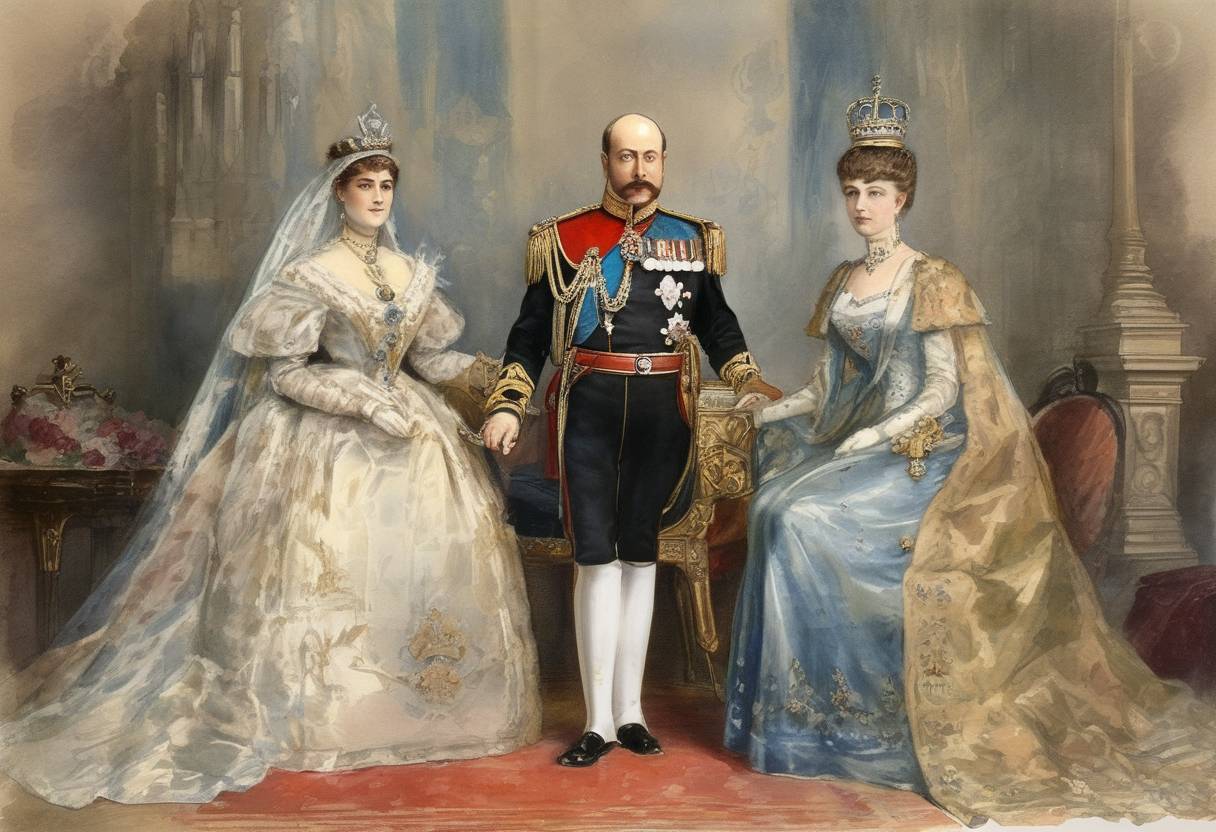
Coronation of Edward VII and Alexandra of Denmark
On August 9, 1902, Edward VII and Alexandra of Denmark were crowned King and Queen of the United Kingdom of Great Britain and Ireland. This event marked the beginning of the Edwardian era, a period characterized by significant social and technological changes.
Background
Edward VII ascended to the throne following the death of his mother, Queen Victoria, on January 22, 1901. His reign was anticipated with great interest, as he had been the Prince of Wales for nearly 60 years, the longest in British history at that time. Edward was known for his diplomatic skills and his role in modernizing the British monarchy.
Alexandra of Denmark, his wife, was a popular figure known for her charm and beauty. The couple had been married since 1863 and had six children together.
The Coronation
Originally scheduled for June 26, 1902, the coronation was postponed due to Edward VII’s sudden illness. He underwent an emergency appendectomy, a relatively new surgical procedure at the time, which was successfully performed. This delay added to the anticipation and excitement surrounding the event.
The coronation took place at Westminster Abbey, a traditional site for British coronations. The ceremony was a grand affair, attended by dignitaries from around the world, reflecting the global influence of the British Empire at the time. The event was notable for its pageantry and the introduction of new ceremonial elements, including the use of electric lighting.
Significance
The coronation of Edward VII and Alexandra marked a shift from the Victorian era to the Edwardian era. This period was characterized by a more relaxed social atmosphere and significant advancements in technology and culture. Edward VII’s reign saw the strengthening of British alliances, particularly with France and Russia, which would later play a crucial role in the geopolitical landscape leading up to World War I.
Aftermath
Edward VII’s reign lasted until his death in 1910, and he was succeeded by his son, George V. The Edwardian era is often remembered for its elegance and the flourishing of arts and culture, setting the stage for the modern age.
The coronation of Edward VII and Alexandra remains a significant event in British history, symbolizing both continuity and change within the monarchy and the broader society.