The Dekemvriana Conflict: December 3, 1944
1944 · Athens, Greece
British troops and their allies clashed with leftist forces (EAM-ELAS) in Athens, marking the start of the Dekemvriana conflict in Greece.
April 27, 1941
German troops entered Athens during World War II, marking the beginning of the Axis occupation of Greece.
Athens, Greece | Nazi Germany
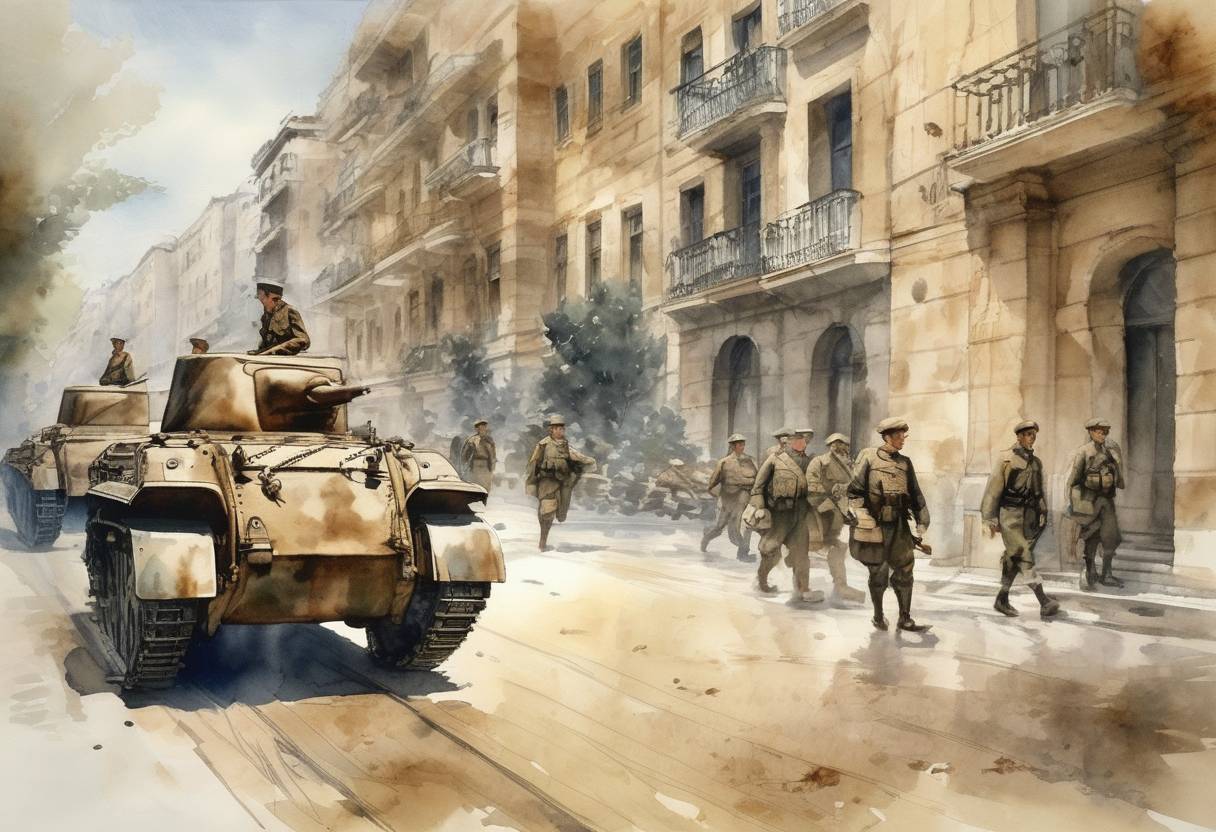
On April 27, 1941, German troops entered Athens, marking the beginning of the Axis occupation of Greece during World War II. This event was a significant moment in the broader context of the war, as it represented the culmination of the German-led Balkan Campaign and the fall of Greece to Axis powers.
Italian Invasion of Greece: The Axis occupation of Greece was preceded by Italy’s failed invasion in October 1940. The Italian forces, under Mussolini, launched an attack from Albania but were met with strong Greek resistance, resulting in a counter-offensive that pushed Italian troops back into Albania.
German Intervention: The failure of the Italian campaign prompted Hitler to intervene to secure the southern flank of the Axis powers and to protect the Romanian oil fields, which were crucial for the German war effort. In April 1941, Germany launched Operation Marita, a military campaign to invade Greece through Bulgaria.
The Battle of Greece: German forces quickly overpowered Greek and British Commonwealth troops. Key battles, such as the Battle of Thermopylae and the rapid advance through the Greek mainland, led to the eventual collapse of organized Greek resistance.
Occupation of the Capital: On April 27, 1941, German forces entered Athens without facing significant resistance. The Greek government and King George II had already evacuated to Crete, and the city was left undefended.
Symbolic Gestures: As German troops marched into Athens, they raised the Nazi flag over the Acropolis, a powerful symbol of their occupation. This act was intended to demonstrate the dominance of the Axis powers over Greece.
Axis Occupation: The occupation of Greece was divided among Germany, Italy, and Bulgaria. The Germans controlled key strategic areas, including Athens and Thessaloniki, while the Italians and Bulgarians occupied other regions.
Resistance and Hardship: The occupation led to severe economic hardship, famine, and widespread suffering among the Greek population. It also sparked a strong resistance movement, with various groups engaging in guerrilla warfare against the occupying forces.
Strategic Impact: The occupation of Greece delayed the German invasion of the Soviet Union, known as Operation Barbarossa, by several weeks. This delay is often cited as a factor that contributed to the eventual failure of the German campaign in the Soviet Union due to the onset of the harsh Russian winter.
The entry of German troops into Athens on April 27, 1941, was a pivotal moment in World War II, illustrating the reach of Axis powers in Europe and setting the stage for a prolonged and brutal occupation that would have lasting impacts on Greece and its people.
Source: en.wikipedia.org