Assassination Attempt on King George III by James Hadfield
1800 · London, United Kingdom
King George III survived an assassination attempt by James Hadfield, who fired a pistol at the king during a theatre performance.
May 30, 1842
John Francis attempted to assassinate Queen Victoria as she drove down Constitution Hill in London. This was the second attempt on her life within two days, but she was unharmed.
London, England | none
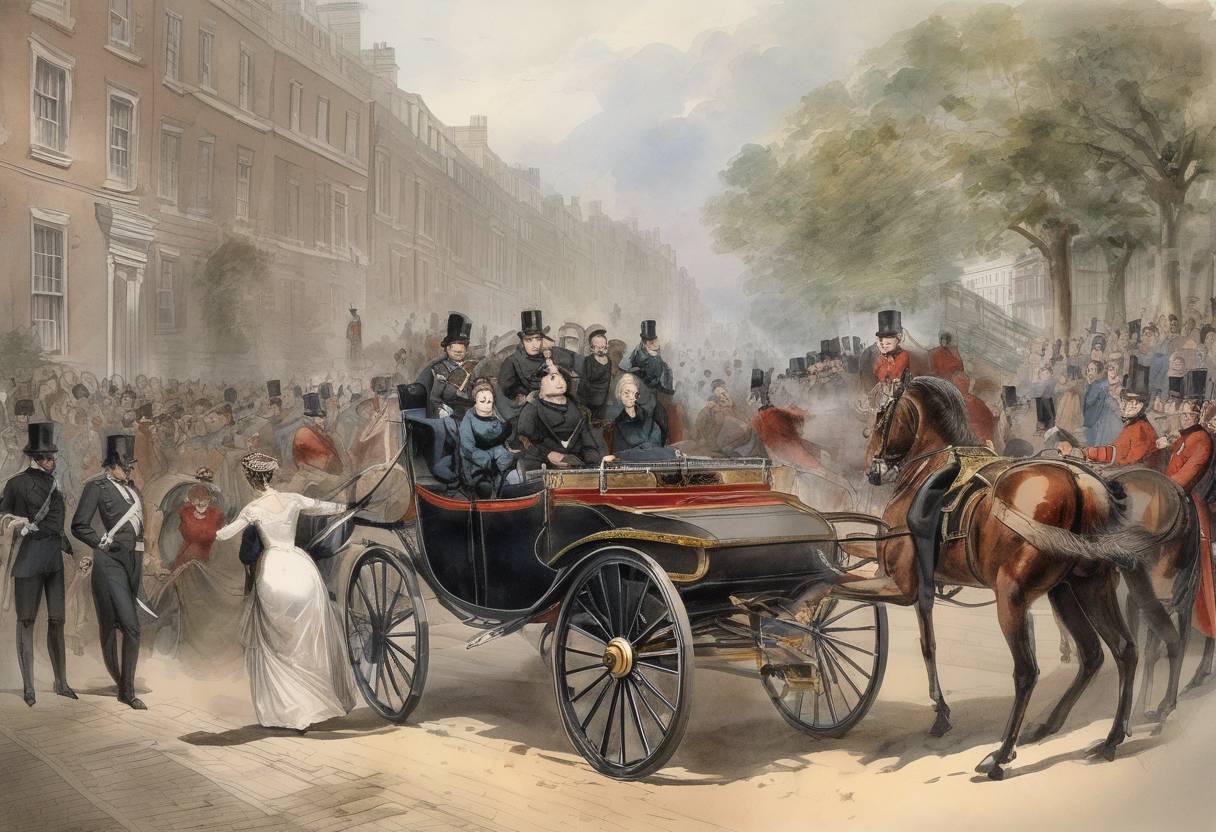
On May 30, 1842, Queen Victoria faced a second assassination attempt within two days while traveling down Constitution Hill in London. This event marked a significant moment in the early years of her reign, highlighting both the vulnerabilities of public figures and the challenges of maintaining security during that era.
Queen Victoria ascended to the throne in 1837, and by 1842, she had already become a symbol of stability and continuity for the British monarchy. However, her reign was not without its threats. The early 19th century was a period of social and political unrest in Britain, with movements advocating for reform and the rights of the working class gaining momentum. This atmosphere of tension sometimes manifested in acts of violence against public figures.
The first attempt on Queen Victoria’s life by John Francis occurred on May 29, 1842. As the Queen and her husband, Prince Albert, were returning from attending a service at the Chapel Royal, St. James’s Palace, Francis fired a pistol at the royal carriage. Fortunately, the shot missed, and Francis fled the scene.
Undeterred by his initial failure, John Francis made a second attempt the very next day, on May 30, 1842. Once again, as Queen Victoria and Prince Albert were traveling along Constitution Hill, Francis fired another shot at the royal couple. Remarkably, the Queen remained unharmed, and the attempt was unsuccessful.
Following the second attempt, John Francis was apprehended and brought to trial. He was initially sentenced to death for high treason, a common penalty for such acts against the monarchy. However, Queen Victoria, known for her clemency, intervened, and his sentence was commuted to transportation for life to the penal colonies in Australia.
The repeated attempts on her life led to increased security measures for Queen Victoria and heightened public awareness of the potential dangers faced by the monarchy. These events also underscored the need for improved protection for public figures, a concern that would continue to evolve throughout her reign.
The attempts on Queen Victoria’s life by John Francis were part of a series of assassination attempts she faced during her reign, reflecting the broader societal tensions of the time. These incidents highlighted the challenges of maintaining public order and the complexities of balancing public appearances with personal safety for the monarchy.
Queen Victoria’s resilience in the face of such threats contributed to her enduring popularity and the strengthening of the monarchy’s public image. Her ability to maintain composure and continue her duties despite these dangers helped solidify her reputation as a steadfast and dedicated monarch.
In summary, the attempted assassination by John Francis on May 30, 1842, serves as a poignant reminder of the vulnerabilities faced by public figures and the historical context of unrest during Queen Victoria’s reign.
Source: en.wikipedia.org