July 27, 1964: US Escalation in Vietnam War
1964 · Washington, D.C., United States
The United States sends 5,000 more military advisers to South Vietnam.
December 11, 1961
U.S. involvement in the Vietnam War officially begins as American helicopters arrive in Saigon.
Saigon, South Vietnam | United States Military
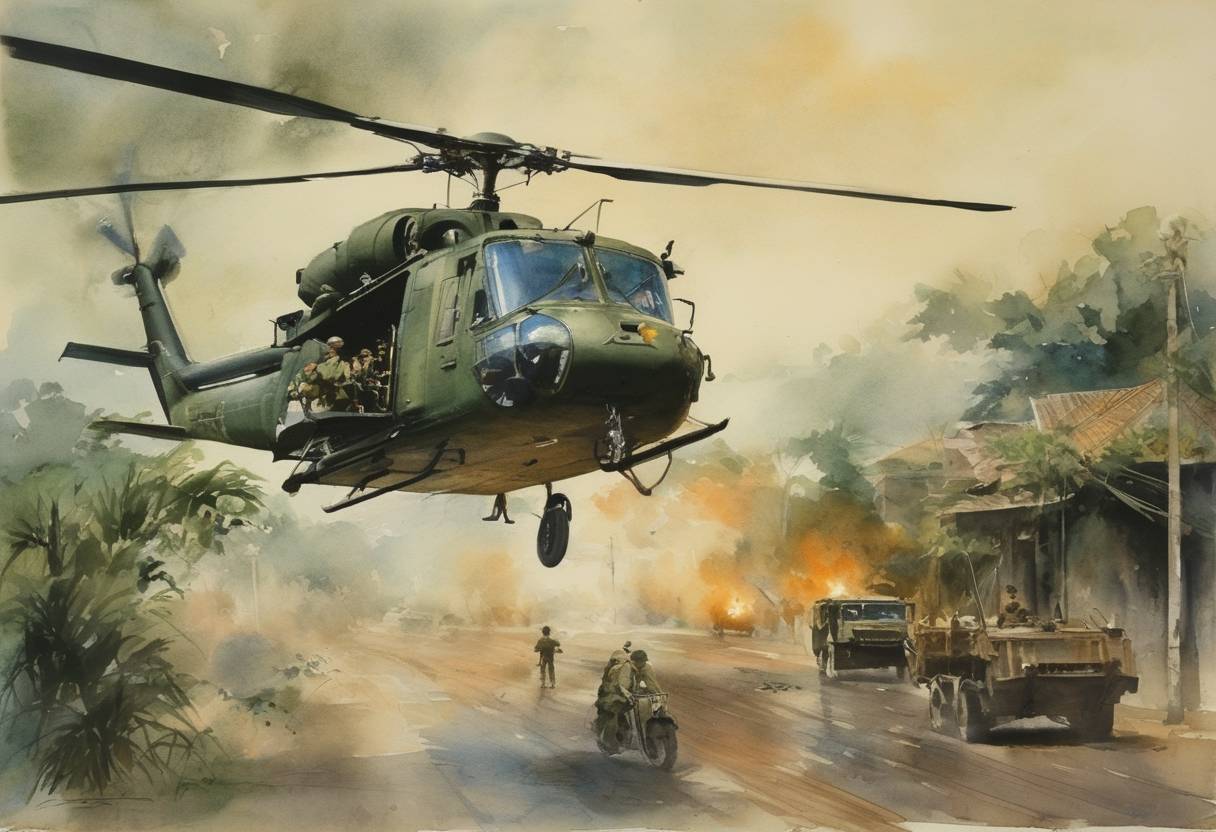
On December 11, 1961, a significant escalation in the Vietnam conflict occurred, marking the beginning of substantial U.S. military involvement. This date saw the arrival of the first American military helicopters, and nearly 400 U.S. personnel in Saigon, Vietnam. The deployment underscored a new phase of increased military support from the United States to the South Vietnamese government in its fight against the communist forces of the Viet Cong and North Vietnam.
The involvement of the United States in Vietnam stemmed from a broader strategy of containment during the Cold War, aimed at preventing the spread of communism in Southeast Asia. This policy was guided by the Domino Theory, which suggested that if one nation fell to communism, neighboring countries would follow.
Before December 1961, U.S. support to South Vietnam was largely limited to military advisors, economic aid, and equipment. The increasing effectiveness of the communist insurgency prompted the United States to intensify its support.
The helicopters that arrived on December 11 were part of the 8th Transportation Company, illustrating a strategic shift towards a more direct, albeit initially non-combat, role. These helicopters were crucial for the South Vietnamese army to conduct rapid troop movements, resupply operations, and reconnaissance missions. They represented a technological and tactical advantage aimed at leveling the battlefield against the guerrilla warfare tactics used by the Viet Cong.
The arrival of American helicopters signaled a shift in U.S. involvement, ultimately serving as a precursor to further military escalation. Over the following years, the U.S. would increase its troop presence significantly, culminating in a full-scale military engagement with the deployment of combat units and the approval of offensive operations by 1965.
The deployment set in motion a series of events that would lead to an extended and deeply contentious conflict, shaping American foreign policy and domestic opinion for decades. The Vietnam War became one of the most polarizing events in U.S. history, influencing military strategies, international relations, and social movements.
In retrospective analysis, the implications of this day reflect on the complexities of foreign intervention and the exhaustive nature of protracted conflicts amid regional and global ideological struggles.
Source: www.history.com