Capture of Trinidad by British Forces on February 17, 1797
1797 · Port of Spain, Trinidad and Tobago
Sir Ralph Abercromby led British forces in the capture of the island of Trinidad from Spain during the French Revolutionary Wars.
August 30, 1799
The Dutch surrender to British forces in the Second Battle of Alkmaar during the War of the Second Coalition.
Alkmaar, Netherlands | British Army
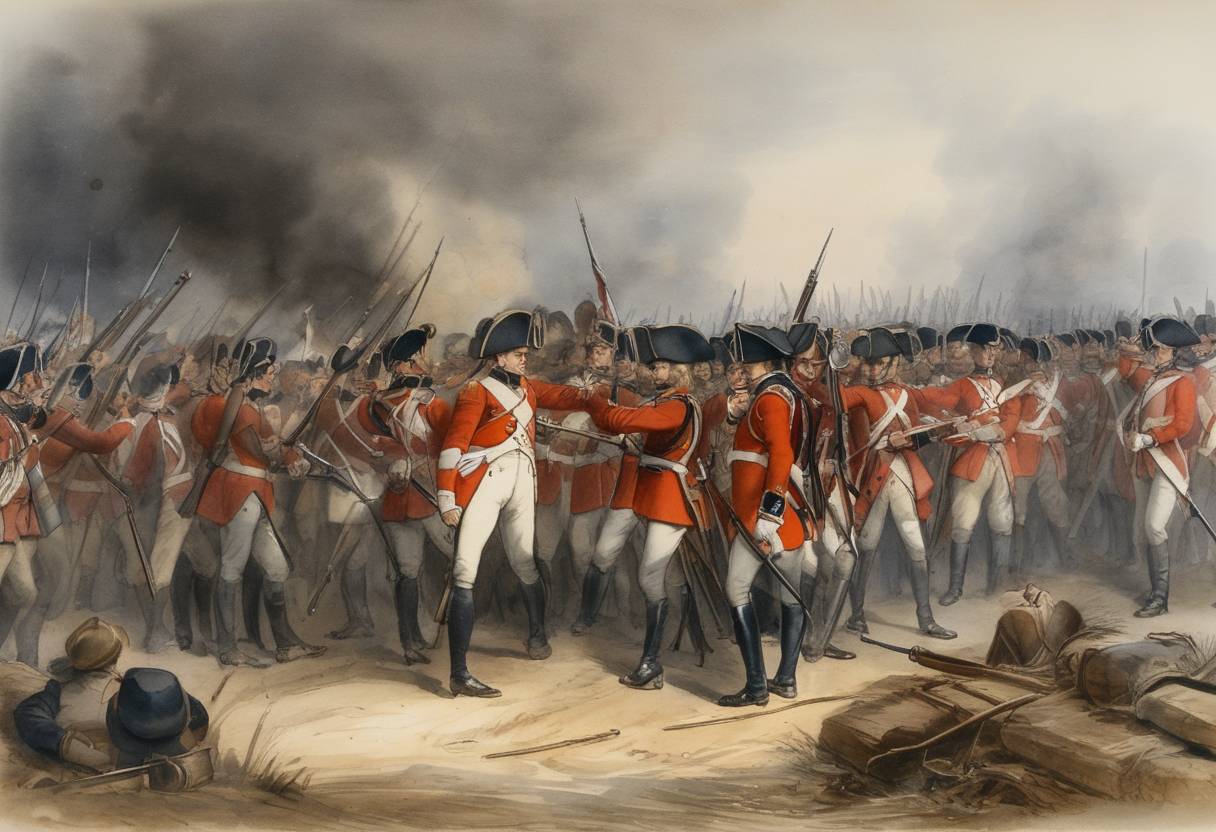
The War of the Second Coalition, part of the broader conflict of the French Revolutionary Wars, saw various European powers uniting against the First French Republic. The conflict involved major European states, including Great Britain, Austria, Russia, and the Ottoman Empire, attempting to curtail French territorial expansion and influence. In this context, the campaign in the Netherlands was a significant front where the Coalition aimed to weaken French control by involving local forces opposed to the French-supportive Batavian Republic.
By 1799, the British, in alliance with the Russians, initiated an expedition to the Batavian Republic (now the Netherlands) to support a Royalist uprising and to open a second front against French forces. The initial landings were met with mixed success, eventually leading to the confrontation at Alkmaar.
On 30 August 1799, British forces, under the command of General Sir Ralph Abercromby, captured the city of Alkmaar during what became known as the Second Battle of Alkmaar. This victory followed a series of engagements around the area involving a combination of British and Russian forces against Dutch and French troops defending the Batavian Republic.
The battle was characterized by a series of maneuvers and clashes, taking place in a landscape of polders and waterways which were both a tactical challenge and an advantage depending on control of key positions. British troops, leveraging their naval superiority and experience in amphibious military operations, managed to advance and secure positions despite challenges presented by the marshy terrain.
Following sustained assaults and the strategic capture of key locations, Dutch forces in the area began to wane in their ability to resist. The culmination of British operational success and the weakening resolve of the French-aligned Dutch troops led to their surrender on the very day of the battle. This event marked a turning point in the campaign within the region, allowing the British to consolidate their holdings temporarily.
The British occupation of Alkmaar, following the surrender, was momentarily successful in establishing a foothold within the Batavian Republic. However, despite this tactical victory, the broader strategic objectives of the campaign faltered as Coalition forces struggled to maintain momentum due to logistical challenges, weather conditions, and renewed French counteroffensives. Ultimately, while the local victory at Alkmaar demonstrated the strength of British and Russian forces, it failed to catalyze a larger collapse of French control in the Netherlands.
In historical terms, the battle highlighted both the tactical prowess and the limits of coalition warfare during the period, with the eventual strategic picture shifting back in favor of the French by the end of 1799. The War of the Second Coalition itself would linger on with varying fortunes until peace treaties in 1801 and 1802 redrew geopolitical alignments in Europe.
Source: books.google.com