Capture of Calcutta by the British, January 2, 1757
1757 · Calcutta, India
The British army captures the city of Calcutta in India from the Nawab of Bengal after the recapture following the Siege of Calcutta.
September 14, 1716
The Siege of Corfu, in which the Ottoman Empire attempted to capture the island of Corfu from the Republic of Venice, ends with a successful Venetian defense.
Corfu, Republic of Venice | Republic of Venice
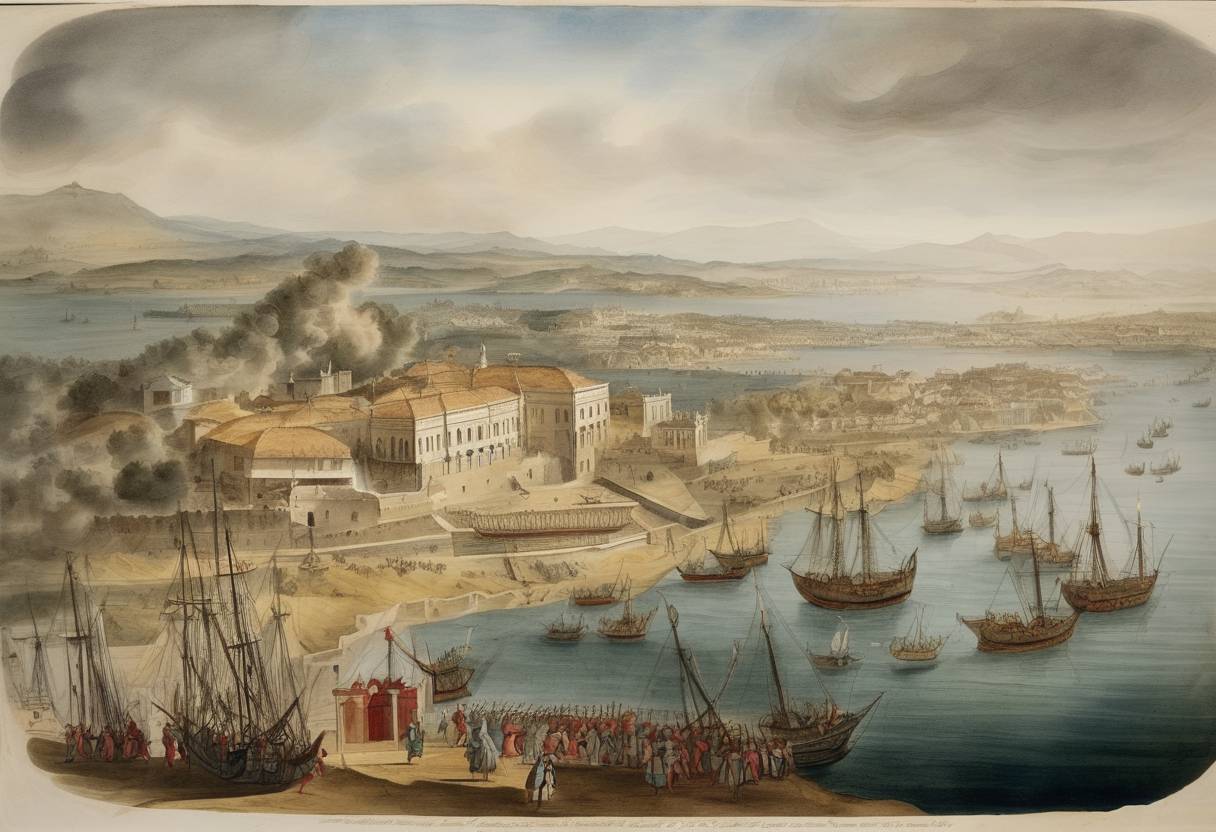
The Siege of Corfu concluded on September 14, 1716, marking a significant victory for the Republic of Venice over the Ottoman Empire. This event was a crucial episode in the Seventh Ottoman-Venetian War, also known as the War of the Holy League (1714–1718).
In the early 18th century, the Ottoman Empire sought to expand its influence in the Mediterranean by capturing key territories controlled by the Republic of Venice. The island of Corfu was strategically important due to its location in the Ionian Sea, serving as a gateway between East and West.
The siege began in early summer 1716, when Ottoman forces, led by Grand Vizier Damat Ali, landed on Corfu with a substantial army and naval support. The defending Venetian forces, under the command of Johann Matthias von der Schulenburg, faced a numerically superior foe. Schulenburg, a seasoned military leader, had approximately 8,000 troops, a mix of Venetian regulars and local militias. Despite being heavily outnumbered, Schulenburg effectively utilized the island’s fortifications, including the Old and New Fortresses of Corfu, to mount a staunch defense.
Over several weeks, the Ottoman forces launched multiple assaults on the fortifications. The Venetians, aided by inclement weather that hampered Ottoman operations, mounted a robust defense. The defenders managed to hold critical positions and repelled repeated attempts by the Ottomans to breach the town’s walls.
On September 14, 1716, after enduring more than a month of continuous assault with little success and suffering significant losses, the Ottoman forces withdrew. The Venetian victory at Corfu was heralded as a triumph in Europe and played a vital role in maintaining Venetian control over their Ionian possessions. The successful defense was largely attributed to Schulenburg’s leadership and the resilience of his troops.
The siege’s outcome contributed to the eventual peace treaty signed at Passarowitz in 1718, which saw the Ottoman Empire cede several territories to the Habsburg Monarchy and consolidate its hold over much of the Peloponnese. The defense of Corfu stood as a symbol of Venetian military tenacity and the broader struggle between European powers and the Ottoman Empire during this period.
Source: en.wikipedia.org