1041 · Constantinople, Byzantine Empire (modern-day Istanbul, Turkey)
Michael IV, the Byzantine Emperor, dies. Following his death, his nephew Michael V is proclaimed emperor in Constantinople, marking a continuation of the Macedonian dynasty.
December 8, 1041
Michael V was proclaimed Byzantine Emperor after a palace coup led to the dethronement and blinding of his predecessor, Michael IV's intended successor, Michael IV's nephew, Michael V Kalaphates assumed the throne, marking a period of political unrest in the Byzantine Empire.
Constantinople, Byzantine Empire | Byzantine Empire
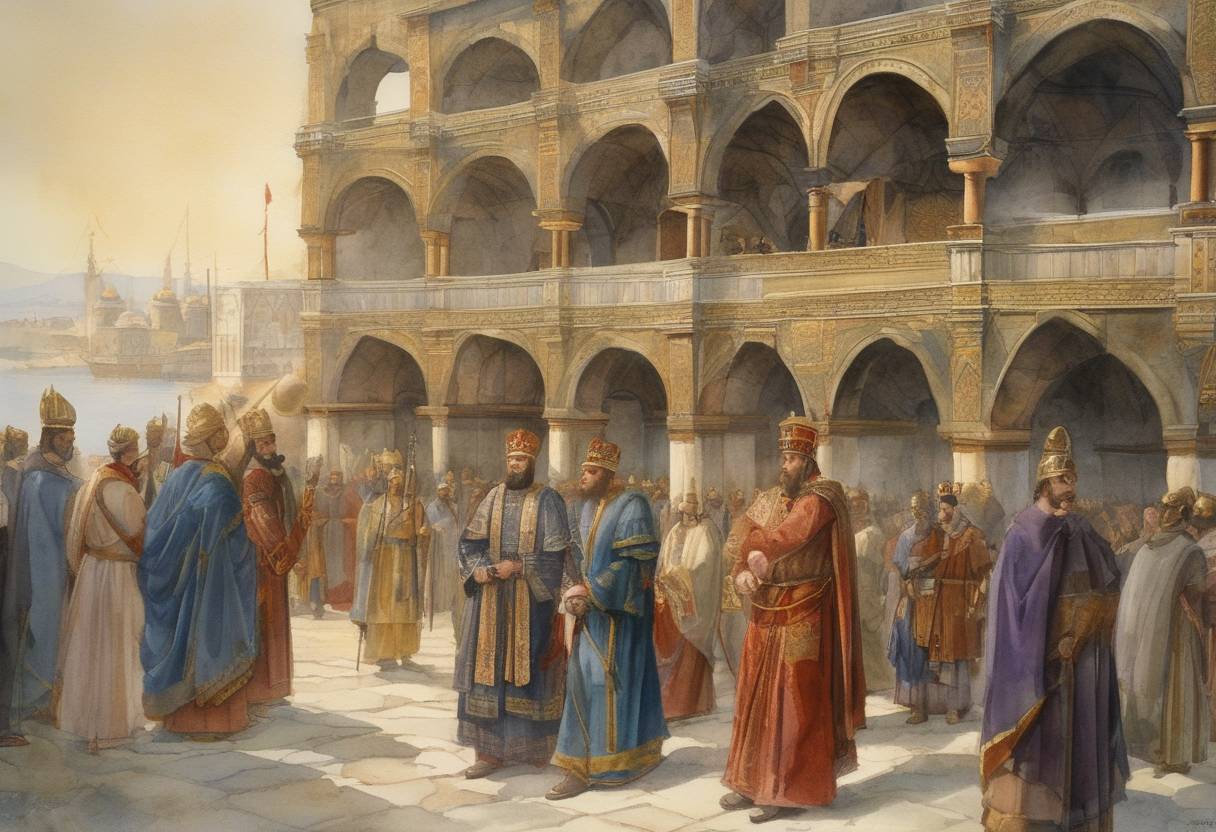
On December 8, 1041, Michael V Kalaphates was proclaimed the Byzantine Emperor following a dramatic palace coup. This coup effectively ended the reign of Michael IV’s intended successor. Michael IV, who reigned from 1034 to 1041, had designated his nephew, Michael V, as his successor to ensure the continuation of his family’s influence over the Byzantine Empire.
The Byzantine Empire, during this period, was characterized by internal strife and political maneuvering. The emperor Michael IV, known as Michael the Paphlagonian, had a reign marked by both military and political achievements but also plagued by chronic illness. Unable to manage the affairs of the state effectively towards the end of his life, he relied heavily on his brother, John the Orphanotrophos, and his nephew, Michael V.
Following Michael IV’s death on December 10, 1041, power dynamics within the Byzantine court shifted swiftly. The coup was orchestrated by key factions within the palace who were dissatisfied with the prevailing leadership. Michael V, leveraging support from influential palace courtiers and military factions, managed to secure power. The palace saw the dramatic expulsion and blinding of his predecessor, who was not deeply entrenched in the Byzantine administrative machine due to having a brief and largely unsuccessful tenure.
Once on the throne, Michael V attempted to consolidate his position by distancing himself from his uncle’s policies. He initially restored property confiscated by his uncle’s administration to gain favor with the aristocracy. However, his reign was short-lived and marred by similar issues of legitimacy and palace intrigue that typified the period. He quickly fell out of favor due to acts perceived as treachery, including banishing John the Orphanotrophos, which led to his eventual downfall after just four months in power.
The usurpation by Michael V marked a turbulent period within the Byzantine Empire known for its political fluidity and frequent coups. His dethronement paved the way for the rise of the powerful Doukas family, who would later play a crucial role in the Empire’s politics. Furthermore, these events highlight the instability of hereditary successions in the Byzantine political system, which was often subject to the whims of palace conspiracies and military influence.
In the broader context of Byzantine history, the rise and fall of Michael V underscore a period of internal decay that foreshadowed the challenges the Empire would face in the 11th century, ultimately leading to the gradual decline of Byzantine power in the following centuries.
Source: en.wikipedia.org