Election of Pope Adrian VI on January 9, 1522
1522 · Rome, Papal States
Pope Adrian VI was elected as the 218th pope, the last non-Italian pope until John Paul II in 1978.
December 3, 1154
Pope Adrian IV, the only English pope, crowns Frederick Barbarossa as Holy Roman Emperor.
Aachen, Holy Roman Empire (now Germany) | Roman Catholic Church
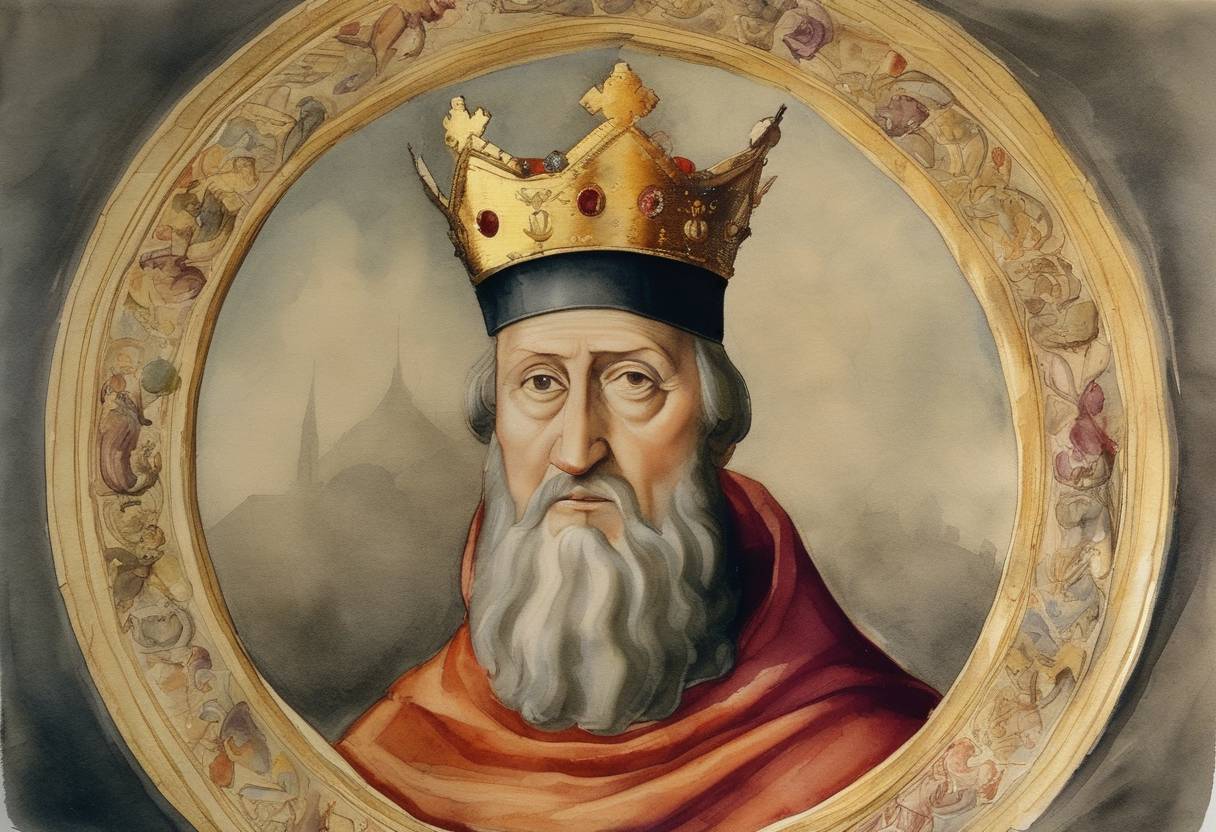
On December 3, 1154, Pope Adrian IV, the only Englishman to ascend to the papacy, crowned Frederick I Barbarossa as the Holy Roman Emperor in a significant event for medieval Christendom. This act underscored the intertwined nature of religious authority and imperial power during the Middle Ages and had profound implications for the political landscape of Europe.
Pope Adrian IV, born Nicholas Breakspear around 1100 in Abbots Langley, England, became pope in 1154, just earlier that same year. His papacy marked the first and only time an Englishman rose to the highest office of the Catholic Church. Before his papacy, Breakspear served as a cardinal and demonstrated strong administrative and diplomatic skills.
Frederick Barbarossa, Duke of Swabia, ascended to the German throne as King of the Romans in 1152, succeeding his uncle Conrad III. Ambitious in his quests, Frederick sought to restore the glory of the Holy Roman Empire and establish imperial authority over his increasingly fragmented and rebellious territories.
The coronation ceremony took place against a backdrop of political tension between the papacy and the Holy Roman Empire. Adrian IV’s decision to crown Frederick Barbarossa was primarily grounded in a mutual interest to strengthen the bond between spiritual and secular powers. By formally recognizing Frederick as Emperor, the papacy aimed to consolidate its influence over European monarchies and maintain control over the appointment of bishops.
The coronation was not just a religious ceremony but also a political maneuver, affirming Frederick’s role as the defender of Christendom. It cemented the pope’s role in legitimizing emperors while aligning with Frederick’s vision of a resultant strengthened empire.
The crowning of Frederick Barbarossa laid the groundwork for both collaborative and contentious relationships between the papacy and the empire:
Political Alliances and Conflicts: While initial relations between Pope Adrian IV and Frederick were cooperative, tensions soon arose over the autonomy of Italian cities, the rights of the papacy in Rome, and the jurisdiction over episcopal appointments.
Lombard League: The ongoing power struggles eventually led to the formation of the Lombard League, an alliance of Northern Italian city-states opposing Frederick’s attempts to dominate Italy.
The Papal-Imperial Struggle: This event foreshadowed longer-term conflicts, including the Investiture Controversy and eventual Guelf-Ghibelline wars, which revolved around papal versus imperial authority.
Frederick’s reign as Holy Roman Emperor was marked by relentless campaigns to unify and strengthen his territories, both in the German lands and across Italy. Pope Adrian IV’s precedent in crowning Barbarossa established a model of papal authority in centralizing imperial authority, albeit seeing varied implementation under subsequent popes and emperors.
The coronation of Frederick I Barbarossa by Pope Adrian IV was a defining moment in the medieval period, reflecting the complex interplay between spiritual leadership and imperial ambition that would shape European politics for centuries.
Source: www.britannica.com