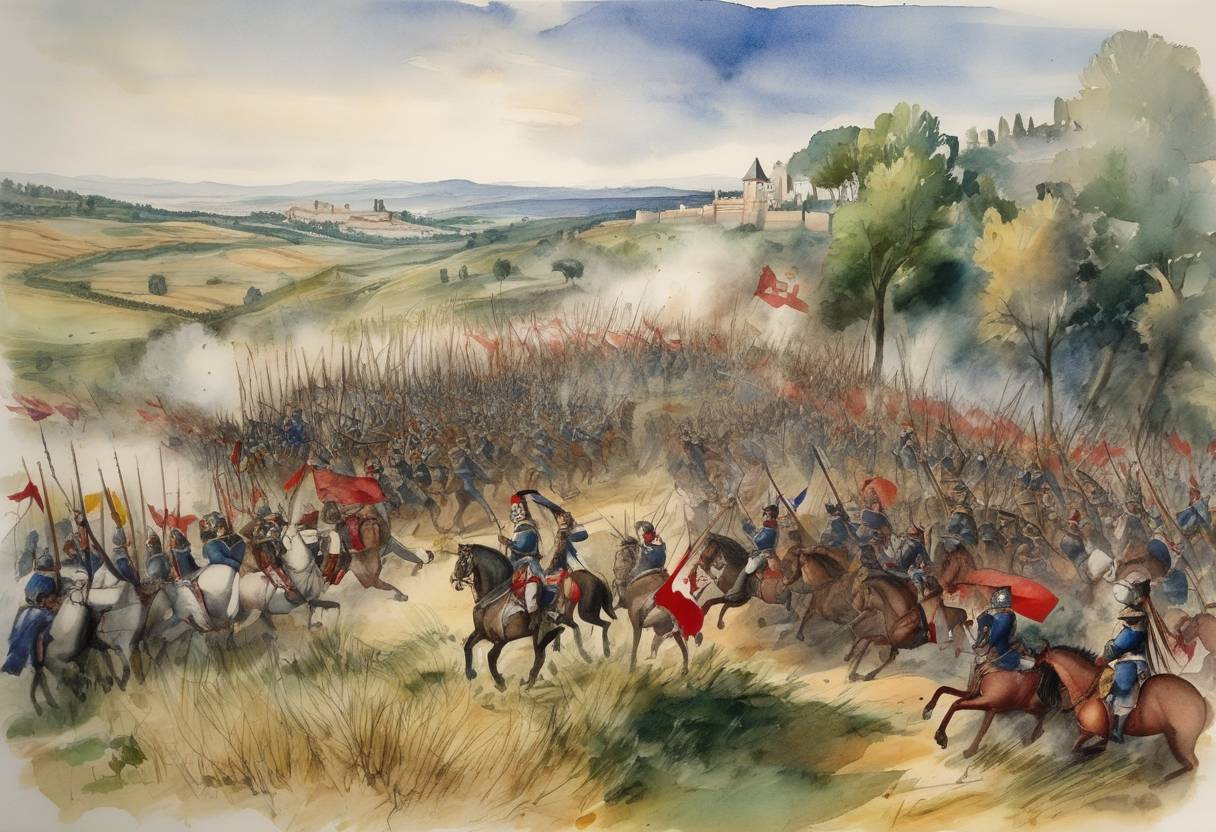
The Battle of Garigliano (December 29, 1503)
The Battle of Garigliano, an integral combat of the Italian Wars, occurred on December 29, 1503, featuring intense rivalry between Spanish and French forces. Commanded by Gonzalo Fernández de Córdoba, known as ‘El Gran Capitán,’ the Spanish army decisively defeated the French, thereby cementing Spanish influence in Italy during this period.
Context and Prelude
The Italian Wars were a series of conflicts from 1494 to 1559 that involved major European powers fighting for control of the Italian Peninsula. By late 1503, Spanish and French forces were vying for dominance over southern Italy, specifically in the Kingdom of Naples. Gonzalo Fernández de Córdoba, a distinguished Spanish general, had already gained significant victories in the region, elevating Spain’s strategic positioning.
Key Events Leading to the Battle
- Strategic Positioning: Prior to the confrontation, the two armies were positioned on opposite sides of the Garigliano River, a natural defensive line that posed logistical challenges for the Spanish forces.
- Siege and Maneuvering: Córdoba ingeniously used a floating bridge composed of boats to outflank the French positions. This strategic maneuver surprised the French forces, leading to a tactical advantage for the Spaniards.
The Battle
- Beginning of Hostilities: The combat commenced with the crossing of the river by Spanish troops, tactically executed under Córdoba’s command.
- Engagement: The battle saw fierce fighting from both sides, with the Spaniards employing tactical infantry formations and artillery to counter French cavalry charges.
- Spanish Tactics: Córdoba’s innovative strategies, which utilized a combination of artillery, infantry, and cavalry, overwhelmed the French defensive fortifications.
Outcome and Aftermath
- Decisive Victory: The Spanish secured a definitive victory with Córdoba’s forces capturing numerous French troops and artillery, forcing the remnants to retreat northward.
- Consolidation of Power: This victory effectively ended French aspirations in southern Italy, consolidating Spanish control over the Kingdom of Naples.
- Significance: The triumph highlighted the effectiveness of combined arms tactics and the evolving nature of European warfare. It further enhanced Gonzalo Fernández de Córdoba’s reputation as one of the eminent military commanders of the era.
Broader Historical Impact
The success at Garigliano not only contributed to the Spanish dominance in the Italian Peninsula but also marked a decline in French influence in the region. This battle exemplified the shift towards more modern military tactics and was pivotal in shaping European geopolitics during the early 16th century. The Spanish advances in Italy set a precedent for the prolonged Habsburg influence in European affairs for decades to come.