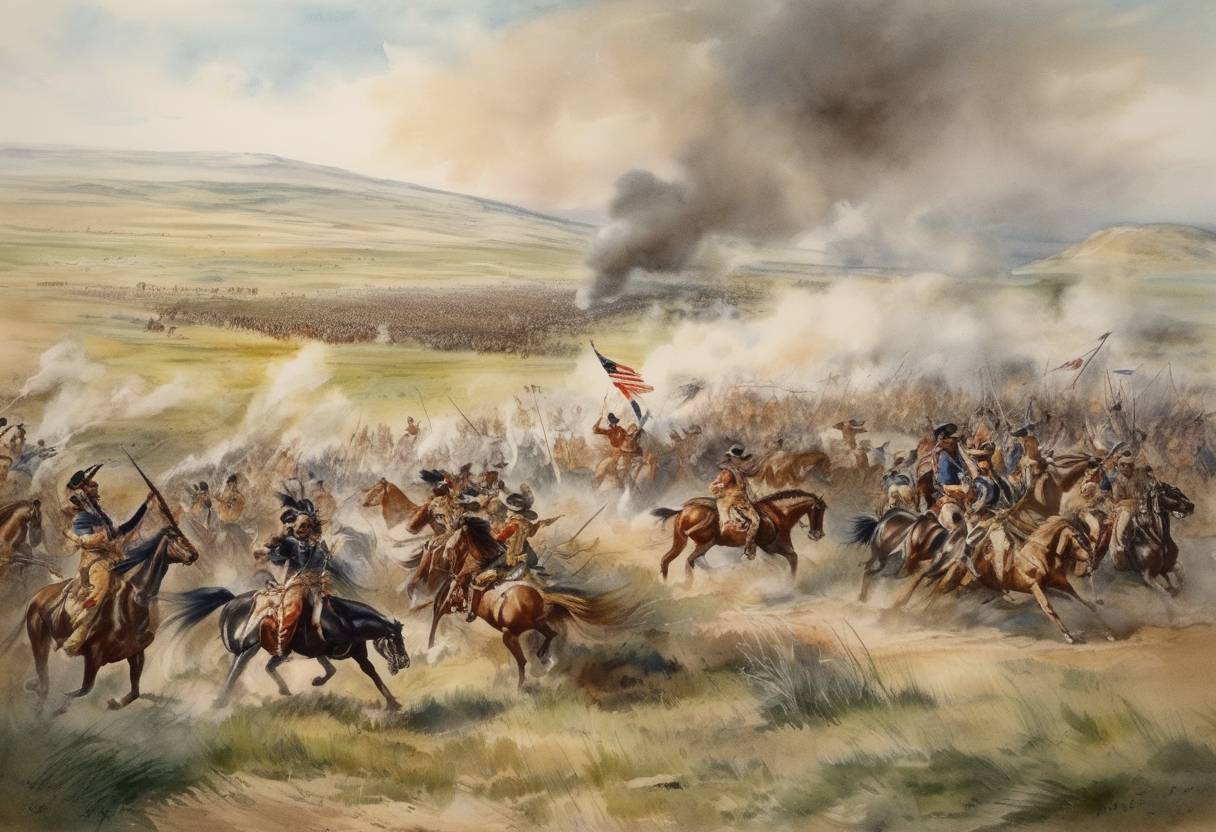
Battle of Little Bighorn Announcement: December 25, 1876
On December 25, 1876, the United States made a formal notification recognizing the Battle of Little Bighorn as a significant engagement within the ongoing Great Sioux War. The battle, which took place on June 25-26, 1876, near the Little Bighorn River in the Montana Territory, had become a pivotal moment in the conflict between the U.S. Army and the combined forces of the Lakota Sioux, Northern Cheyenne, and Arapaho tribes.
Context of the Great Sioux War
The Great Sioux War of 1876, also known as the Black Hills War, was primarily fueled by the U.S. government’s interest in acquiring land in the Black Hills of South Dakota, following the discovery of gold. This territory was sacred to the Sioux and guaranteed to them by the Treaty of Fort Laramie in 1868. However, the influx of non-Native prospectors led to tensions and ultimately to conflict.
The Battle of Little Bighorn
The announcement on December 25, 1876, underscored the scale and significance of the confrontation at Little Bighorn, which had resulted in a complete victory for the Native American forces. The battle saw Lieutenant Colonel George Armstrong Custer’s 7th Cavalry suffer devastating losses, with Custer and over 260 of his men killed. This defeat was one of the most publicized events of the Great Sioux War and shocked the American public.
Aftermath and Historical Impact
The formal recognition of the battle signaled a pivotal moment in U.S. military history and policy toward the Plains tribes. Although the Native American victory initially empowered the Sioux and their allies, it also galvanized the U.S. government to intensify military efforts. The overwhelming U.S. military response eventually forced many tribes to surrender and cede their lands, leading to the further erosion of Native American autonomy.
The Battle of Little Bighorn remains a symbol of Native American resistance and has been studied extensively for its tactical and cultural implications. The formal announcement by the United States not only acknowledged the battle’s significance but also marked a turning point in the government’s approach to Native American policy and military strategy.