The Battle of Durbe: A Pivotal Moment in the Northern Crusades
1260 · Durbe, Latvia
The Livonian Order suffered a defeat at the Battle of Durbe against the Samogitians, which was a significant event in the Northern Crusades.
September 22, 1236
The Battle of Saule took place, where joint forces of the Livonian Brothers of the Sword and other crusaders suffered a significant defeat by the pagan Samogitians and Semigallians.
Saule, modern-day Lithuania/Latvia | Livonian Brothers of the Sword
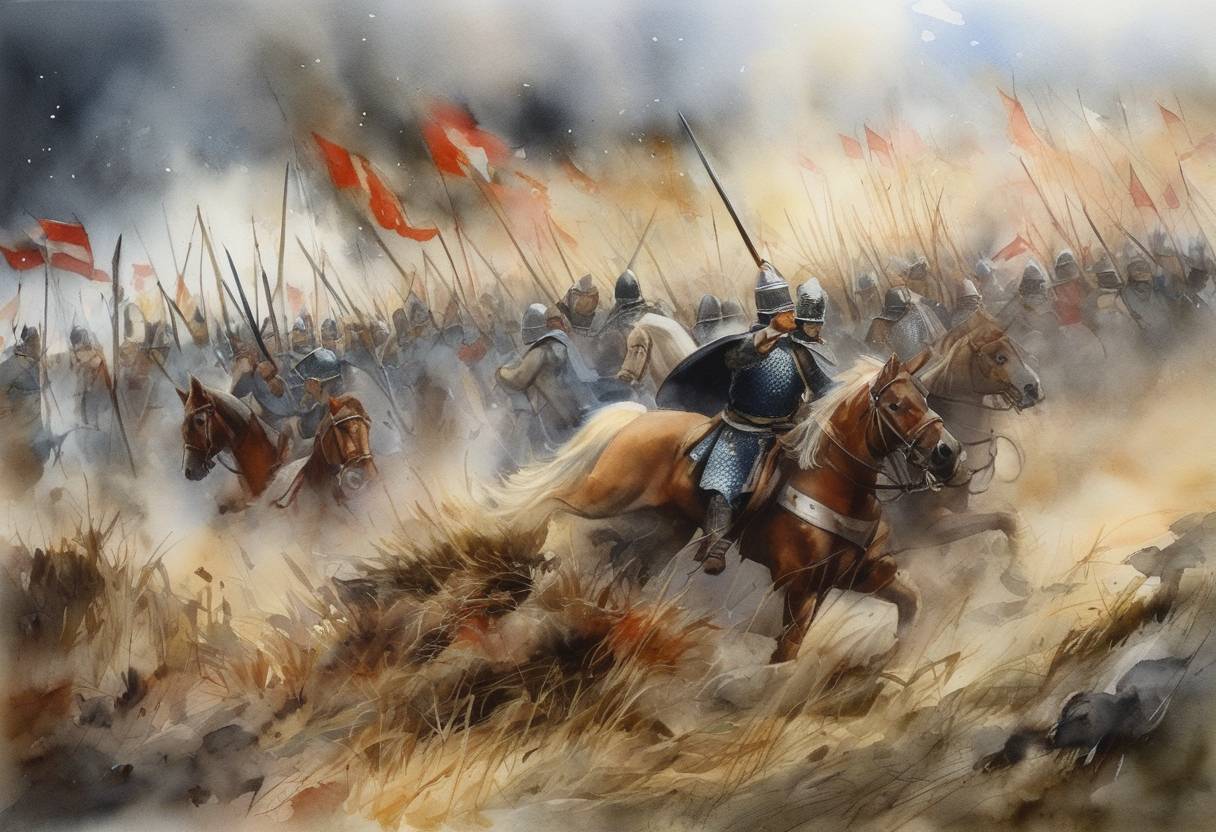
The Battle of Saule was a pivotal confrontation that occurred on September 22, 1236, involving the Livonian Brothers of the Sword, a Crusader military order, and a coalition of Samogitians and Semigallians, pagan tribes of the Baltic region. This battle took place near present-day Šiauliai in Lithuania and marked a significant turning point in the Northern Crusades.
In the early 13th century, the Northern Crusades were being waged by Christian military orders, like the Livonian Brothers of the Sword, under the endorsement of the Papacy. These efforts were part of a broader mission to convert the pagan peoples of the Baltic region to Christianity. The Livonian Brothers sought to extend their influence and Christian dominion into what is now modern-day Latvia and Lithuania.
The conflict arose as the Livonian Brothers of the Sword attempted to subjugate the Samogitians, a fiercely independent and resistant Baltic tribe. The Livonian forces, supported by Danes and other crusading knights from the Holy Roman Empire, advanced into Samogitian territory. However, they underestimated the capability and resilience of their opponents.
On September 22, 1236, the two forces collided near Saule. The Samogitian and Semigallian tribes, employing their intimate knowledge of the terrain and battlefield tactics, managed to encircle and overwhelm the Crusader forces. The battle concluded with a decisive victory for the Samogitians and Semigallians, resulting in the death of many knights, including the Grand Master of the Livonian Brothers, Volkwin von Naumburg zu Winterstätten.
The defeat at the Battle of Saule had significant repercussions for the Livonian Brothers of the Sword. Severely weakened, the order was unable to sustain its independent operations. Consequently, they sought amalgamation with the more prominent Teutonic Order, leading to the merger in 1237. This integration marked the formation of the Livonian Order, a regional branch of the Teutonic Order.
The battle also had broader implications for the Northern Crusades. It galvanized resistance among the Baltic tribes, contributing to a prolonged struggle against the Crusader states. The failure of the Livonian Brothers at Saule highlighted the challenges faced by the Christian military orders in their efforts to subdue and convert the Baltic pagans. Eventually, the region remained a focal point of conflict and cultural resistance well into the 14th century.
The Battle of Saule stands as a testament to the resilience and military acumen of the Baltic tribes, with enduring historical significance in the narrative of the Northern Crusades. This event underscored the difficulties posed by the complex cultural and political landscapes in the crusading era, shaping the future of the Baltic territories.
Source: en.wikipedia.org