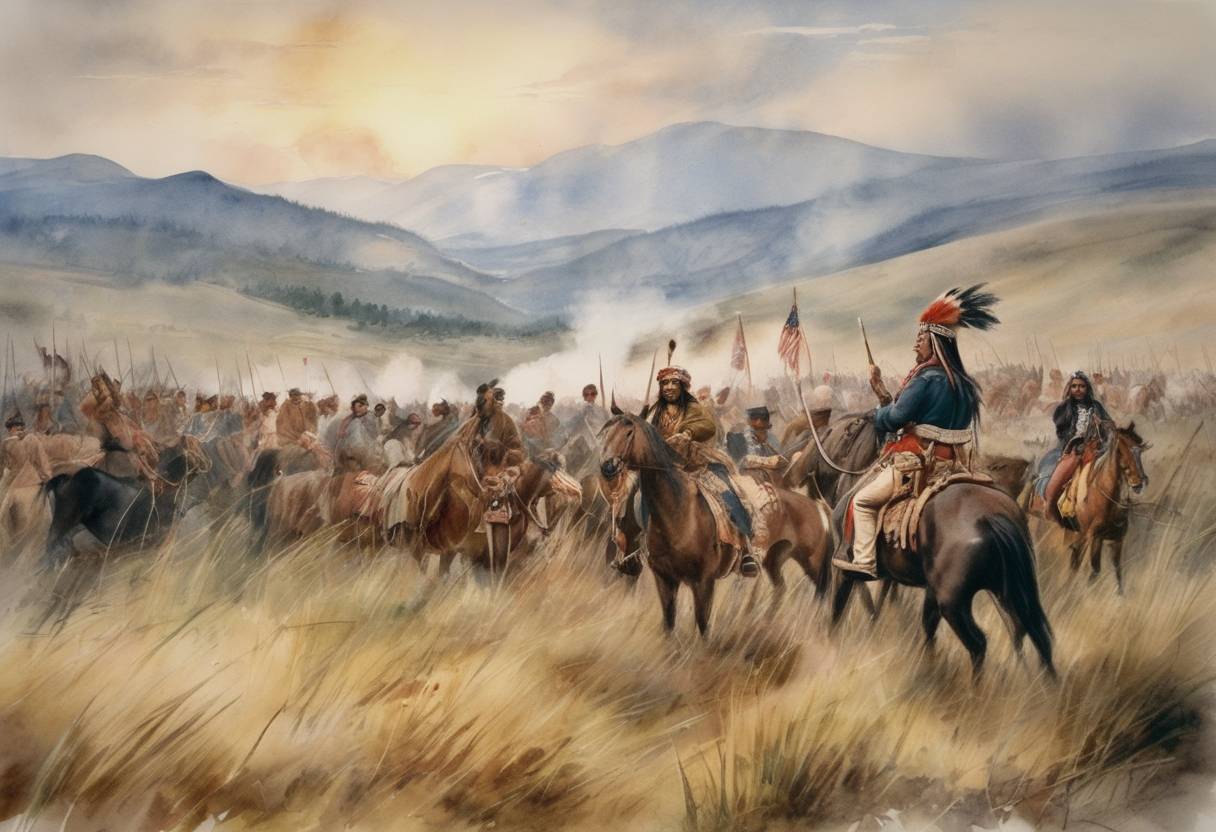
The Surrender of Chief Joseph: The End of the Nez Perce War
On October 5, 1877, the Nez Perce War reached its conclusion as Chief Joseph formally surrendered to the U.S. Army’s General Nelson A. Miles in the Bear Paw Mountains of Montana Territory. This event marked the end of a grueling conflict that lasted for more than three months, during which the Nez Perce, a Native American tribe, skillfully fought against much larger and better-equipped U.S. military forces.
Context and Events Leading to the Surrender
The Nez Perce War erupted due to escalating tensions over U.S. government efforts to forcibly relocate the Nez Perce from their ancestral lands in the Pacific Northwest to a reservation in Idaho. In June 1877, hostilities began after several young Nez Perce warriors, inflamed by injustice and broken treaties, attacked nearby white settlements.
Under the leadership of Chief Joseph, and other leaders such as Looking Glass, White Bird, and Toohoolhoolzote, the Nez Perce embarked on a strategic retreat. They traveled over 1,200 miles through rugged terrain, engaging in multiple battles and skirmishes while seeking asylum first in Wyoming, then aiming to reach the perceived safety in Canada.
The Surrender at Bear Paw Mountains
The Nez Perce’s daring retreat is noted for both its military brilliance and humanitarian consideration under extreme duress. Despite initial successes against U.S. forces, the Nez Perce were exhausted, outnumbered, and running out of supplies by early October 1877. Only 40 miles from the Canadian border, their path to freedom was cut off at the Bear Paw Mountains by forces under General Nelson Miles and reinforced by elements led by General Oliver O. Howard.
Faced with the cold, lack of resources, and inevitable defeat, Chief Joseph decided to surrender. In a poignant speech, he declared:
“I am tired; my heart is sick and sad. From where the sun now stands, I will fight no more forever.”
Aftermath and Historical Significance
The surrender of Chief Joseph is often remembered for his heart-wrenching rhetoric, which encapsulated the struggles and suffering of his people. After the surrender, the Nez Perce, instead of being allowed to return to Idaho, were forcibly relocated to various areas far from their homeland, initially to Kansas and then to Indian Territory in present-day Oklahoma.
Chief Joseph’s leadership and dignified surrender have since become symbolic of the broader Native American resistance to U.S. expansion and the injustices faced by indigenous peoples. His legacy is one of resistance, resilience, and a quest for justice, contributing significantly to the ongoing dialogue about Native American rights and history.