Thomas Edison Files Patent for Optical Phonograph - October 17, 1888
1888 · West Orange, United States
Thomas Edison filed a patent for the Optical Phonograph (the first patented movies).
October 14, 1884
George Eastman receives a U.S. Government Patent for his invention of photographic film in roll form. This invention would eventually lead to Eastman's establishment of the Kodak company, revolutionizing photography by making it more accessible to the general public.
Rochester, United States | Eastman Kodak Company
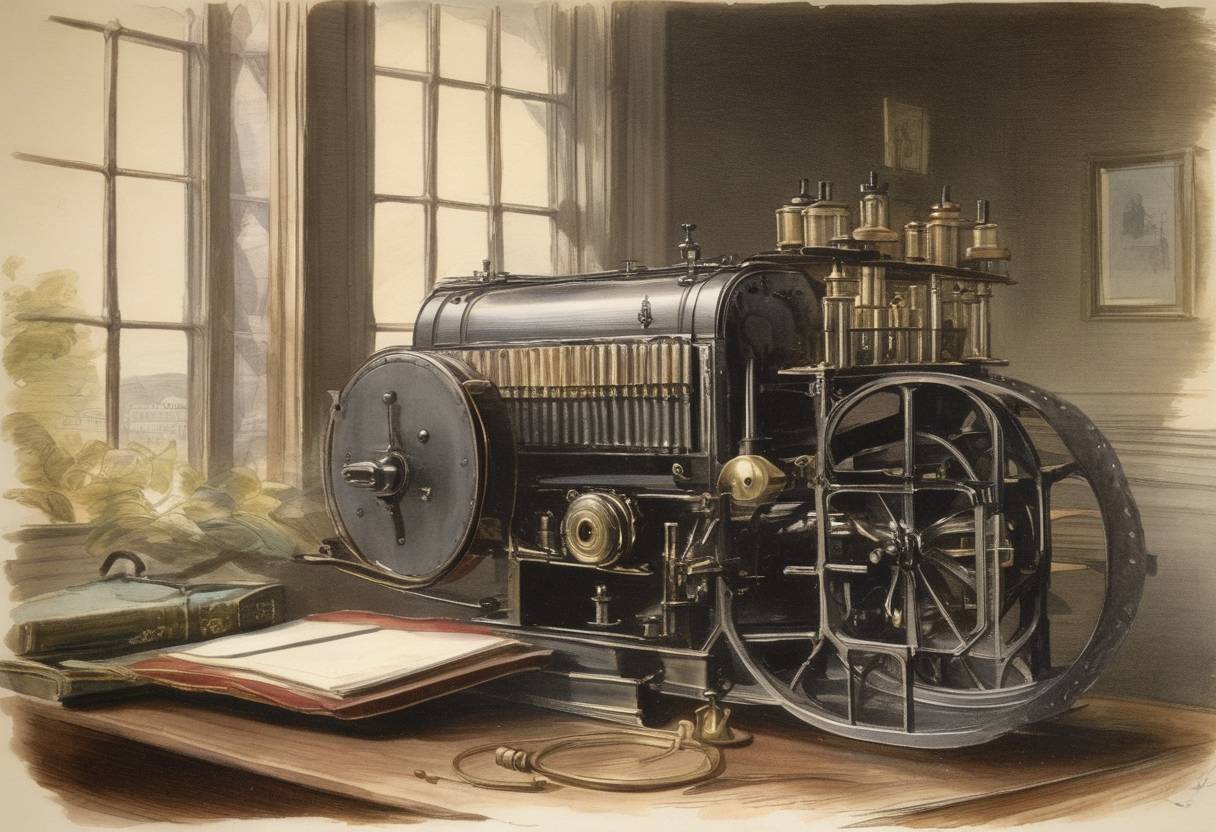
On October 14, 1884, George Eastman received a patent from the U.S. Government for his groundbreaking invention of photographic film in roll form. This invention marked a significant advancement in the field of photography, making it more accessible and practical for the average person.
Before Eastman’s invention, photography was a cumbersome process, involving bulky and fragile glass plates. This made photography an arduous task that was typically reserved for professionals or dedicated amateurs. Eastman, however, sought to democratize photography, envisioning it as a hobby and a tool for anyone to use.
Eastman’s patent encompassed a flexible photographic film that could be rolled onto spools. This roll film was a departure from the traditional glass plates, offering a lightweight and portable alternative. Made from a gelatin emulsion layered on a paper backing, the film could be wound onto a spool in a camera, used for multiple exposures, and then developed.
Eastman’s invention laid the groundwork for the establishment of the Eastman Kodak Company in 1888. The company would go on to revolutionize photography by introducing the Kodak camera, which was promoted with the slogan, “You press the button, we do the rest.” This innovation transformed photography into an activity available to the masses, removing the technical barriers associated with the medium.
The use of roll film enabled significant advancements in other fields as well, playing a critical role in the development of motion pictures and the cinematic arts. The flexibility and mass production of celluloid film catalyzed innovations in capturing and documenting moving images.
George Eastman’s contributions altered the landscape of photography, setting in motion a new era of visual documentation and artistic exploration. By simplifying the process and reducing costs, Eastman’s roll film made it possible for millions of people to capture personal moments and stories, fundamentally altering how society preserves and shares memories.
Eastman’s vision materialized in a world where capturing everyday life became a universal hobby, underpinning many modern social and cultural shifts related to visual communication and media.
Source: www.kodak.com