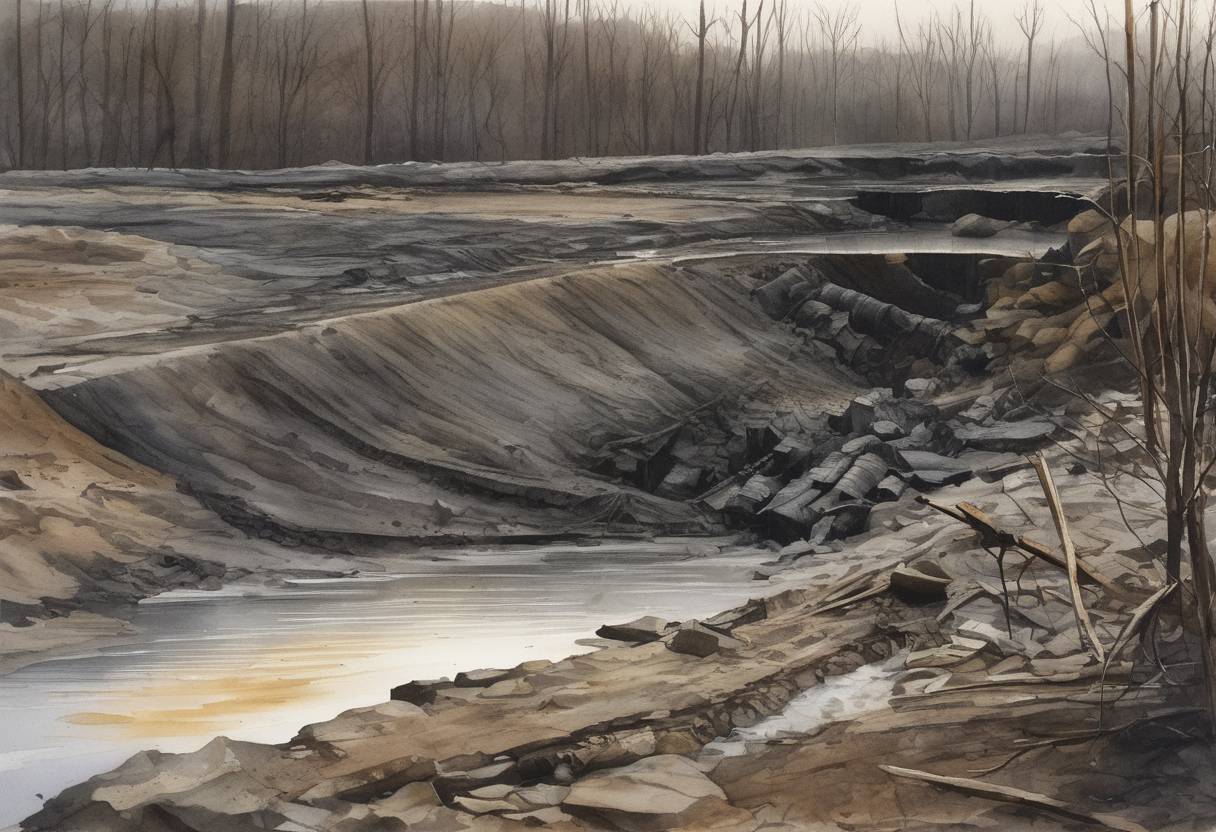
Kingston Fossil Plant Ash Spill - December 22, 2008
On December 22, 2008, a significant environmental disaster occurred at the Kingston Fossil Plant in Roane County, Tennessee. This catastrophe unfolded when a dike containing wet coal fly ash from the plant collapsed, releasing approximately 1.1 billion gallons of coal fly ash slurry into the nearby environment.
Background
The Kingston Fossil Plant, operated by the Tennessee Valley Authority (TVA), was one of the largest power plants in the United States. The plant used coal-fired generators, which produced coal fly ash as a byproduct. This ash was mixed with water to minimize dust and stored in vast containment areas or retention ponds.
The Disaster
On that December morning, the earthen dike of a holding pond at the plant broke, unleashing a massive wave of sludge. This toxic slurry, laden with heavy metals like arsenic, lead, and mercury, engulfed over 300 acres of land. It damaged homes, disrupted infrastructure, and forced the evacuation of nearby residences. The spill flowed into the Emory and Clinch rivers, raising concerns about water safety and ecological impacts.
Environmental and Health Concerns
The incident immediately raised alarms about environmental contamination. The toxic concoction of metals posed serious risks to the local ecosystem and water quality, with long-term repercussions feared for both aquatic life and human health. The immediate response involved addressing these environmental threats and minimizing further damage.
Response and Aftermath
The TVA initiated an extensive cleanup operation to manage the spill, a process that lasted several years and cost over a billion dollars. This clean-up aimed to remove the ash, restore affected areas, and ensure public safety. Moreover, the incident prompted a nationwide re-evaluation of coal ash storage practices.
Broader Impact
The Kingston disaster led to increased scrutiny and regulatory attention on coal ash storage. In response, the U.S. Environmental Protection Agency (EPA) eventually established more stringent regulations for coal combustion residuals, seeking to prevent similar incidents. The disaster also spurred public debate about the environmental responsibilities of energy producers and the risks associated with coal-fired power generation.
Conclusion
The ash spill at the Kingston Fossil Plant remains one of the largest industrial disasters in U.S. history, serving as a stark reminder of the potential environmental and health risks linked to coal ash disposal. It underscores the critical need for robust regulatory oversight and proactive measures to ensure environmental safety.