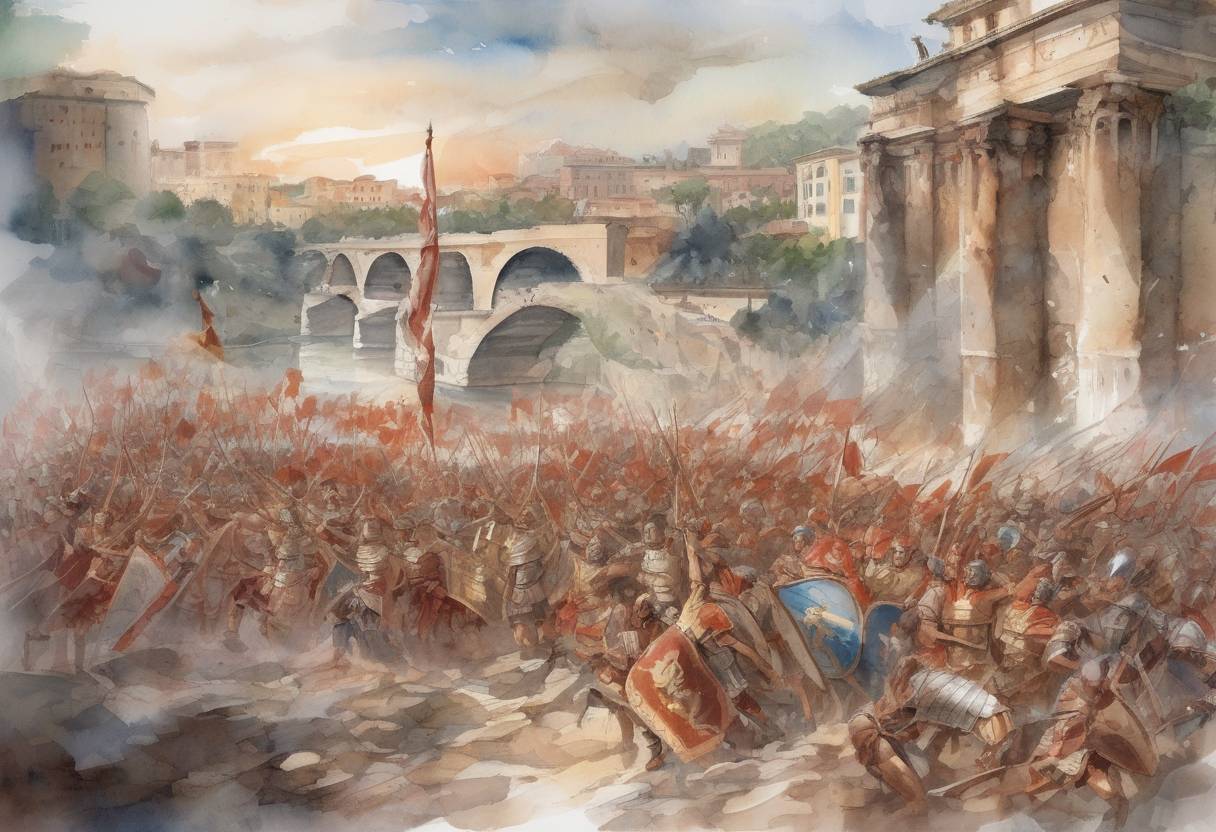
The Battle of the Milvian Bridge
Date and Context
The Battle of the Milvian Bridge occurred on October 28, 312 CE, between the Roman Emperors Constantine I and Maxentius. This battle was a decisive moment in Roman history, marking the beginning of Constantine’s conversion to Christianity and significantly influencing the future of the Roman Empire.
Background
Political Landscape
- Tetrarchy System: The Roman Empire was under the tetrarchy system, established by Emperor Diocletian, which divided power among four rulers to maintain order across the vast empire.
- Rivalry: After the abdication of Diocletian, the tetrarchy system began to unravel, leading to power struggles. Constantine and Maxentius emerged as rivals, each claiming legitimacy as emperor.
Pre-Battle Events
- Maxentius’ Rule: Maxentius controlled Rome and parts of the Western Roman Empire. His rule was marked by instability and dissatisfaction among the populace.
- Constantine’s Campaign: Constantine marched his army from Gaul towards Rome, seeking to consolidate power and challenge Maxentius.
The Battle
Location
- Milvian Bridge: The battle took place near the Milvian Bridge, a crucial crossing over the Tiber River, just north of Rome.
Key Events
- Vision and Symbol: According to historical accounts, Constantine experienced a vision the night before the battle. He reportedly saw a symbol in the sky, often described as the Chi-Rho (☧), accompanied by the words “In hoc signo vinces” (“In this sign, you will conquer”). This vision is said to have prompted him to adopt the Christian symbol on his soldiers’ shields.
- Tactics and Outcome: Constantine’s forces, though outnumbered, employed superior tactics and morale, leading to a decisive victory. Maxentius’ forces were routed, and he drowned in the Tiber River during the retreat.
Aftermath and Significance
Constantine’s Rise
- Consolidation of Power: The victory at the Milvian Bridge solidified Constantine’s position as the sole ruler of the Western Roman Empire.
- Religious Impact: The battle is often seen as the catalyst for Constantine’s conversion to Christianity. In 313 CE, he issued the Edict of Milan, granting religious tolerance throughout the empire and ending the persecution of Christians.
Broader Historical Impact
- Christianity’s Rise: Constantine’s support for Christianity paved the way for its spread throughout the Roman Empire and its eventual establishment as the state religion.
- Transformation of the Empire: The battle marked a turning point in Roman history, leading to significant cultural and religious transformations that shaped the future of Europe.
The Battle of the Milvian Bridge remains a pivotal event, symbolizing the intersection of military conquest and religious transformation, with lasting implications for the Roman Empire and the Christian faith.