The Trial of Adolf Eichmann: April 11, 1961
1961 · Jerusalem, Israel
The trial of Adolf Eichmann, a major organizer of the Holocaust, began in Jerusalem, bringing international attention to Nazi war crimes.
December 15, 1961
Adolf Eichmann is sentenced to death after being found guilty of war crimes in Israel.
Jerusalem, Israel | Israeli court
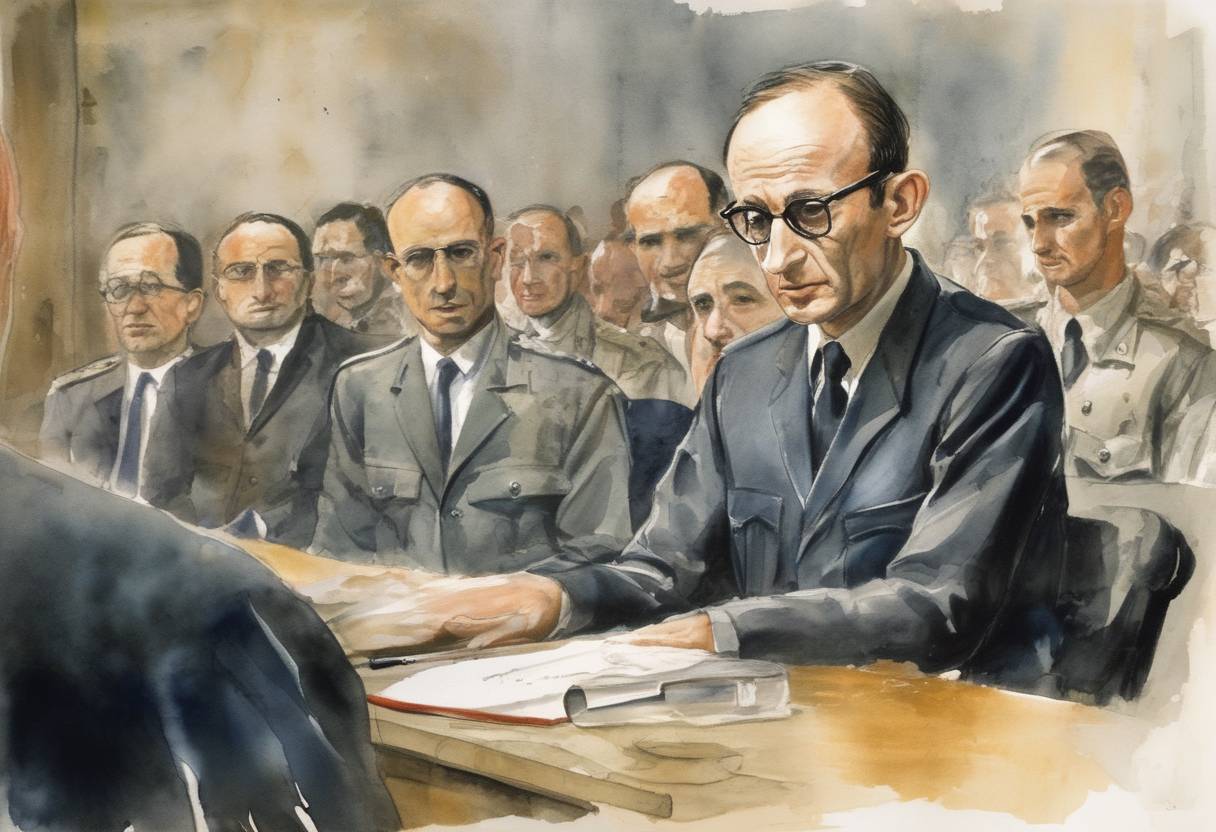
On December 15, 1961, Adolf Eichmann, a former high-ranking Nazi official, was sentenced to death by an Israeli court after being found guilty of war crimes, crimes against humanity, and other offenses related to his role in the Holocaust. This event marked a significant moment in post-World War II history, as it was one of the first major trials to address the atrocities committed during the Holocaust.
Adolf Eichmann was a key figure in the Nazi regime, serving as a lieutenant colonel in the SS and playing a central role in the implementation of the “Final Solution,” the Nazi plan to exterminate the Jewish population of Europe. Eichmann was responsible for organizing the logistics of mass deportations of Jews to ghettos and extermination camps.
After World War II, Eichmann evaded capture and fled to Argentina, where he lived under the alias Ricardo Klement. In 1960, Israeli intelligence agency Mossad located and captured Eichmann in a covert operation, subsequently bringing him to Israel to stand trial.
Eichmann’s trial began on April 11, 1961, in Jerusalem and was one of the first trials to be widely televised, bringing global attention to the proceedings. The trial was presided over by a panel of three judges and was conducted in a manner that adhered to Israeli law, ensuring Eichmann’s right to defense.
The prosecution, led by Attorney General Gideon Hausner, presented extensive evidence and witness testimonies detailing Eichmann’s involvement in the Holocaust. Eichmann’s defense argued that he was merely following orders and was not personally responsible for the atrocities.
On December 15, 1961, the court found Eichmann guilty on all counts, including crimes against humanity, war crimes, and membership in a criminal organization. The judges concluded that Eichmann had played a pivotal role in the systematic extermination of millions of Jews and other minority groups.
Eichmann was sentenced to death, making him the only person ever to receive a death sentence in Israel. His appeal was rejected, and he was executed by hanging on June 1, 1962.
The trial and sentencing of Adolf Eichmann had profound implications:
Eichmann’s trial remains a pivotal moment in the history of Holocaust remembrance and the pursuit of justice for victims of genocide.
Source: en.wikipedia.org