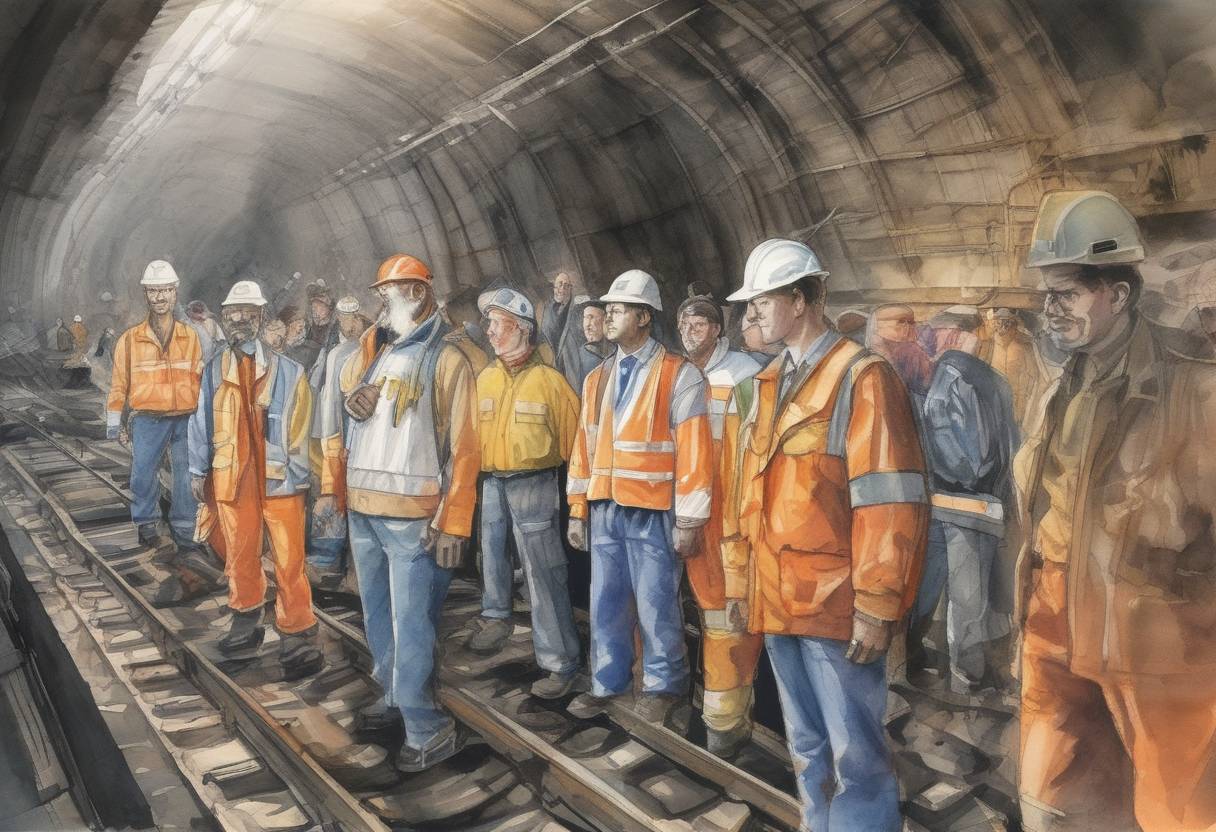
The Channel Tunnel Breakthrough: December 1, 1990
On December 1, 1990, a significant milestone was achieved in the construction of the Channel Tunnel, often referred to as the “Chunnel.” On this day, workers from the United Kingdom and France met 40 meters beneath the English Channel, marking the first time the two sides of the tunnel were physically connected. This event symbolized not only a remarkable engineering feat but also a historic moment of cooperation between the two nations.
Background
The idea of a tunnel beneath the English Channel dates back to the early 19th century, but it wasn’t until the late 20th century that technological advancements and political will made it feasible. The Channel Tunnel project officially began in 1988, following an agreement between the British and French governments. The tunnel was designed to provide a direct rail link between Folkestone, Kent, in the UK, and Coquelles, Pas-de-Calais, in France.
Construction Challenges
The construction of the Channel Tunnel was a complex and challenging endeavor. It involved boring through approximately 50 kilometers (31 miles) of chalk marl, a type of sedimentary rock that provided a stable medium for tunneling. The project required the use of advanced tunnel boring machines (TBMs) and the coordination of thousands of workers from both countries.
The Breakthrough
The breakthrough on December 1, 1990, occurred in the service tunnel, one of three parallel tunnels being constructed. This moment was marked by a small opening being created between the two sides, allowing workers to shake hands and exchange flags. It was a powerful symbol of the collaboration and shared effort that characterized the project.
Significance
The Channel Tunnel was officially opened on May 6, 1994, by Queen Elizabeth II and French President François Mitterrand. It has since become a vital transportation link, facilitating the movement of passengers and goods between the UK and mainland Europe. The tunnel has had a significant impact on trade, tourism, and cultural exchange, reinforcing the interconnectedness of the two regions.
Aftermath and Legacy
The successful completion of the Channel Tunnel stands as a testament to human ingenuity and international cooperation. It has been recognized as one of the “Seven Wonders of the Modern World” by the American Society of Civil Engineers. The tunnel continues to serve as a crucial infrastructure component, handling millions of passengers and freight each year.
In summary, the meeting of the Channel Tunnel workers on December 1, 1990, was a pivotal moment in the project’s history, symbolizing the culmination of years of planning, engineering, and collaboration. It remains a landmark achievement in the field of civil engineering and a lasting symbol of Franco-British partnership.