Junko Tabei: First Woman to Summit Mount Everest
1975 · Mount Everest, Nepal
Junko Tabei becomes the first woman to reach the summit of Mount Everest.
May 8, 1978
Reinhold Messner and Peter Habeler become the first climbers to reach the summit of Mount Everest without supplemental oxygen.
Mount Everest, Nepal/China | Mountaineering Expedition
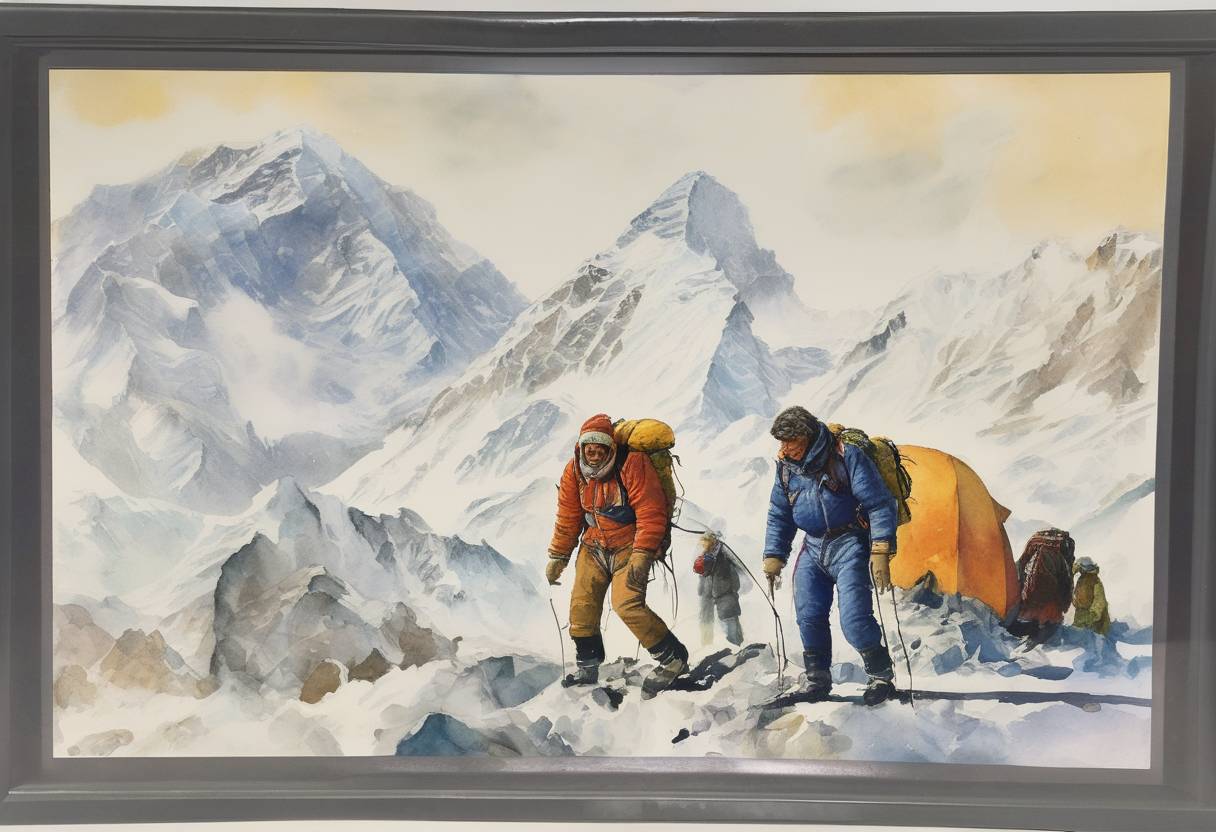
On May 8, 1978, Reinhold Messner and Peter Habeler achieved a groundbreaking feat in the history of mountaineering by becoming the first climbers to reach the summit of Mount Everest without the use of supplemental oxygen. This remarkable accomplishment challenged the prevailing belief that human beings could not survive at such extreme altitudes without additional oxygen support.
Mount Everest, the world’s highest peak at 8,848 meters (29,029 feet), had been a coveted goal for climbers since the early 20th century. The first successful ascent was made by Sir Edmund Hillary and Tenzing Norgay in 1953, using supplemental oxygen. Prior to Messner and Habeler’s ascent, it was widely assumed that the human body could not endure the “death zone”—altitudes above 8,000 meters—without artificial oxygen.
Reinhold Messner: An Italian mountaineer from South Tyrol, Messner was already renowned for his climbing prowess and his philosophy of “alpine style” climbing, which emphasized speed, minimal equipment, and self-reliance.
Peter Habeler: An Austrian climber known for his technical skills and partnership with Messner on several expeditions. Together, they had previously achieved notable climbs, including the first ascent of the Eiger North Face in alpine style.
Messner and Habeler’s expedition to Everest in 1978 was part of a larger Austrian expedition led by Wolfgang Nairz. The duo’s attempt to summit without supplemental oxygen was initially met with skepticism by many in the climbing community. However, their meticulous preparation, acclimatization, and understanding of high-altitude physiology played crucial roles in their success.
On May 8, 1978, Messner and Habeler set out from their high camp, navigating the treacherous terrain and extreme conditions of Everest’s upper slopes. Despite the thin air and physical exhaustion, they reached the summit, proving that it was possible to climb Everest without supplemental oxygen.
The successful ascent by Messner and Habeler marked a paradigm shift in high-altitude mountaineering. It demonstrated the potential of the human body to adapt to extreme conditions and inspired a new generation of climbers to pursue “oxygen-free” ascents of the world’s highest peaks.
Reinhold Messner continued to push the boundaries of mountaineering, becoming the first person to climb all 14 of the world’s 8,000-meter peaks without supplemental oxygen. His achievements have cemented his legacy as one of the greatest climbers in history.
The 1978 ascent of Everest without supplemental oxygen remains a testament to human endurance and the spirit of exploration, challenging the limits of what was thought possible in the realm of high-altitude climbing.
Source: en.wikipedia.org