Nobel Peace Prize Awarded to Barack Obama - October 12, 2009
2009 · Oslo, Norway
The Nobel Peace Prize was awarded to Barack Obama for his extraordinary efforts to strengthen international diplomacy and cooperation between peoples.
December 10, 2001
The Nobel Peace Prize was awarded to the United Nations and its Secretary-General, Kofi Annan, for their work for a better organized and more peaceful world.
Oslo, Norway | Nobel Committee
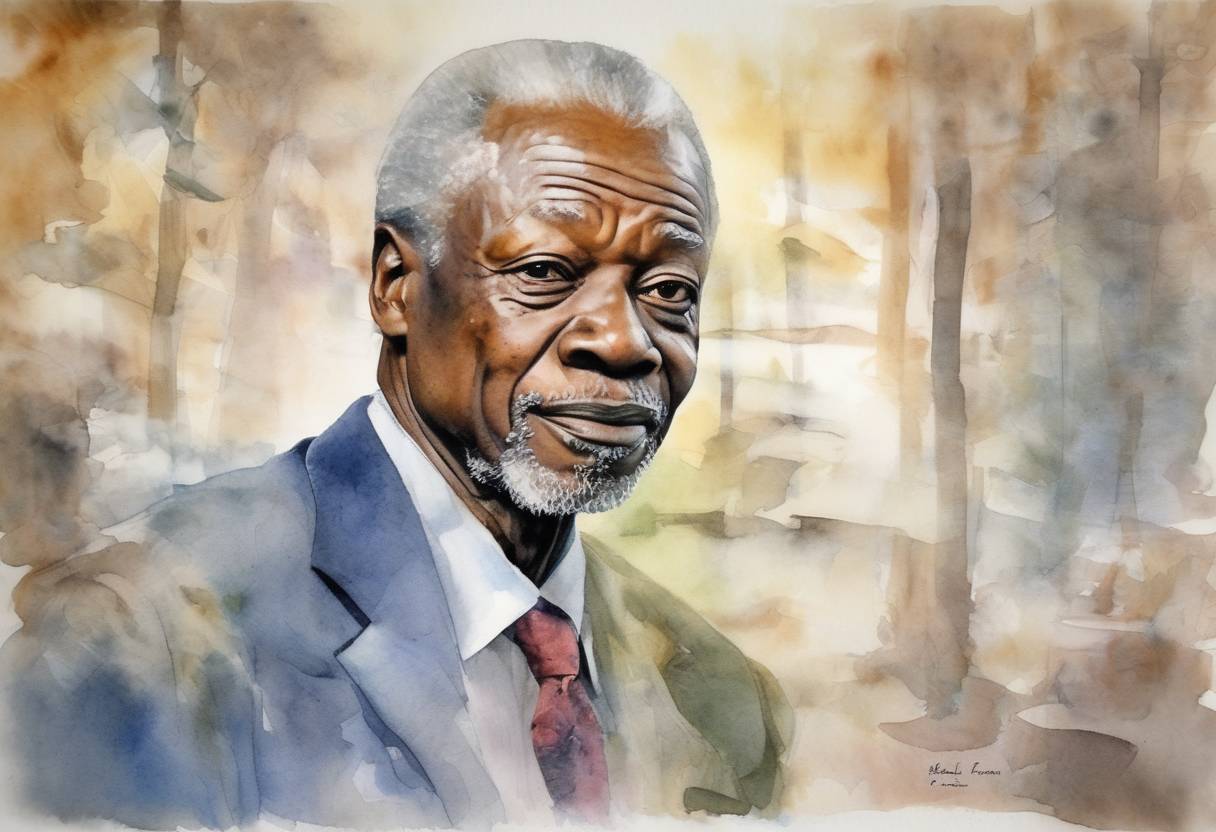
On October 12, 2001, the Nobel Peace Prize was awarded jointly to the United Nations (UN) and its Secretary-General, Kofi Annan. This prestigious recognition was given for their efforts in creating a better organized and more peaceful world.
Kofi Annan: Born in Ghana in 1938, Kofi Annan served as the seventh Secretary-General of the United Nations from January 1997 to December 2006. He was the first person from sub-Saharan Africa to hold this position.
United Nations: Established in 1945 after World War II, the UN is an international organization founded to promote peace, security, and cooperation among countries.
Peacekeeping and Conflict Resolution: Under Annan’s leadership, the UN played a crucial role in peacekeeping operations and conflict resolution around the world. Annan was instrumental in reforming the UN’s peacekeeping operations to make them more effective and responsive.
Human Rights and Development: Annan emphasized the importance of human rights, development, and the fight against poverty. He launched the Millennium Development Goals, which aimed to address various global issues, including poverty, education, and health.
Global Diplomacy: Annan was known for his diplomatic skills and efforts to mediate in conflicts, including those in the Middle East and Africa. His tenure was marked by a focus on strengthening the UN’s role in global governance.
The Nobel Committee recognized the UN and Annan for their work in revitalizing the organization and enhancing its role in international affairs. The award highlighted the importance of multilateralism and international cooperation in addressing global challenges.
Continued Influence: Annan continued to be an influential figure in global diplomacy after his tenure as Secretary-General. He was involved in various initiatives and organizations aimed at promoting peace and development.
UN Reforms: The award underscored the need for ongoing reforms within the UN to adapt to new global challenges, a theme that remains relevant in international discourse.
Global Recognition: The Nobel Peace Prize brought significant attention to the UN’s efforts and the importance of international collaboration in maintaining peace and security.
In summary, the awarding of the Nobel Peace Prize to the United Nations and Kofi Annan in 2001 was a recognition of their significant contributions to fostering a more organized and peaceful world. It underscored the critical role of international institutions and leaders in addressing complex global issues.
Source: www.nobelprize.org