King Michael's Coup in Romania - August 26, 1944
1944 · Bucharest, Romania
Romanian King Michael leads a successful coup to topple the pro-Nazi government, switching sides in World War II to join the Allies.
August 23, 1944
Romania switched allegiance from the Axis powers to the Allies during World War II.
Bucharest, Romania | Romanian government
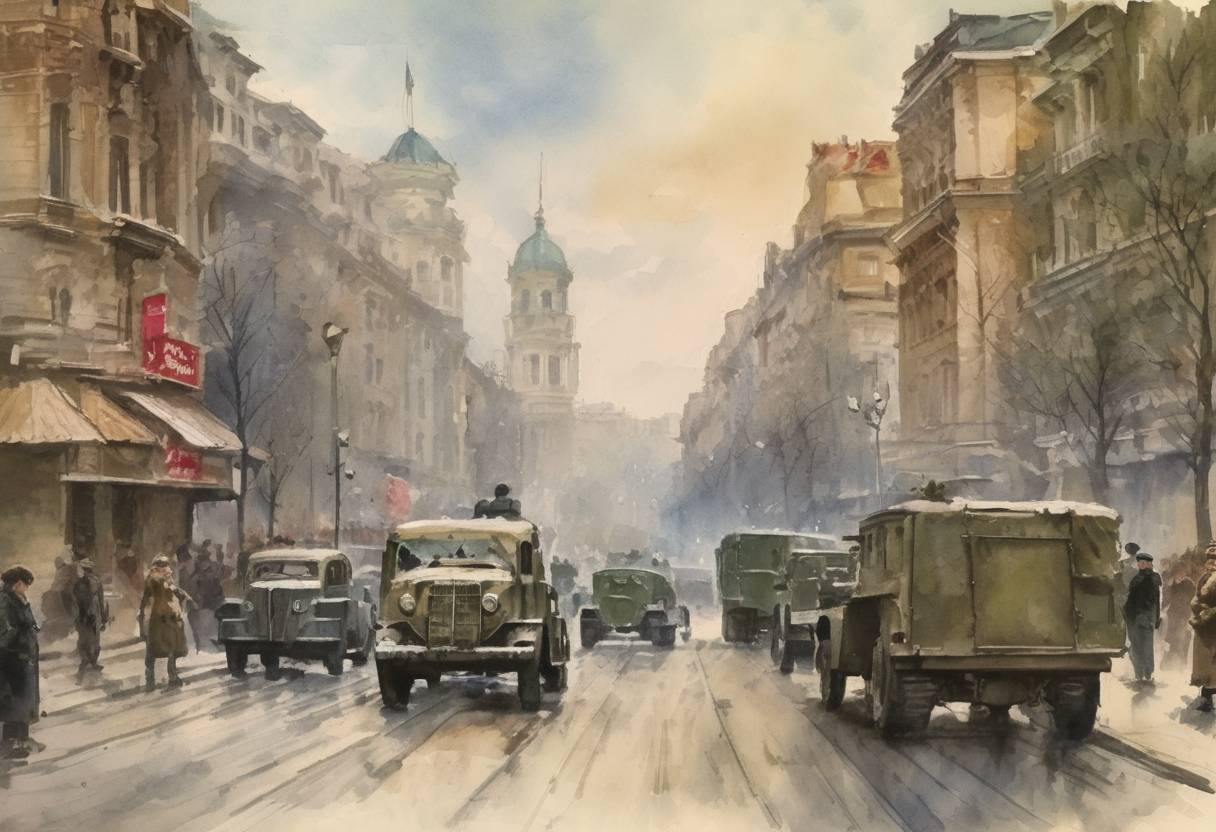
On August 23, 1944, Romania underwent a significant political and military shift during World War II by switching its allegiance from the Axis powers to the Allies. This pivotal event had profound implications for the course of the war in Eastern Europe and the post-war landscape.
Romania initially joined the Axis powers in November 1940, largely due to geopolitical pressures and territorial losses. The country sought to regain territories lost to the Soviet Union, Hungary, and Bulgaria through the Second Vienna Award and other agreements. Under the leadership of Ion Antonescu, Romania became a key Axis ally, contributing significantly to the Eastern Front against the Soviet Union.
Military Setbacks: By 1944, the Axis powers were experiencing significant setbacks on the Eastern Front. The Soviet Union’s successful offensives were pushing German and Romanian forces back, threatening Romanian territory.
Internal Dissent: Within Romania, dissatisfaction with the war and Antonescu’s regime was growing. The Romanian population and political factions were increasingly opposed to the continued alliance with Nazi Germany.
Allied Advances: The success of the Allied forces in Western Europe, coupled with Soviet advances, made a continued alliance with the Axis untenable for Romania.
On August 23, 1944, King Michael I of Romania led a coup d’état against the government of Ion Antonescu. The coup was supported by a coalition of political parties, including communists, liberals, and social democrats, who sought to end the war and align with the Allies.
Romania’s switch from the Axis to the Allies exemplifies the complex dynamics and shifting alliances of World War II. It highlights the impact of military pressures and internal dissent on national policy and underscores the broader geopolitical transformations that characterized the war’s final years.
This event not only contributed to the weakening of the Axis powers but also set the stage for the post-war reorganization of Eastern Europe, significantly influencing the region’s political landscape during the Cold War.
Source: en.wikipedia.org