Iran Becomes an Islamic Republic - April 1, 1979
1979 · Tehran, Iran
Iran became an Islamic Republic following a national referendum, marking the end of the Pahlavi monarchy and the beginning of theocratic rule under Ayatollah Khomeini.
January 30, 1979
The Iranian government, led by Prime Minister Shapour Bakhtiar, collapsed, paving the way for the return of Ayatollah Khomeini and the establishment of the Islamic Republic of Iran.
Tehran, Iran | Iranian Government
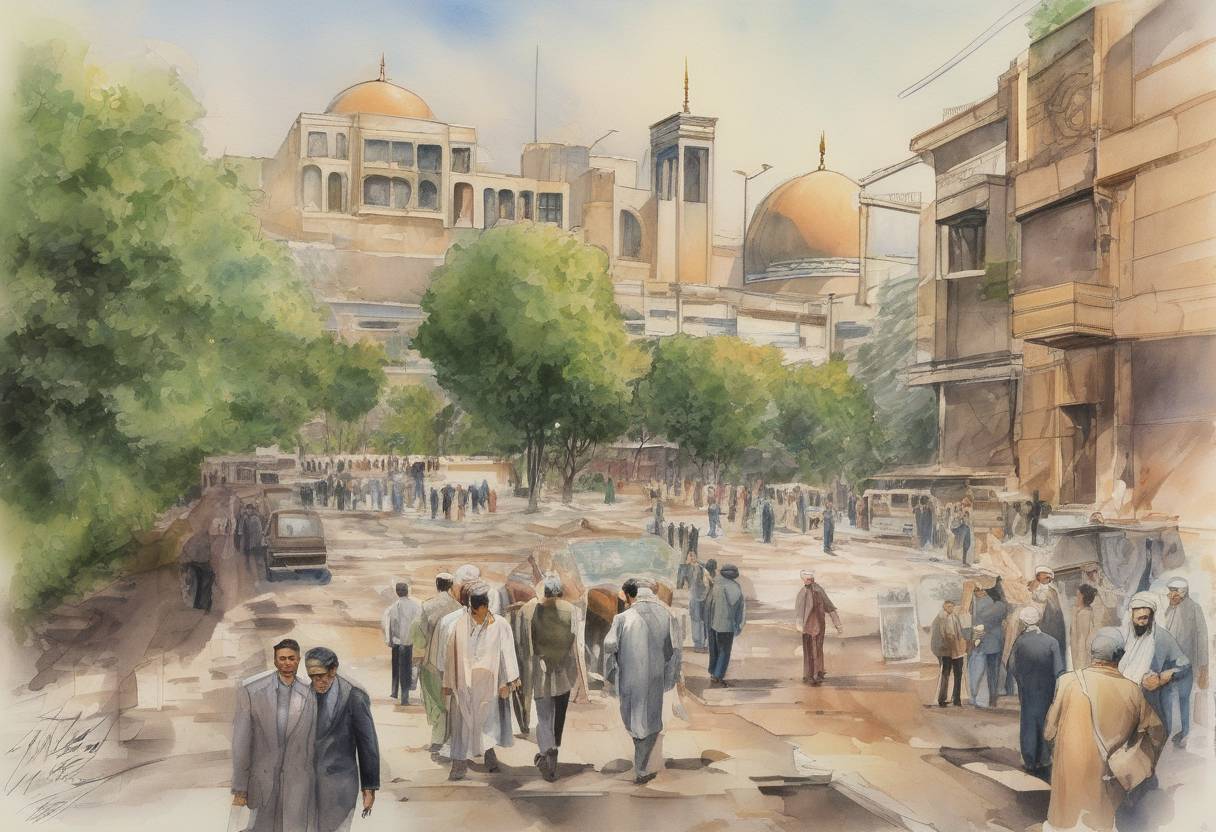
On January 30, 1979, the Iranian government led by Prime Minister Shapour Bakhtiar collapsed, marking a pivotal moment in the Iranian Revolution and paving the way for the return of Ayatollah Ruhollah Khomeini and the establishment of the Islamic Republic of Iran.
The Iranian Revolution was a culmination of widespread dissatisfaction with the rule of Mohammad Reza Shah Pahlavi, who had been the monarch of Iran since 1941. His regime was characterized by rapid modernization and Westernization, which, while economically beneficial for some, led to social upheaval and discontent among various segments of Iranian society. Key grievances included:
In an attempt to quell the growing unrest, the Shah appointed Shapour Bakhtiar as Prime Minister on January 4, 1979. Bakhtiar, a member of the National Front and a moderate politician, sought to implement reforms that included:
However, Bakhtiar’s government was seen as too little, too late. His association with the Shah’s regime undermined his credibility, and he faced opposition from both the revolutionary forces and the Shah’s loyalists.
By late January 1979, the situation in Iran had reached a critical point. Mass protests and strikes had paralyzed the country, and the military, a key pillar of the Shah’s power, was increasingly unwilling to support the regime. On January 16, 1979, the Shah left Iran for an “extended vacation,” effectively abdicating his role.
On January 30, 1979, Bakhtiar’s government collapsed under the pressure of the revolutionary forces. This collapse cleared the way for Ayatollah Khomeini, who had been in exile in France, to return to Iran. Khomeini arrived in Tehran on February 1, 1979, to a tumultuous welcome by millions of Iranians.
Following Khomeini’s return, the revolutionary momentum continued to build. By February 11, 1979, the Pahlavi regime was effectively overthrown, and Khomeini assumed control. The subsequent months saw the establishment of the Islamic Republic of Iran, with Khomeini as its Supreme Leader. The new government implemented a theocratic system based on Islamic principles, fundamentally altering Iran’s political, social, and cultural landscape.
The revolution had significant regional and global implications, affecting geopolitics in the Middle East and altering Iran’s relations with Western countries, particularly the United States.
The events of January 30, 1979, thus marked a turning point in Iranian history, leading to profound changes that continue to influence the country and the broader region today.
Source: en.wikipedia.org