The Treaty of Meerssen: June 21, 870
870 · Meerssen, Carolingian Empire
The Treaty of Meerssen is signed, dividing the Carolingian Empire between the sons of Louis the German and Charles the Bald.
November 30, 0870
The Treaty of Meerssen was signed, dividing the Carolingian Empire among the sons of Louis the German and Charles the Bald, reshaping the political landscape of Western Europe.
Meerssen, Carolingian Empire | Carolingian Empire
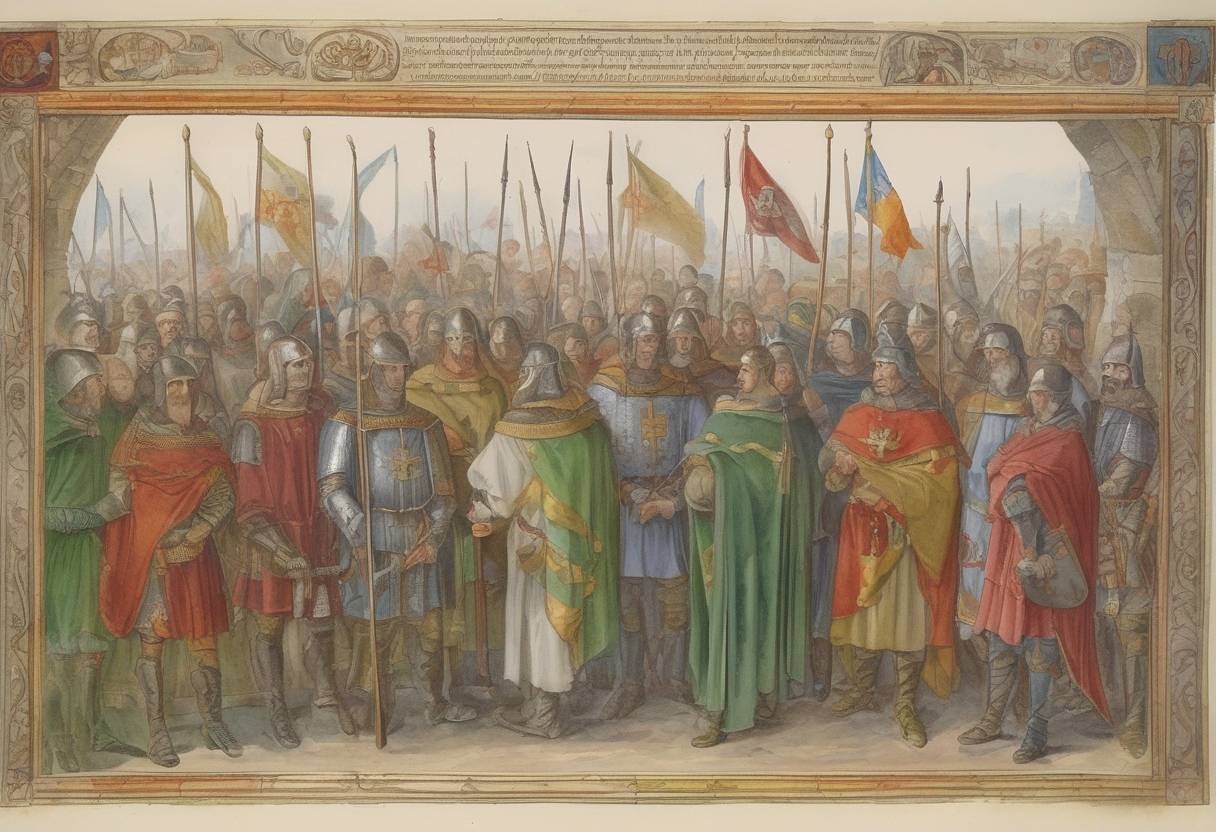
The Treaty of Meerssen, signed on August 8, 870, was a significant event in the history of the Carolingian Empire, marking a crucial moment in the division of the empire established by Charlemagne. This treaty was a result of ongoing disputes and the complex dynamics of succession among Charlemagne’s grandsons, following the death of Lothair II in 869.
Charlemagne’s Legacy: Charlemagne, crowned Emperor in 800, had expanded the Frankish Empire to its zenith. Upon his death in 814, his son Louis the Pious inherited the empire. However, Louis’s reign was marked by internal strife and the challenge of dividing the empire among his sons.
Treaty of Verdun (843): This earlier treaty divided the Carolingian Empire into three parts among Louis the Pious’s sons: Charles the Bald, Louis the German, and Lothair I. This division laid the groundwork for future territorial disputes.
Death of Lothair II: Lothair II, the son of Lothair I, ruled over Lotharingia. His death without legitimate heirs in 869 prompted his uncles, Charles the Bald and Louis the German, to claim his territory.
Date and Location: The treaty was signed on August 8, 870, in Meerssen, a location in present-day Netherlands.
Key Provisions: The treaty effectively divided the territory of Lotharingia between Charles the Bald and Louis the German. This division was intended to resolve the disputes over Lothair II’s inheritance and maintain peace between the two rulers.
Territorial Adjustments:
Political Landscape: The Treaty of Meerssen significantly reshaped the political landscape of Western Europe. It further fragmented the Carolingian Empire, setting the stage for the emergence of distinct European kingdoms.
Legacy of Division: The division of territories under the treaty contributed to the long-term fragmentation of the Carolingian Empire, influencing the development of modern European states.
Impact on Succession: The treaty highlighted the challenges of succession and territorial division within the Carolingian dynasty, issues that would continue to affect European politics in subsequent centuries.
The Treaty of Meerssen was a pivotal moment in the history of the Carolingian Empire, reflecting the complexities of medieval European politics and the enduring legacy of Charlemagne’s empire. It underscored the challenges of maintaining a unified empire in the face of familial rivalries and territorial ambitions, shaping the future of Western Europe.
Source: en.wikipedia.org