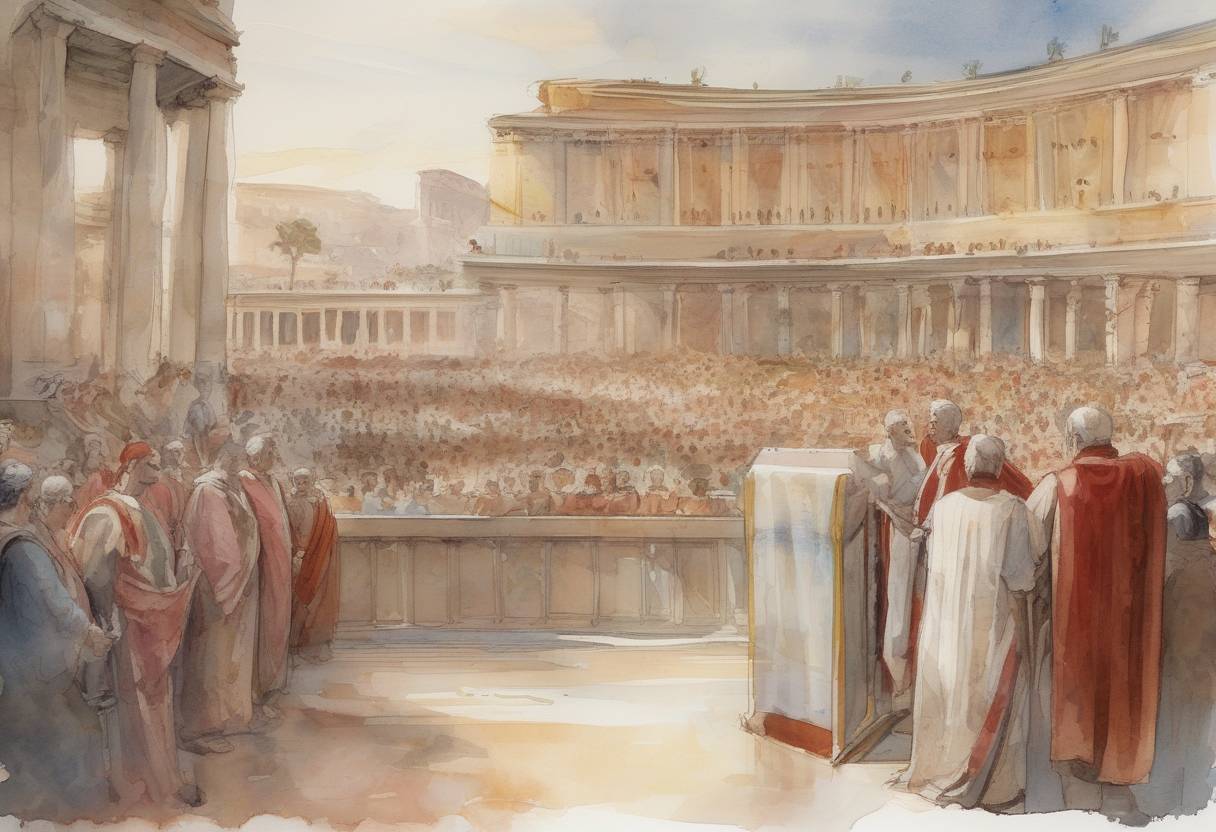
Cicero’s Fourth Catilinarian Oration: December 5, 63 BCE
On December 5, 63 BCE, the Roman statesman and orator Marcus Tullius Cicero delivered the fourth and final speech in a series known as the Catilinarian Orations. These speeches were pivotal in exposing and thwarting the conspiracy led by Lucius Sergius Catilina (Catiline) to overthrow the Roman Republic.
Context and Background
Political Climate: The late Roman Republic was a period marked by political instability, social unrest, and power struggles among the elite. Catiline, a disaffected aristocrat, sought to exploit these tensions to seize power.
Catiline’s Conspiracy: Catiline, having failed in his bid for the consulship, plotted to assassinate several senators and incite a rebellion. His plan aimed to cancel debts and redistribute wealth, appealing to Rome’s disenfranchised citizens.
Cicero’s Role: As consul in 63 BCE, Cicero was tasked with maintaining order. He became aware of the conspiracy through informants and took decisive action to protect the Republic.
The Orations
Cicero’s Catilinarian Orations were a series of four speeches delivered to the Roman Senate and the public:
First Oration: Delivered on November 8, 63 BCE, Cicero addressed the Senate, revealing the conspiracy and denouncing Catiline, who was present at the time.
Second Oration: Given to the public, Cicero explained the threat posed by Catiline and justified his actions to safeguard the Republic.
Third Oration: After the arrest of key conspirators, Cicero detailed the evidence against them, further solidifying public support for his actions.
Fourth Oration: The final speech, delivered on December 5, was crucial in determining the fate of the captured conspirators.
The Fourth Oration
Setting: The speech was delivered in the Temple of Concord, where the Senate convened to decide the punishment for the conspirators.
Content: Cicero argued for the execution of the conspirators, emphasizing the severity of their crimes and the need to protect the Republic. He balanced his legal and moral arguments, appealing to the senators’ sense of duty and justice.
Outcome: Cicero’s persuasive rhetoric swayed the Senate, leading to the execution of the conspirators without a trial, a decision that was controversial but deemed necessary by many to prevent further unrest.
Aftermath and Significance
Immediate Impact: The swift action against the conspirators quelled the immediate threat to the Republic. Catiline, who had fled Rome, was later defeated in battle and killed in early 62 BCE.
Cicero’s Legacy: Cicero was hailed as a savior of the Republic, earning the honorary title “Pater Patriae” (Father of the Fatherland). However, his decision to execute the conspirators without trial would later be used against him politically.
Historical Significance: The Catilinarian Orations are celebrated as masterpieces of rhetoric and are studied for their insight into Roman politics and Cicero’s oratorical skill. They highlight the fragility of the Republic and foreshadow the eventual transition to imperial rule.
Cicero’s actions during the Catilinarian Conspiracy remain a subject of debate among historians, reflecting the complex interplay of law, politics, and morality in the late Roman Republic.