June 24, 1314

The Battle of Bannockburn concluded with a decisive victory for the Scots, led by Robert the Bruce, over the English army commanded by King Edward II, securing Scottish independence.


Bannockburn, Scotland | Scottish Army
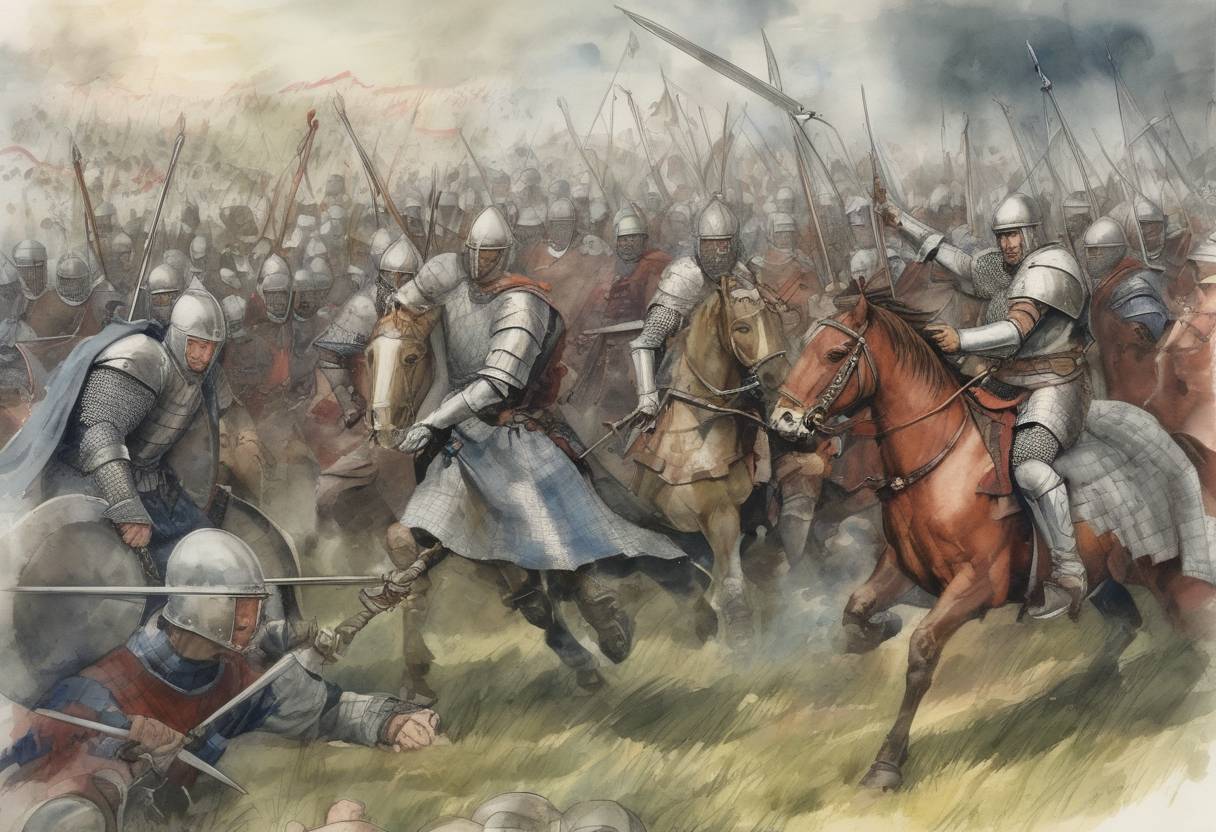
Watercolor painting based depiction of The Battle of Bannockburn concluded with a decisive victory for the Scots, led by Robert the Bruce, over the English army commanded by King Edward II, securing Scottish independence. (1314)

The Battle of Bannockburn: A Decisive Scottish Victory

Date: June 24, 1314

Background

The Battle of Bannockburn was a pivotal conflict in the First War of Scottish Independence. Tensions between Scotland and England had been escalating since the late 13th century, following the death of the Scottish king, Alexander III, in 1286, and the subsequent succession crisis. Edward I of England sought to assert dominance over Scotland, leading to a series of conflicts. By 1314, Robert the Bruce had established himself as the King of Scots, but his control was not yet secure.

Key Events Leading Up to the Battle

  • 1296: Edward I of England invaded Scotland, initiating the Wars of Scottish Independence.
  • 1306: Robert the Bruce was crowned King of Scots, but faced opposition from both English forces and rival Scottish factions.
  • 1313: Bruce began a campaign to reclaim Scottish castles held by the English, including Stirling Castle, a strategic stronghold.

The Battle

The Battle of Bannockburn took place over two days, June 23 and 24, 1314, near Stirling in central Scotland. The Scottish forces, led by Robert the Bruce, faced a larger English army commanded by King Edward II.

Day 1: June 23, 1314

  • The Scots, utilizing the terrain to their advantage, engaged the English forces in a series of skirmishes.
  • A notable incident involved Robert the Bruce personally defeating the English knight Sir Henry de Bohun in single combat, boosting Scottish morale.

Day 2: June 24, 1314

  • The Scots employed schiltron formations, dense groups of spearmen, to counter the English cavalry.
  • The English army, hindered by the marshy terrain and poor coordination, struggled to maintain formation.
  • Scottish forces launched a decisive attack, causing chaos and panic among the English troops, leading to a rout.

Aftermath and Consequences

  • The victory at Bannockburn was a significant boost for Scottish morale and solidified Robert the Bruce’s position as King of Scots.
  • The defeat weakened Edward II’s authority and diminished English influence in Scotland.
  • Although the battle did not immediately secure Scottish independence, it was a crucial step towards the eventual recognition of Scotland’s sovereignty with the Treaty of Edinburgh-Northampton in 1328.

Historical Significance

The Battle of Bannockburn is celebrated as a symbol of Scottish resilience and determination. It demonstrated the effectiveness of strategic leadership and the importance of terrain in medieval warfare. The victory remains a defining moment in Scottish history, commemorated for its role in the struggle for independence.