Discovery of the Venus de Milo
1820 · Milos, Greece
The Venus de Milo, an ancient Greek statue, was discovered on the island of Milos in the Aegean Sea.
September 12, 1940
The Lascaux Caves were discovered in France, containing some of the most famous examples of prehistoric cave paintings.
Montignac, France | none
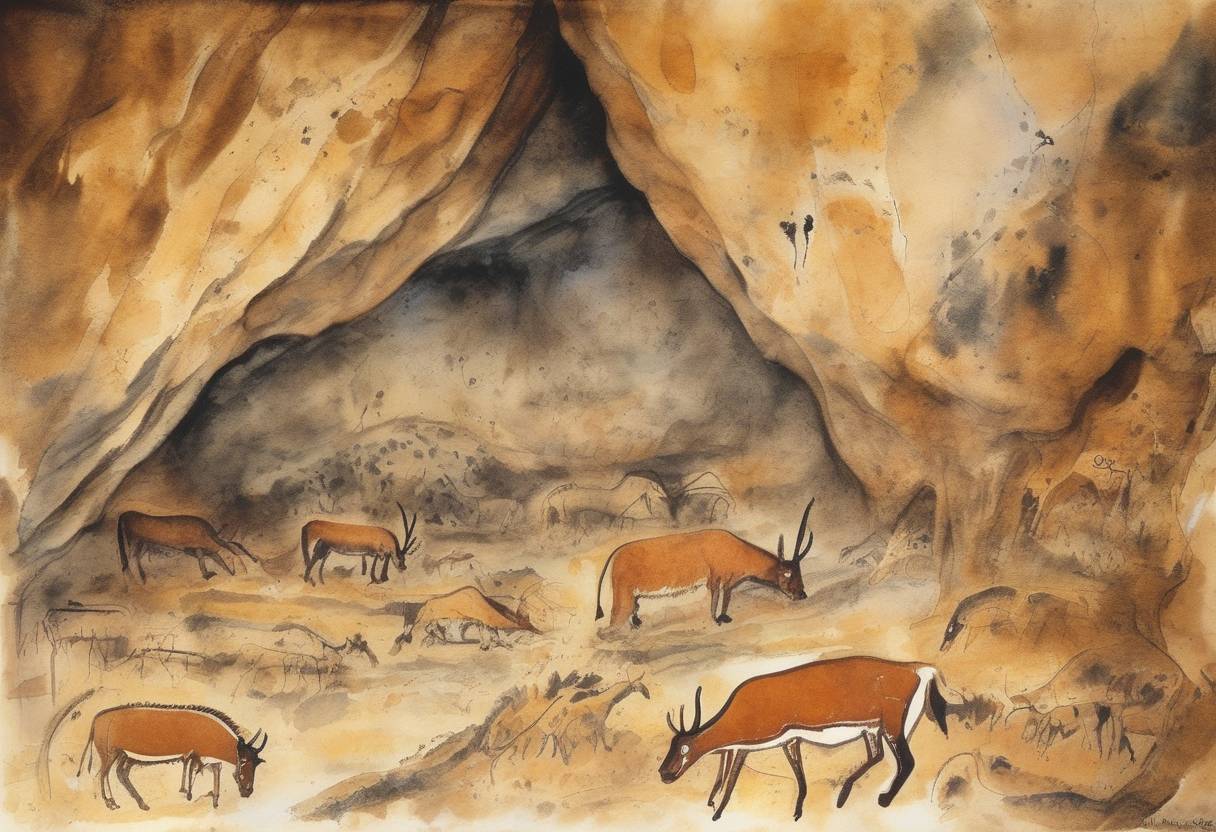
On September 12, 1940, one of the most significant archaeological discoveries of the 20th century occurred in southwestern France: the discovery of the Lascaux Caves. These caves, located near the village of Montignac in the Dordogne region, contain some of the most remarkable examples of Upper Paleolithic art, dating back approximately 17,000 years.
The caves were discovered by four teenagers: Marcel Ravidat, Jacques Marsal, Georges Agnel, and Simon Coencas. The story goes that Marcel Ravidat stumbled upon the entrance while walking his dog, Robot, who fell into a hole that led to the cave’s entrance. Intrigued, Ravidat returned with his friends, and together they explored the cave, revealing its stunning prehistoric artwork.
The Lascaux Caves are renowned for their extensive and well-preserved collection of over 600 parietal wall paintings. These artworks primarily depict large animals, which were prevalent in the region during the Upper Paleolithic period. The paintings include:
The paintings are characterized by their vivid colors, achieved using mineral pigments, and their sophisticated use of perspective and motion, which suggest a high level of artistic skill and cultural development.
The Lascaux Caves provide invaluable insights into the lives and beliefs of early human societies. The artwork is believed to have been created by the Cro-Magnon people, who were among the first anatomically modern humans in Europe. The purpose of the paintings remains a subject of debate among scholars, with theories ranging from religious or ceremonial functions to a form of early storytelling or communication.
Following their discovery, the caves quickly gained international attention, attracting numerous visitors. However, the influx of tourists led to the deterioration of the paintings due to exposure to carbon dioxide, heat, and humidity. In 1963, the French government closed the caves to the public to preserve the artwork. Today, only a few scientists and preservationists are allowed limited access.
To allow the public to appreciate the art without damaging the originals, a replica of the cave, known as Lascaux II, was opened in 1983. This replica faithfully reproduces the main sections of the cave and its paintings.
The discovery of the Lascaux Caves significantly advanced the study of prehistoric art and human history. It underscored the complexity and creativity of early human societies and has inspired countless studies and exhibitions worldwide. The caves are now a UNESCO World Heritage Site, recognized for their cultural and historical importance.
In summary, the discovery of the Lascaux Caves on September 12, 1940, marked a pivotal moment in archaeology, offering a window into the artistic expression and cultural practices of our ancient ancestors.
Source: en.wikipedia.org