Mahatma Gandhi's Arrest and the Quit India Movement
1942 · Bombay, India
Mahatma Gandhi is arrested in Bombay by British forces, marking the beginning of the Quit India Movement, a mass protest demanding an end to British rule in India.
October 16, 1905
The Partition of Bengal is made effective by the British Raj, leading to significant political unrest and contributing to the rise of the Indian independence movement.
Calcutta, India | British Raj
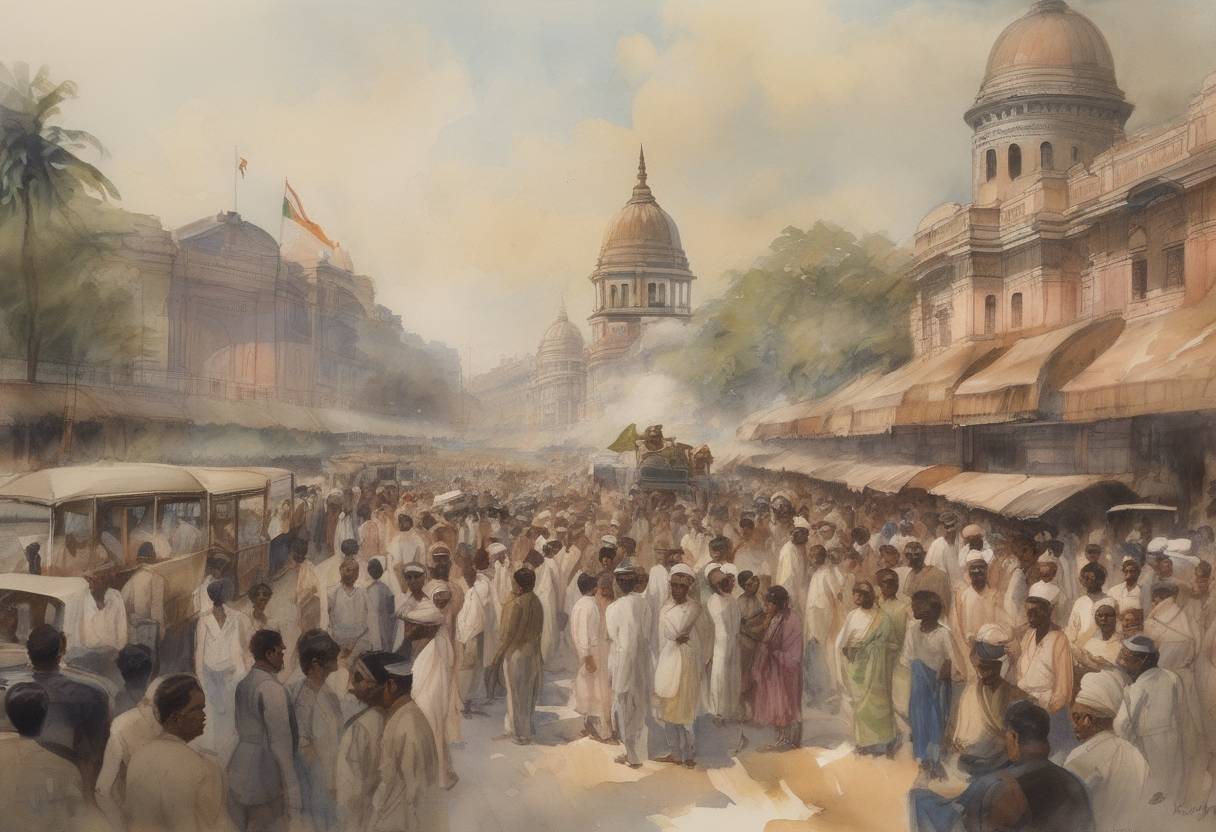
On October 16, 1905, the British Raj implemented the Partition of Bengal, a decision that would have profound implications for the Indian subcontinent. This event marked a significant turning point in the history of British India, contributing to the rise of the Indian independence movement.
Bengal Presidency: Before the partition, Bengal was the largest province in British India, encompassing present-day Bangladesh and parts of India, including West Bengal, Bihar, and Odisha. It was a densely populated region with a diverse mix of ethnicities and religions.
Administrative Challenges: The British administration justified the partition on administrative grounds, arguing that the province was too large to govern effectively. The division was intended to improve governance by creating two smaller, more manageable provinces.
Division: The partition split Bengal into two separate entities:
Lord Curzon’s Role: The Viceroy of India, Lord Curzon, was a key proponent of the partition. He believed it would strengthen administrative efficiency and reduce the influence of the Bengali intelligentsia, who were increasingly vocal in their opposition to British rule.
Immediate Reaction: The partition was met with widespread opposition from the Indian populace, particularly among the Bengali Hindus. They viewed it as an attempt to “divide and rule” by creating religious divisions.
Swadeshi Movement: In response, the Swadeshi Movement emerged, advocating for the boycott of British goods and the promotion of Indian-made products. This movement was characterized by mass protests, strikes, and the burning of foreign goods.
Cultural Impact: The partition also sparked a cultural renaissance, with increased emphasis on Indian identity and heritage. Rabindranath Tagore, a prominent Bengali poet, composed the song “Amar Sonar Bangla,” which later became the national anthem of Bangladesh.
Reversal of Partition: Due to the intense opposition and unrest, the British government annulled the partition in 1911. Bengal was reunited, but the seeds of nationalism had already been sown.
Rise of Nationalism: The partition and its reversal galvanized Indian nationalism, leading to the formation of more organized political movements. It marked a shift from moderate to more radical approaches in the struggle for independence.
Long-term Impact: The events surrounding the partition highlighted the growing discontent with British rule and set the stage for future movements that ultimately led to India’s independence in 1947.
The Partition of Bengal in 1905 was a pivotal moment in Indian history, illustrating the complexities of colonial governance and the powerful forces of nationalism that would eventually lead to the end of British rule in India.
Source: en.wikipedia.org