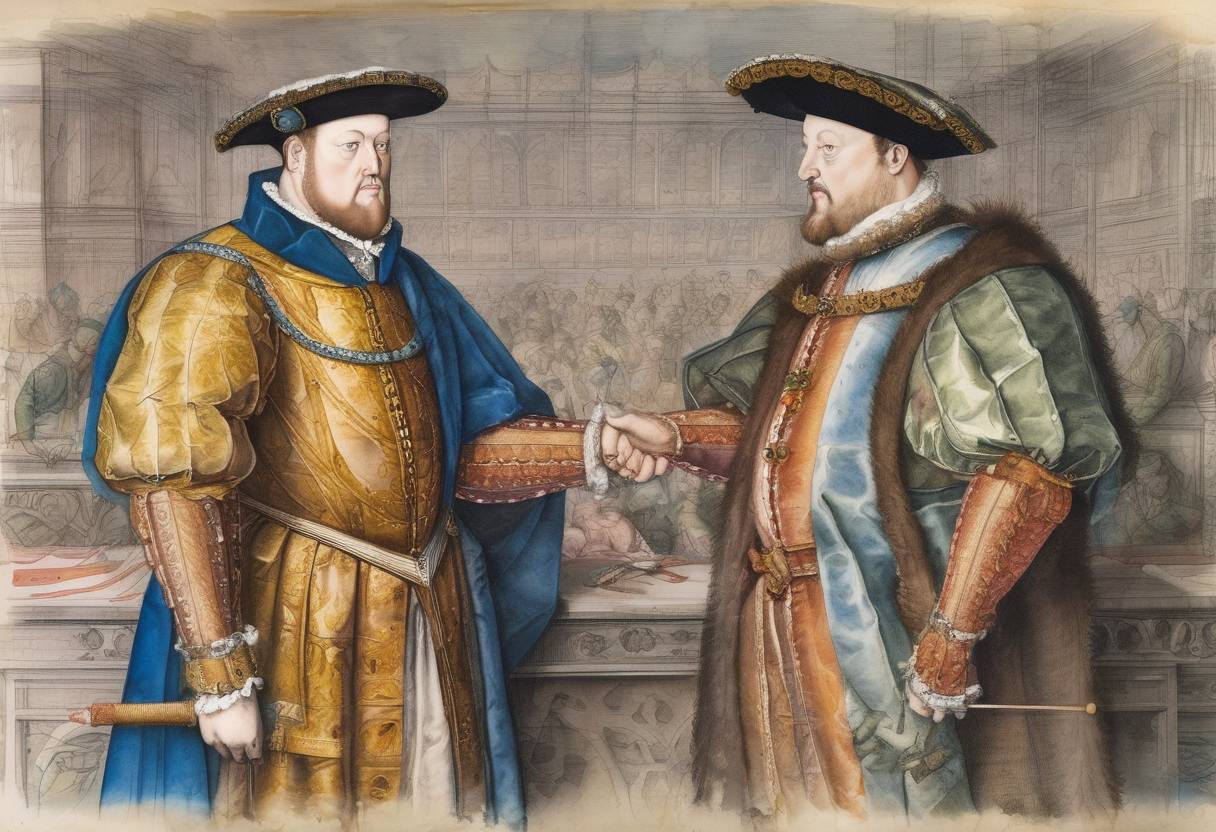
The Secret Treaty of 1532: Henry VIII and François I
On June 23, 1532, a significant yet clandestine diplomatic agreement was forged between two of Europe’s most powerful monarchs: King Henry VIII of England and King François I of France. This secret treaty was aimed against their mutual rival, Emperor Charles V of the Holy Roman Empire. The alliance marked a pivotal moment in the complex web of European politics during the early 16th century.
Context Leading to the Treaty
The early 16th century was a period of intense rivalry among European powers. The Holy Roman Emperor Charles V, who also ruled Spain and vast territories in the Americas, was one of the most powerful figures of the time. His dominance posed a threat to both England and France, prompting these two traditional adversaries to consider an alliance.
Key Factors:
- Territorial Ambitions: Charles V’s extensive empire encircled France, and his influence in Italy and the Low Countries was a constant concern for François I.
- English-French Relations: Although historically adversarial, the shifting political landscape encouraged Henry VIII and François I to set aside their differences temporarily.
- Personal Rivalries: Both Henry and François had personal grievances against Charles V. François had been captured by Charles’s forces in 1525 during the Battle of Pavia, and Henry sought to assert his influence in European affairs.
The Treaty Details
The treaty, negotiated in secret, outlined a mutual defense pact between England and France. While the exact terms remain somewhat obscure due to its clandestine nature, the primary objective was to counterbalance the power of Charles V.
Key Provisions:
- Military Support: Both nations agreed to provide military assistance to each other in the event of an attack by Charles V.
- Diplomatic Cooperation: The treaty emphasized diplomatic collaboration to isolate Charles V on the European stage.
- Marriage Alliances: There were discussions of potential marriage alliances to strengthen the bond between the two courts.
Aftermath and Historical Significance
The secret treaty of 1532 had several important implications:
- Temporary Alliance: The treaty marked a rare moment of cooperation between England and France, although it was short-lived due to the volatile nature of European politics.
- Impact on Charles V: While the treaty did not lead to immediate military conflict, it signaled to Charles V that he faced a united front from two major European powers.
- Shifting Alliances: The treaty exemplified the fluid alliances of the period, as both Henry VIII and François I would later shift their allegiances based on changing political needs.
In conclusion, the secret treaty of 1532 between Henry VIII and François I was a strategic maneuver in the broader context of European power struggles. It highlighted the intricate and often temporary nature of alliances during this era, driven by both personal rivalries and geopolitical considerations.