Consecration of Pope Stephen IV
816 · Rome, Papal States
Pope Stephen IV is consecrated as Pope after being elected on June 22, 816.
January 17, 0708
Sisinnius is elected as Pope, succeeding Pope John VII. His papacy is notably brief, lasting only around three weeks due to his poor health.
Rome, Papal States | Catholic Church
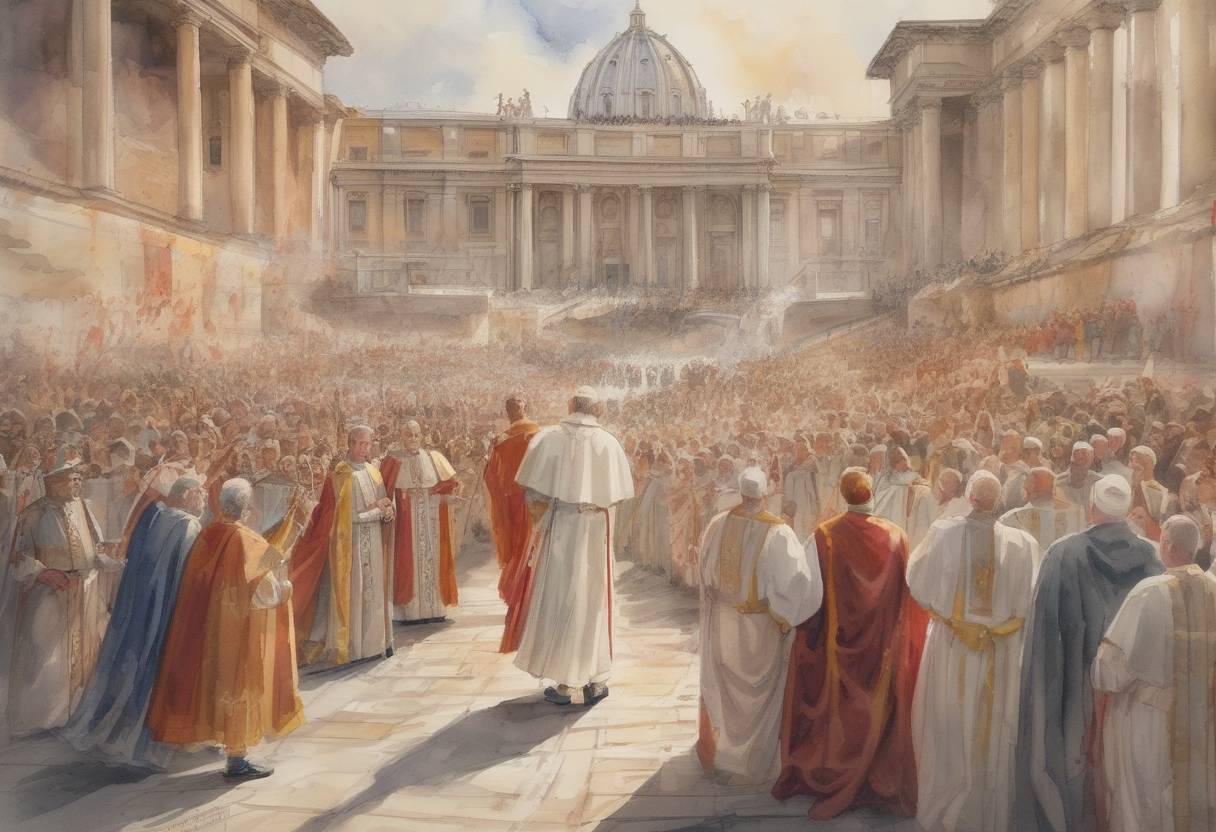
On January 17, 708, Sisinnius was elected as the Bishop of Rome, succeeding Pope John VII. His election came during a period of significant challenges for the papacy, including political instability and external threats to the city of Rome.
Pope John VII, Sisinnius’s predecessor, had a relatively short papacy from 705 to 707. His tenure was marked by efforts to restore churches and improve relations with the Byzantine Empire. However, his sudden death left the papal seat vacant, leading to the election of Sisinnius.
Sisinnius’s papacy is one of the shortest in the history of the Catholic Church, lasting only about three weeks. Despite his brief time as pope, Sisinnius is noted for his intentions to fortify the walls of Rome, a necessary measure given the ongoing threats from the Lombards and other external forces. Unfortunately, his poor health severely limited his ability to implement any significant changes or policies.
Sisinnius was reportedly in poor health at the time of his election, suffering from severe gout, which incapacitated him to the extent that he could not feed himself. His health issues ultimately led to his death on February 4, 708, just 21 days after his election.
Following Sisinnius’s death, the papal seat was again left vacant, leading to the election of Pope Constantine, who succeeded him. Constantine’s papacy was marked by continued efforts to manage the complex relationship with the Byzantine Empire and address the challenges facing the Church.
While Sisinnius’s papacy was notably brief, it highlights the challenges faced by the papacy during this period, including the need for strong leadership amidst political and military threats. His election and subsequent death underscore the vulnerabilities of the papal office during the early 8th century, a time when the Church was navigating both internal and external pressures.
Sisinnius’s brief tenure serves as a reminder of the human frailties that can impact leadership roles, even in the highest echelons of religious authority. Despite his short time as pope, his election reflects the continuity of the papal institution and its resilience in the face of adversity.
Source: en.wikipedia.org