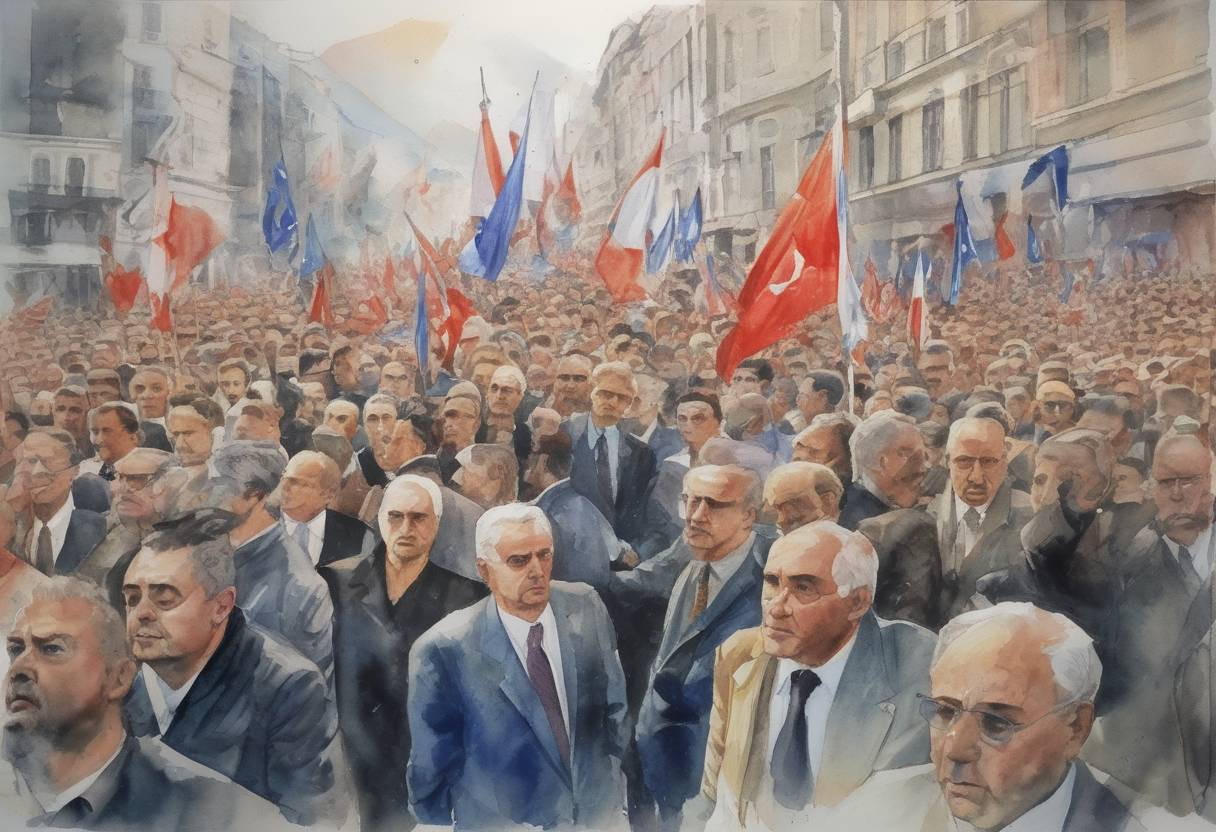
Resignation of Slobodan Milošević: October 6, 2000
On October 6, 2000, Slobodan Milošević, the President of the Federal Republic of Yugoslavia, resigned from his position following mass protests in Belgrade. This event marked a pivotal moment in the political transformation of Yugoslavia, signaling the end of Milošević’s authoritarian rule and the beginning of a new democratic era in the region.
Background
Slobodan Milošević rose to power in the late 1980s and became a dominant political figure in Yugoslavia. His tenure was marked by nationalist policies and involvement in the Yugoslav Wars, which led to significant international condemnation and economic sanctions against the country. By the late 1990s, Milošević’s regime faced increasing domestic opposition due to economic hardship, political repression, and the aftermath of the Kosovo War.
Key Events Leading to the Resignation
September 24, 2000: Yugoslavia held presidential elections. Opposition leader Vojislav Koštunica, representing the Democratic Opposition of Serbia (DOS), ran against Milošević. The official results declared a need for a runoff, but the opposition claimed Koštunica had won outright.
Mass Protests: In response to the disputed election results, massive protests erupted across Serbia. The movement, known as the “Bulldozer Revolution,” saw hundreds of thousands of citizens demanding Milošević’s resignation and the recognition of Koštunica’s victory.
October 5, 2000: The protests reached their peak when demonstrators stormed the Federal Assembly building in Belgrade. The police and military largely refrained from intervening, signaling a shift in power dynamics.
The Resignation
On October 6, 2000, faced with overwhelming public pressure and the loss of support from key institutions, Slobodan Milošević conceded defeat and resigned from the presidency. This decision effectively ended his 13-year rule and paved the way for Vojislav Koštunica to assume the presidency.
Aftermath and Significance
Transition to Democracy: Milošević’s resignation marked the beginning of a democratic transition in Serbia and Montenegro, the two remaining republics of the Federal Republic of Yugoslavia.
International Relations: The change in leadership improved relations with Western countries and led to the lifting of many international sanctions.
Legal Consequences: In 2001, Milošević was arrested and extradited to The Hague to stand trial for war crimes, crimes against humanity, and genocide. His trial at the International Criminal Tribunal for the former Yugoslavia (ICTY) was ongoing when he died in 2006.
Legacy: The events of October 2000 are remembered as a successful example of a peaceful revolution that brought about significant political change through popular protest.
The resignation of Slobodan Milošević was a crucial turning point in the history of the Balkans, symbolizing the end of an era of conflict and the beginning of a new chapter focused on democratic governance and integration into the international community.