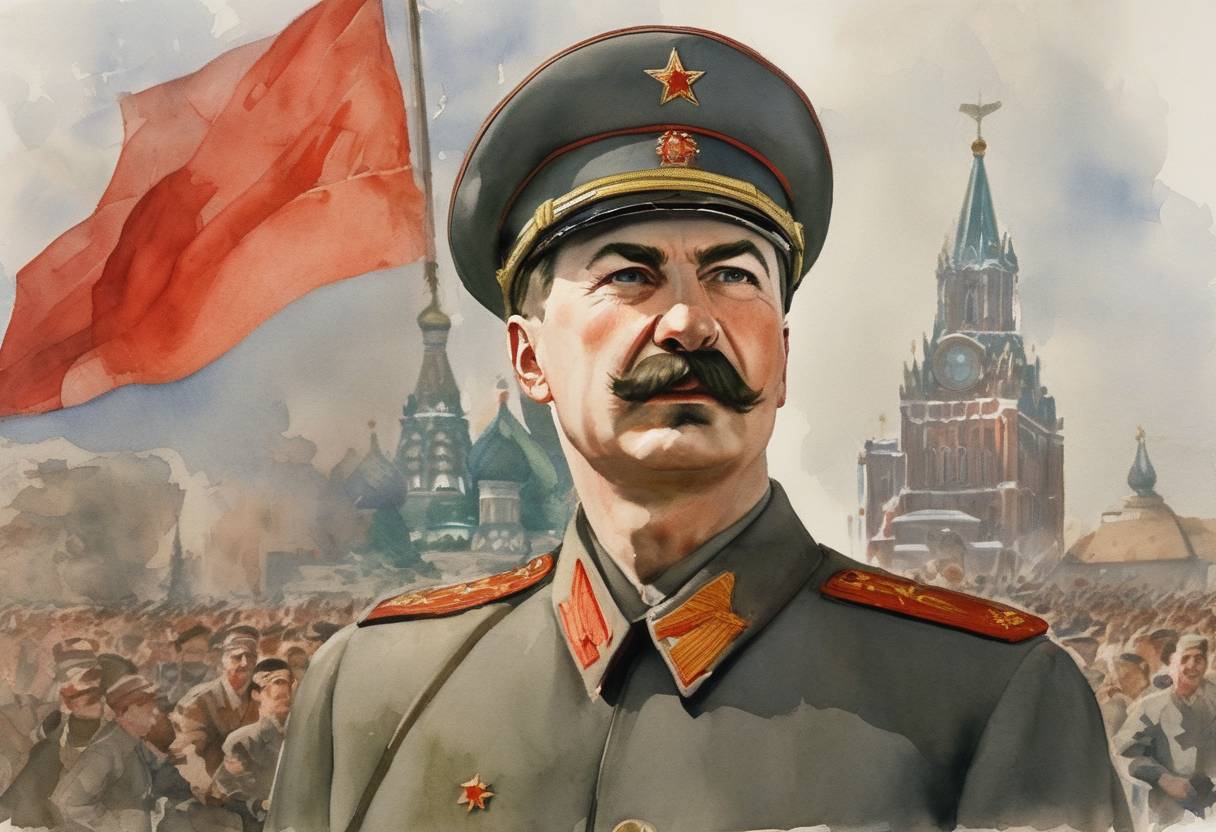
Joseph Stalin Becomes Premier of the Soviet Union - May 6, 1941
On May 6, 1941, Joseph Stalin assumed the position of Premier of the Soviet Union, marking a pivotal moment in Soviet history. This event signified the consolidation of Stalin’s power, as he now held the highest governmental office in addition to his role as General Secretary of the Communist Party, a position he had held since 1922.
Context and Background
Rise to Power: Stalin’s rise to power began after the death of Vladimir Lenin in 1924. Through a combination of political maneuvering, strategic alliances, and the elimination of rivals, Stalin gradually consolidated control over the Communist Party and the Soviet state.
Political Landscape: By the late 1930s, Stalin had effectively eliminated opposition within the party through purges, known as the Great Purge, which targeted perceived enemies of the state. This period saw widespread repression, with thousands of party members, military leaders, and ordinary citizens executed or sent to labor camps.
World War II: The geopolitical climate of 1941 was dominated by World War II. The Soviet Union had signed the Molotov-Ribbentrop Pact with Nazi Germany in 1939, a non-aggression treaty that temporarily kept the Soviet Union out of the conflict. However, tensions were rising as Germany prepared for Operation Barbarossa, the invasion of the Soviet Union, which would commence in June 1941.
Stalin’s Premiership
Consolidation of Power: By becoming Premier, Stalin further centralized his control over the Soviet Union’s political and military apparatus. This dual role allowed him to direct both domestic policy and military strategy, crucial as the threat of war loomed.
Military Preparations: As Premier, Stalin oversaw the Soviet Union’s military preparations in anticipation of a potential conflict with Germany. Despite intelligence warnings, the Soviet military was caught off guard by the German invasion, leading to significant early losses.
Aftermath and Historical Significance
World War II Leadership: Stalin’s leadership during World War II was marked by both strategic successes and catastrophic failures. His initial misjudgment of Hitler’s intentions led to severe setbacks, but the Soviet Union eventually played a crucial role in the defeat of Nazi Germany.
Post-War Influence: Following the war, Stalin’s Soviet Union emerged as a superpower, significantly influencing the post-war geopolitical landscape. The establishment of Soviet-controlled regimes in Eastern Europe laid the groundwork for the Cold War.
Legacy: Stalin’s tenure as Premier and his broader rule are subjects of extensive historical debate. His policies led to industrialization and military strengthening but also resulted in widespread human suffering due to purges, forced collectivization, and famine.
Stalin’s assumption of the Premiership on May 6, 1941, was a key moment in Soviet history, solidifying his absolute control over the Soviet state and setting the stage for the Soviet Union’s role in the mid-20th century global order.