Dagen H: Sweden's Switch to Right-Hand Traffic
1967 · Stockholm, Sweden
Sweden switched from driving on the left-hand side of the road to the right, in an event known as Dagen H.
February 28, 1986
Swedish Prime Minister Olof Palme is assassinated in Stockholm, leading to a major investigation and political upheaval in Sweden.
Stockholm, Sweden | Swedish Government
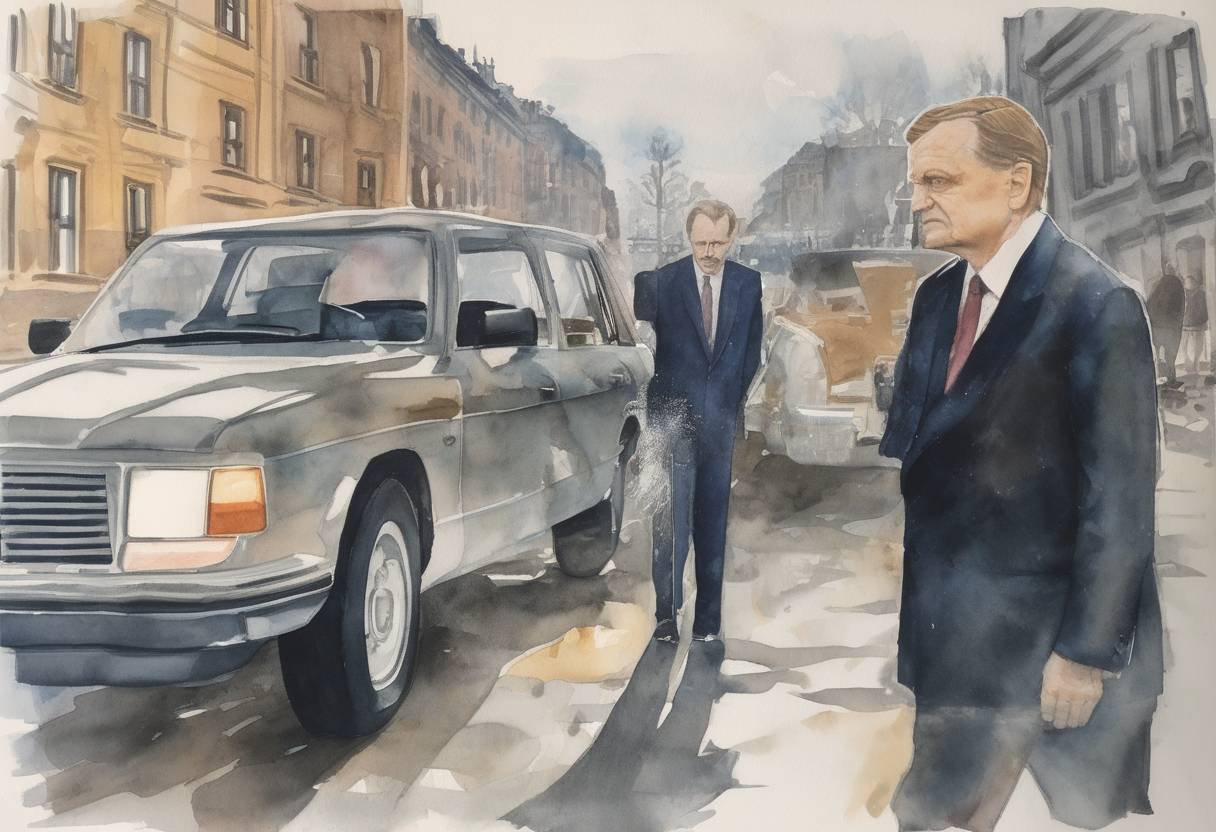
On February 28, 1986, Swedish Prime Minister Olof Palme was assassinated in Stockholm, an event that shocked the nation and had profound political and social repercussions.
Olof Palme was a prominent and influential figure in Swedish and international politics. As leader of the Social Democratic Party, he served as Prime Minister from 1969 to 1976 and again from 1982 until his death in 1986. Palme was known for his strong stance on social justice, his opposition to apartheid in South Africa, and his criticism of both the United States and the Soviet Union during the Cold War. His policies and outspoken nature made him a polarizing figure both domestically and internationally.
On the evening of February 28, 1986, Olof Palme and his wife, Lisbet Palme, were walking home from a cinema in central Stockholm without bodyguards, a testament to Sweden’s reputation for safety and Palme’s personal belief in accessibility. At approximately 11:21 PM, a lone gunman approached them on Sveavägen street and shot Palme in the back at close range. Lisbet was also injured but survived. Olof Palme was pronounced dead shortly after arriving at the hospital.
The assassination led to one of the largest police investigations in Swedish history. Despite the extensive efforts, the investigation was marred by initial missteps, including a delayed response and mishandling of evidence. The case remained unsolved for decades, leading to widespread speculation and numerous conspiracy theories.
In 1989, Christer Pettersson, a petty criminal, was convicted of Palme’s murder but was acquitted on appeal the following year due to lack of evidence. The case remained open until June 2020, when Swedish authorities named Stig Engström, a graphic designer who had been present at the scene, as the likely suspect. Engström had died in 2000, and the case was officially closed.
The assassination of Olof Palme had a significant impact on Sweden. It challenged the country’s perception of itself as a safe and peaceful society. Politically, it led to increased security measures for public officials and a reevaluation of Sweden’s open and accessible political culture.
Internationally, Palme’s death was mourned by many who admired his commitment to peace and social justice. His assassination remains a pivotal moment in Swedish history, symbolizing both the vulnerability of democratic societies and the enduring quest for justice.
The assassination of Olof Palme was a tragic event that left a lasting mark on Sweden and the world. It highlighted the complexities of political life and the challenges of maintaining security in an open society. Despite the closure of the case, the mystery surrounding his death continues to intrigue and provoke discussion.
Source: www.britannica.com